Preparing yourself for labor and birth…

Preparing yourself for labor and birth…

During pregnancy (and even before!), it’s important to spend time preparing and educating yourself about what to expect during the remainder of pregnancy, and for your upcoming labor, birth, and postpartum period. Fear of the unknown can cause more tension, thus causing more pain, and adequate preparation can help you to avoid not knowing what to expect. Moms and dads who have seriously prepared for birth are often rewarded with a much more satisfying birth experience, especially due to the fact that they had a better idea of what to expect, and what was going on with mom’s body during the different stages. Being able to learn about the natural processes, how these things affect mom and baby, what positions can help at what times, etc. all serve to enable a couple to work as a team as they bring their baby into the world.

childbirth456While it’s ideal to take a live childbirth class whenever possible (this gives you personal time with the instructor, the chance to ask questions, and the fun of interacting with other couples experiencing pregnancy), there are often times when there are no natural-minded classes available in your area, or when time constraints make it impossible to attend a series of classes. When this is the case, don’t give up the desire to be prepared! There are many different online classes, videos and books that can all help to educate you on the labor and birth process, and this list is intended to give you some pointers on where to start:

Actual Childbirth Classes-either online or DVD:
http://birthbootcamp.com/online-childbirth-education-classes/online-class-faq/ Birth Boot Camp is an intense class, available online or in various locations around the US, focusing on preparation for a natural childbirth by teaching relaxation techniques, exercises, etc., taught by midwives, childbirth educators, lactation consultants and others.

http://spinningbabies.com/classes/eclass-for-pregnant-parents-2 Gail Tully teaches an incredible class on optimal fetal positioning, and this is a link for the online childbirth classes that she recommends.

http://injoyvideos.com/mothers-advocate-dvds.html This DVD is a “mini childbirth class”…30 min. of good advice and information, available to purchase, or on youtube at https://www.youtube.com/user/MothersAdvocate
Other Helpful Links/DVD’s:
http://spinningbabies.com/videos/spinning-babies-video Taught by Gail Tully at Spinning Babies, the Parent Class DVD is an excellent resource for teaching couples techniques and exercises for encouraging baby to get in a good position and prepare mom for birth.

https://www.youtube.com/watch?v=mZDeozklQw8&app=desktop An older Lamaze video, this shows several moms in labor, and talks about ways to be prepared for natural childbirth.

http://www.happyhealthychild.com/ This DVD set, available through Amazon, is taught by a variety of OB’s, midwives, doulas, and other professionals. It covers prenatal nutrition, labor preparation, natural childbirth, birth choices, newborn care, and more in a lecture-type style.

https://www.youtube.com/watch?v=Xath6kOf0NE, https://www.youtube.com/watch?v=ZDP_ewMDxCo, https://www.youtube.com/watch?v=ze53Ep-gwBQ&index=5&list=PLD8C569116E48F504, Short, 3D animated medical videos giving excellent visuals on the birth process, contraction action, station explanation, and more.

http://www.thebusinessofbeingborn.com/ Excellent documentary explaining birth choices in the US. Features quotes by OBs, midwives, doulas, and home/natural birth moms. Available to watch for free on youtube!

http://www.mothering.com/articles/6-birth-videos-used-prepare-child-siblings-entrance/ Various birth videos

http://babies.littlethings.com/husband-wife-home-birth/?utm_content=buffer0f17b&utm_medium=Facebook&utm_source=sungazing&utm_campaign=PFPost A really sweet home water birth video.

https://www.youtube.com/watch?v=Uvk08EfgECk A brief overview of the stages of labor.

One more thing to note…if you live local, I’d be more than happy to share with you some of the great options for live childbirth classes in this area!

Suggestions for a Healthy Pregnancy

Suggestions for a Healthy Pregnancy

Recently I’ve been searching for a short, easy-to-read handout on nutrition and exercise. I was having trouble finding what I wanted…something that hit the high points, but wasn’t so detailed that no one would take the time to read it. Here’s what I came up with, though there is SO much more that could be said. I encourage each of you mama’s to research nutrition, supplements and exercise so that you know WHY you are doing what you’re doing for you and your baby!

2266-19942-1-SPDuring pregnancy, your body faces extra demands and nutritional needs. Making wise choices in caring for your physical needs can help to build a healthy baby, improve your energy levels, experience less complications during birth, and have a more rapid recovery. How is that for motivation?

Diet Recommendations:
There are many varied suggestions out there as far as pregnancy diet goes. While it is important for you to do your research and make the best choices for your particular situation, the following are a few principles to go by when it comes to what you eat:
– Major on high-quality protein. Protein helps to give you sustained energy, builds good skin integrity, and keeps your blood sugars in check. Some ideas include: Greek yogurt, cheese, nuts, nut butter, chia seeds, eggs, meat, and seeds.
– Consume a variety of vegetables, preferably organic whenever possible. This helps to provide you with more fiber, and the multitude of natural vitamins and minerals that vegetables contain.
– Add quality oils to your diet. Recent research has proven that quality fats are good for us, contrary to what we used to be told! Coconut oil, olive oil, and butter (esp. if it’s grass fed!) are examples of good fats to be consuming.
– Reduce your intake of carbs-especially simple carbs. While carbohydrates are good in moderation, they shouldn’t be considered the foundation of your diet. Carbohydrates tend to elevate blood sugar levels, as well as adding extra pounds to you and the baby during the last several months of pregnancy. When eating carbs, do your best to make sure they are made of whole grains whenever possible, which provide you with fiber and a slower sugar release. Using a variety of organic grains (such as oats, spelt, rye, etc.) are better choices than only consuming wheat products.
– Stay away from artificial sugars, and limit your intake of refined sugar. Try using maple syurp, honey, coconut sugar or other more natural-type sugars when you need something sweet!
– Try to limit fruit juices, and eat whole fruit instead.
– Keep healthy snacks on hand, so that it’s easiest to make good choices when you’re hungry!
Supplements:
Ideally, your nutritional needs should be met through a healthy, balanced diet. But most of us can still use a bit more help!  The basis of your supplements should include a high-quality prenatal vitamin, one made from natural food sources instead of being chemically engineered. Seeking Health, New Chapter Organic, and Thorne Research are good brands, but there are more out there. Most moms are also lacking in sufficient calcium and magnesium, and I recommended taking a minimum of 1000 mg. of calcium each day. This can also help you to sleep better at night, and experience less muscle cramping and discomfort. Other supplements are normally suggested and added as needed, and we can discuss your particular needs during our prenatal visits.newborn

Exercise:
In preparing for your labor and birth, it’s good to keep in mind that it is similar to preparing for a marathon. No one decides to run a marathon and then does it the next day-it takes lots of preparation and training for the big event. It’s much the same with giving birth. The more prepared and equipped your body is, the better able you’ll be able to handle the challenge and the easier your recovery will be. I highly recommend the following:
– Take a brisk walk at least 3 times each week, trying to go at least 1 mile in distance.
– Incorporate some type of exercise program (even just 10 min. long!) into your daily routine, and make it happen at least 3 times a week. There are many different 10 min. pregnancy workouts on youtube, and many other options you can take advantage of. A routine that incorporates lots of squats and leg-strengthening moves can be especially helpful in getting your body prepared for birth.
– Visit the “spinningbabies” website for information on daily exercises that encourage good alignment for mom and good positioning for baby. I have an excellent DVD on this subject that I encourage each of my clients to borrow and watch.
– Consider visiting a chiropractor during the last trimester to ensure your body is ready for birth!

Frequently Asked Questions

Frequently Asked Questions

If you are considering a home birth, perhaps the following are questions you have wondered about. Don’t hesitate to contact me with any specific questions…I’d love to help you in any way I can! Please note, these questions and answers pertain specifically to my practice here at Gentle Delivery Childbirth Services, and may not apply to other midwives and practices.

Q. At what point in my pregnancy should I contact you?
A. You are welcome to contact me at any time-with preconception questions or as soon as you find out your pregnant. A free no-obligation consultation where you can ask questions and see my office can occur at any point, but I typically schedule your first actual appointment once you are between 10-12 weeks along, as that allows the baby to be mature enough to hear the heartbeat. The earlier you are in touch, the greater chance I will have an opening over the time you are due, though it’s never too late to talk with me about your options, either…we can begin care late in the pregnancy when necessary, too!

Q. What does a normal prenatal look like, and where does it take place?
A. Prenatal appointments normally take place in my home office, usually on Tuesday and Thursday afternoons, although other times are possible. I generally expect to take anywhere from 30 min. to an hour, with the goal being able to spend enough time to answer any questions or concerns a couple might have, as well as including education regarding exercise, nutrition, positioning, childbirth, etc. At each visit a urine sample is checked, weight is recorded, BP is taken, and baby is listened to, measured, and palpated to see his or her position. Other testing and/or procedures will be performed as needed. The normal schedule for visits is every month until 28 weeks, followed by bi-weekly appointments until 36 weeks, and weekly visits thereafter. A home visit is performed at 36 weeks, in order to give myself and any other birth attendants a chance to see your location in normal daylight hours! 

Q. Do I need to see a doctor besides seeing you for prenatal care?
A. That honestly depends upon your personal preferences. The prenatal care I give would be similar to what you would receive from a doctor, including labs and referrals for things like sonograms. Most of my clients do not see a doctor while receiving care from me, as it keeps costs down and keeps them from multiple prenatal care visits. If your OB office is open to co-care, it can provide you with a seamless transition in case of transport, especially if it is covered by your insurance provider. If care with an OB is covered in full by your insurance provider, you may benefit from continuing care with them in order to have the costs for your labwork and other testing covered completely.

Q. Will my insurance cover your services, or how can I afford it?
A. Sadly, many insurance companies do not cover home midwifery care, though it is always worth checking into thoroughly. I would be happy to provide you with some information on how to best discuss this with your insurance company, and I am also willing to give you a written statement complete with insurance codes to submit to your insurance company. In order to keep my own costs down, I do not file insurance, but I do try to make care accessible to all families by charging a sliding scale fee based upon your family’s income. Keep in mind, too, that when using insurance, you will have a co-pay, and for some people the cost of my services are either similar or lower than the co-pay amount you would be paying with a hospital delivery.

Q. I notice you have a student working with you. How does that influence my care?
A. When a student is interning for midwifery training, their level of involvement varies according to where they are at in their studies. A student midwife begins by observing all aspects of midwifery care, and applying the academic knowledge she has already received to practical, hands-on situations. As her experience expands, so do her opportunities-she assumes more responsibility depending upon her level of experience and skill. Students are always grateful for any opportunity afforded them to learn, and would love to be as involved with your care as you feel comfortable with. I always strive to make sure the client feels completely comfortable with any care provided by a student, whether that is allowing the student to feel for baby’s position and fundal measurement, or whether it is as extensive as allowing the student to participate in a high level of care during delivery. Whether you prefer lots of involvement or minimal involvement, a student generally acts as my birth assistant during the actual labor and delivery, helping to provide labor support, take notes, and in general act as my second set of hands. 

Q. Who will attend my birth? Is is okay to invite others to be present in addition to the birth team?
A. Normally I attend births with one or two qualified assistants. These ladies are usually either skilled students or birth attendants, and enable me to know you are getting the best care possible, allowing both baby and mom to be cared for in case of emergency. Besides this, whomever else you choose to have present at your birth is up to you. I’ve been at births where it was the bare minimum of people, and I’ve been to births where there was a crowd! The main issue is that you feel totally and completely at ease and comfortable with whomever is present, as that can majorly impact your experience.

Q. Are children welcome to attend the birth?
A. It’s your birth, so you get to decide if you want your children present or not! If you are planning on having your children attending, I strongly recommend you having an extra person handy whose sole responsibility is caring for your child(ren) so that you can focus on the delivery.

Q. Do you do waterbirths?
A. Yes! Laboring and delivering in the water are both options. For many people, their home tub is comfortable enough, but if you’re wanting to use an actual “birth pool”, I can put you in touch with rental possibilities.

Q. I had a cesarean with my previous delivery, does that rule out a home birth?
A. I am happy to help women VBAC whenever possible. For most women, a VBAC at home is statistically safer than a repeat c-section. Make sure you get a copy of your previous medical records, and we can discuss your particular situation in person in more detail.

Q. What birth positions are options at home?
A. There are about as many options as there are women!  One benefit to delivering at home is the flexibility to figure out what works the best for you…whether that is squatting, laying in bed, standing in the shower, or wherever you are the most comfortable. I have a traditional “birth stool” that I bring along to births which gives you the option of a low squat, but most women instinctively find a position that works the best for them.

Q. Are you prepared for possible emergencies?
A. Yes. I maintain current certification in both neonatal resuscitation and CPR, bringing along emergency equipment in case of a baby with breathing difficulties. I also carry equipment to assist with stabilizing a mom in the rare case of hemorrhage. It’s my goal to make your home birth experience as safe as possible, which includes careful monitoring of both baby and mom during and after labor, so as to catch any concern that is out of the scope of “normal”. Consistent prenatal care combined with healthy, low risk moms lowers the chance of emergency procedures drastically, but your birth team stays alert for any signs of possible surprises. We can discuss this question in more detail during your consultation if you wish.

Q. So, laboring at home sounds nice, but what about the mess that comes along with birth?
A. Most people are surprised at how little mess is involved. I have families purchase disposable underpads (available at most drugstores) and a cheap shower curtain, which we use to protect surfaces such as the bed and carpet for the actual birth. These things get thrown away afterwards, and myself or my assistant will start laundry before we leave your home. We also make sure to tidy things up so that you aren’t left with clean up!

Q. How do I go about getting documentation for my child?
A. I will file all needed paperwork with the state, which includes the official birth certificate and request for a social security number. I also perform the newborn screening test on your baby during the home visit which occurs 24-48 hours after birth.

24413_1380390063526_5477660_n

Sweet baby feet as baby is being weighed during the newborn exam!


Remembering seven years ago…a thank you to many of you!

Remembering seven years ago…a thank you to many of you!

I had to stop today and remember what happened on this date seven years ago…it’s actually hard to believe it’s been that long! I’m sure the fact that it’s also one of my grandmother’s birthdays helps to remind me of the actual date, but it’s fun to take some time and think about and remember some of the dear people that played such an important role in the midwifery aspect of my life. It was on October 16 in 2007 that I had the great privilege and wonder of “catching” my first baby…

As a student midwife, I had been eagerly anticipating when this time would come. By that point, I had finished almost one year of the academic work required to complete my training, and I had been working, living and training at Family Birth Services, a birth center/training center since the end of May of that year. Living at FBS was like studying midwifery by immersion…that was seriously most of what you did all the time…live, talk, think, dream and study birth, babies and mothers. Since my arrival at the birth center about 5 months before this, I had spent many hours sitting in prenatal appointments, talking with other midwives, attending births in a variety of settings, and trying to take in everything I possibly could.

Family Birth Services was a wonderful setup for aspiring midwives. Besides being staffed by a lovely group of ladies (who didn’t mind questions and discussions going on into the wee hours of the night!), those of us who were students were offered the opportunity to truly get our hands into the work as the birth center offered discounted rates for those families who chose to have a student provide them with care. When I think back to the families I had the joy of working with (many of whom still stay in touch today!), it makes me incredibly grateful for the investment they made in my training. Getting the opportunity to learn how to care for mothers and babies while assuming a major portion of responsibility is one of the best ways to learn! And I’m grateful, too, for the midwives who tirelessly gave of themselves to supervise and ensure that the clients were still receiving safe, quality care while allowing the student to provide as much care as they were capable of.

So, come October, I was feeling mixed emotions about when I would get to play the primary role in my first client’s birth. At this point, I had already had two primary care clients who had already delivered…one who went preterm, and another who ended up delivering while I was gone at a required midwifery training workshop. I should back up here, too, and note that while I had been assisting with other births, each of us students especially savored the relationship we had with our “own” primary care clients-these were the ladies we were providing care to under supervision, and whose births we were the most involved with. Due to the fact that I had some ability to communicate in Spanish, I was give the opportunity to take on my own primary care clients earlier than most students, as there were no other students available at that time who were able to offer Spanish speaking care. My dear Spanish-speaking supervising midwife, Sorani, had her hands full as she not only worked to help me communicate with clients, but also worked to make sure I was covering all the details needed especially since I was so early in my clinical training.

Given the fact that my two previous clients had not turned out the way I was hoping, I was beginning to wonder what might possibly happen with my third client. Sorani patiently encouraged me to trust the Lord with the timing and outcome, and relax while we waited for this baby who was taking her own good time to come. I still remember getting the call on my phone in the wee hours of the morning, and thinking that here was my time to put into practice the things I had been learning! Things seemed to be progressing well, and since this birth was planned to take place at the birth center, my client decided to come on in.

I’ll never forget the thrill that went through me when, just about 2 hours later, I helped this beautiful little girl enter the world during a lovely picture-perfect birth. While the difficult births would take place later, this first one was beautiful…totally breathtaking to me as a new midwife, and thrilling as I realized again how much I was drawn to the birthing process and how fulfilling this work was-even at 4 in the morning! 🙂 I’m sure Sorani (who was supervising) and Peggy (the other student assisting) won’t forget how they had to pull me down to earth and remind me that I really should eat something before my blood sugar crashed due to the high I was on! 🙂 We had a special celebration with hugs and ice cream in the kitchen early that morning, and I was reassured that this was indeed the work that I thoroughly enjoyed doing.

While there have been lots of other experiences in the years since, this birth still stays clear in my mind. And on this day when I remember this particular birthdate, I also want to thank all of those who invested in my training…the families who allowed me to be a part of their birth experiences, the midwives who allowed me to be part of their practices, those who spent hours teaching/instructing/coaching me, the other students who I trained alongside of, and the Lord who opened the doors and allowed me to be involved in the beautiful & intense work of assisting new lives into the world. Thank you!

189798_1003306276667_5593_n

Baby L just a few hours after birth…dressed and ready to go home!

Random Life Happenings…

Random Life Happenings…

Well, my hopes to keep up with blogging a post at least once a month fell to the wayside this summer! My big plans and ideas came to a rather screeching halt when we found out that we have another little one on the way…soon after that discovery I was sick enough with morning sickness that I found it hard to keep anything up besides the bare minimum! I’m very grateful to be past the 1st trimester by now, and we’re anticipating our new arrival to make his/her appearance come early March. This news does, of course, have ramifications for midwifery-at this point I am taking clients until the beginning of February, and will then take time off until May. For updates on my client schedule for the next months, feel free to check out the “current availability” tab.

We had a fun family trip out to KS for my sister’s wedding at the beginning of July. All of my immediate family (along with much of my extended family) lives in the central KS area, so it was good to reconnect with family and friends again. Making memories by taking horseback rides, going fishing, eating donuts with Grandpa, visiting the zoo, and in general being spoiled by all the grandparents, uncles and aunties made for a lovely time as far as the children were concerned! 🙂

Family Photo at Aunt Charis' wedding

Family Photo at Aunt Charis’ wedding

Two baby girls made their appearance in June, with both of them ending in lovely births. It’s always a special privilege to be involved when a baby makes it’s arrival…those first moments of a family being together for the first time, savoring the new baby looks, smells and cuddles are all so amazing and unique to each individual, and it makes me so grateful to be able to be a part of it!

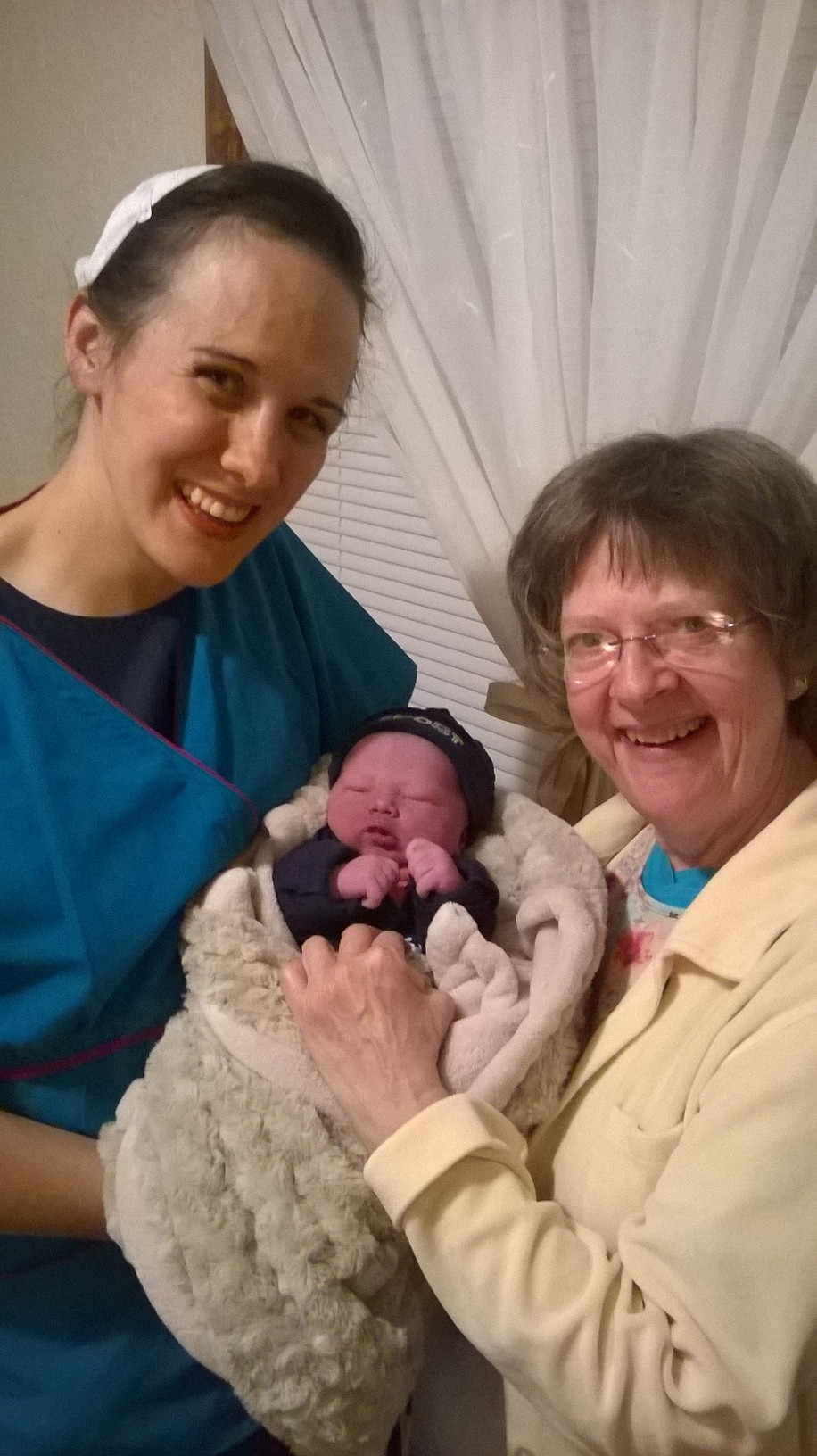
Little baby K, and my sweet assistant Beth, who also helped me with the delivery of baby K's big sister!

Little baby K, and my sweet assistant Beth, who also helped me with the delivery of baby K’s big sister!

My little guy delighted to hold baby C. when she came for a visit!

My little guy delighted to hold baby C. when she came for a visit!

Another new development that has occurred recently is taking on a new student here at Gentle Delivery Childbirth Services.  At some point in the near future, I’d love to tell you more about Emily, but I’ll just give you a little teaser for now. 🙂 Those of you who are current clients will likely be meeting her in some of your upcoming visits, and from the interaction we’ve had so far, I think you’ll thoroughly enjoy her and her passion for serving mamas and babies in this special time of life. Emily is just getting started in her training, and I’m excited about having a steady assistant to help me out with visits and births during the months ahead!

September brought with it two little fellows, who both interestingly enough, decided to make their arrivals on Saturday nights! They both seem to be thriving, and if they continue at the present rate, won’t be little fellows for long! For both of these births, I had the assistance of Gretchen D, a midwife/assistant who lives nearby.

Baby R with Gretchen and myself

Baby R with Gretchen and myself

and here with baby L!

and here with baby L!

Hopefully it won’t be quite so long until next time…but there’s a little peek into my life the past while…and here’s a peek into what is to come, as birth kits are prepared for the upcoming fall babies!

Birth kits ready to be delivered to families at their home visits!

Birth kits ready to be delivered to families at their home visits!

Have a lovely fall, and thanks for your continued interest in the work here. If you haven’t already done so, feel free to take a peek at our facebook page: facebook.com/gentledelivery. And keep posted on the blog for new pages coming soon!

Preparing for your birth…

Preparing for your birth…

Newborn-Baby-FeetThis information is written specifically to give first time mothers  and first time VBAC moms suggestions for how to improve their chances at achieving a natural, easier delivery. But that doesn’t mean this is just for them! All of these suggestions can help ANY mom as she prepares for an optimal birth!  Pregnancy and  childbirth is such a special and exciting time, and it is also something to be prepared for ahead of time. It is good to keep in mind that a woman’s body was designed to give birth, and that, normally speaking, your body does know what to do to get the baby out. On the flip side, though, is the fact that this is the first time your body has ever experienced this process. Because of this, labor can sometimes last longer, and be more physically demanding, as your body takes the time it needs for all of the muscles and bones to work together and stretch to allow your baby to enter this world. If you have invested time and effort into preparing ahead of time, your body will benefit, both in the labor and recovery processes. Just think, you wouldn’t run a marathon without giving adequate training and preparation-and so it is with childbirth. You must condition your mind and body to give you the best results.

Throughout the pregnancy:

–          Read and educate yourself! Take childbirth classes, together with your husband. This will help you both to be informed about the physical and emotional processes, and allow you to discuss ideals, hopes, and dreams before labor begins. I believe that education can also help to reduce the level of pain, as it helps you to understand what is going on in your body, instead of fearing the unknown. The more you can find out ahead of time, the more able you will be to relax, knowing your body is doing what it was intended to do. There are many books, DVD’s, and classes available-talk with me if you need suggestions!

–          Eat a healthy diet. A diet full of good, healthful foods (vegetables, protein, and complex carbohydrates), and low in sugars, fats and simple carbohydrates, can help you in several areas. One, it doesn’t build a huge baby. A smaller baby is easier to push out! Secondly, it allows your body to be able to function at it’s optimal ability, as your energy level is increased. Thirdly, good nutrition can build better skin integrity, which decreases your chances of tears.

–          Exercise regularly. Exercise is an extremely important factor, as labor and birth are very much physical events. Stretching, and building up your endurance level throughout the pregnancy will enable you to persevere if your labor gets long and tiresome. Throughout the last few weeks, walking briskly (until your pelvis hurts!) for at least 45 min. every day, can help to encourage the baby’s arrival to happen sooner rather than later.

–         See a Chiropractor-if your body is not in alignment before labor, this can really slow things down and keep the baby from descending. While having regular adjustments can be helpful, it’s an especially good idea during the last 3-4 weeks, as it can help your body to relax and get the baby into the best possible position before labor begins.

–          Visit http://www.spinningbabies.com and try some of Gail’s suggested techniques for helping baby to achieve the best position. Regularly implementing techniques such as inversions and belly sifting can help to reduce your overall labor time by helping your body to stay aligned and encouraging good position of the baby!

–          Practice relaxation. If you can learn to relax, go limp, and let your body work before labor begins, then the better able you will be to do this during labor. Remember, fighting pain and discomfort works against you during labor-you must open up, let go, and relax in order for your uterus to function the most efficiently. And the more efficiently it works, the easier it will be on you! In practicing, pick times of the day when you can work on letting each area of your body go limp. Find out what helps you to relax: water, music, massage, etc., and then have these available during labor.

During the last 5 weeks:

–          I encourage moms to take the following supplements:

  • Gentle Birth Formula ~ this is a specially formulated blend of herbs in a tincture form that work to help prepare the uterus for the upcoming birth. You begin at 35 weeks by taking 2 dropperfulls a day throughout the first week, and increasing the amount to 2 dropperfulls 3x/day for the remaining weeks. Mothers who take this herb usually have more “warm-up” contractions, which help the cervix to begin dilation and effacement before actual labor. This tincture can be purchased through In His Hands Birth supply at the same time that you order your birth kit.
  • Super Primrose Oil or Borage Oil ~ this supplement is in a soft-gel form, and you begin taking 1-2 capsules orally beginning at 35 weeks. Around 36-37 weeks, you may begin inserting one capsule vaginally at night when ready to go to bed. The high GLA content and natural prostaglandin that these oils contain helps the cervix to soften, making dilation easier. It’s a great way to give your body a head-start towards dilation!

In closing, remember to keep yourself hydrated, rest often, and take care of yourself. And when labor begins, try to get some rest before getting excited.   You need to conserve the energy for later. So think about some activities that provide fun distraction (games, movies, going out for supper, etc.), and try to focus on other things until the contractions become consistent and strong enough that you can’t be distracted through them….

Another Birth Story!

Another Birth Story!

We recently celebrated our daughter’s birthday, and I thought maybe you all would enjoy reading the story of her birth…this was written almost 2 years ago….just before the birth of our second:

Ever since my daughter was born, I’ve wanted to write down her birth story, both for myself and for her to read someday. Now that “little brother” will be making his appearance any time, I figured I really should get her story written before having another birth to get it mixed up with. So here goes….

Our baby was due June 26, which meant that I really wasn’t expecting to have a baby until the end of June, or maybe even the beginning of July. After seeing many first-time mama’s get so disappointed over not hitting their “due date”, and proceeding to go at least a week overdue, I was determined that I wouldn’t set such expectations.  This was one area where I really didn’t have an expectation…the week before she came, I was busily painting several rooms in our house (“nesting instinct” for sure!), and then Joel’s family hosted a surprise baby shower for us on June 18. While the shower really was a surprise, he had talked with me about dates for something, and I assured him that I would still be doing quite fine by Father’s Day weekend, with probably another couple of weeks to go yet. Shows you how much I knew, after all! During the last 6-7 weeks of my pregnancy, I had continued to get very swollen, and my blood pressure was creeping higher, so I wonder in retrospect if my body just realized that it was time to get the baby out.

I still vividly remember getting up Sunday morning and noticing some bloody show, and signs that my water had possibly broken. I wasn’t totally sure (and wouldn’t you know, that was the one weekend that another midwife was using my kit, so I didn’t even have the test strips to check it out!), but I started crying as I told Joel about it, which made me wonder if maybe I really was going to start labor soon. Since my mother had several labors where she experienced prolonged rupture of membranes, once again I didn’t want to count on anything happening very quickly. I figured it could be a good while yet before we saw any “action”, so I still got ready for church…I didn’t really want anyone asking any questions, and since our home is right off the road, I knew that EVERYONE would know that there was the possibility of something going on if I wasn’t at church and yet our vehicle was in the drive.  During the service I was a bit uncomfortable, experiencing some cramps and things, but still nothing regular. After church I had a humorous conversation with two moms about how I shouldn’t get my hopes up in going anytime soon…and inwardly I was smiling as I figured I probably only had days or hours left, and not weeks!

With it being Father’s Day, we had planned to eat lunch with his family down the road (they only live a mile from us, so it wasn’t far). Joel wondered if I still wanted to go, and once again I wanted to show up just to keep people from knowing what was going on. I still felt pretty good, though I could tell that the cramps were getting stronger, and I was beginning to lose a bit more fluid. Everything went fine until right at the end of lunch, when all of a sudden I just wanted to be home…and I was afraid that the pad I was wearing might not be catching all of the fluid! Joel caught the message that I wanted to go, so he made some remark about the pregnant mama needing a nap, and whisked me out…with my swollen feet and hands, no one objected to my not helping with dishes, or wondered anything about us leaving so quickly!

We came home and laid down, and right around 3 or 3:30pm, I experienced my first REAL contraction. Not one of those low-crampy kind of aches, but the actual thing. It woke me right up, and after that my adrenaline kept me from sleeping anymore. However, things still picked up slowly, with the contractions only coming every 10-15 minutes or so, and were fairly easy to relax through. At this point, we called our folks to let them know that it looked like I really was in labor, which of course made them all excited. I still was figuring on hours and hours yet to go, so I took care of some things around the house, and Joel had a friend over for an early supper (they sat out on the porch to talk). At about 6:30, the contractions got more intense, and started coming more frequently. Joel thought it would be a good idea to call the midwives and let them know, especially since one was coming up from Lancaster and had a two hour trip ahead of her. I told him that I was fine with letting them know what was going on, but that I probably had another 24 hours at least to go, so there wasn’t any hurry. He didn’t agree with me, which was a good thing!

By 8:00, we went ahead and had Rose come over, as Joel thought I should have someone here. He also called Debby and told her that he thought she should go ahead and come…and meanwhile the contractions were about 5 minutes apart, lasting around a minute. I changed into more comfortable clothing, and tried to get comfortable, though I wasn’t finding it easy. I finally got in the shower, which gave some relief. Rose wondered if I wanted to be checked, but I didn’t-I was afraid at this point that I was probably only at 2-3cm, and wasn’t sure I could handle that news with how intense the contractions were.  Joel started filling up the tub, as I always thought that I would like to labor in water…though our tub faucet wasn’t working well, and it took an hour to fill up! By 9:55, Rose suggested that she check me, and Joel encouraged me to…and I was a stretchy 6-7. That was encouraging, though the contractions by now were coming so close and so hard that I was finding it difficult to stay on top of them. The most comfortable thing I could do was sit on the birth ball, lean my head on the bed, and squeeze onto Joel’s hand…and there was NO way I could think about making the effort to get into the tub at this point!

That next hour was intense, with the contractions coming every 2-4 minutes, and lasting a good long time, and I was beginning to wonder how I could ever get through a whole night of this. I still remember thinking “they always say that when you think you can’t do it anymore, you’re almost through”, but then dismissing the thought as wishful thinking.  By this time, we were beginning to wonder where Debby was…Rose called her, and found out that she also figured she had a good amount of time to get there with this being my first baby and all, and she hadn’t left right away. I couldn’t blame her, as I would have done the exact same thing! Rose told her she should hurry…it was 10:40pm by that time, and I was close to 9cm. That surprised all of us! Just before 11:00, I started feeling pushy, and Rose said I was complete. Right about that time Debby walked in, so I felt like I could relax to begin pushing.

By this time I moved to the bed in a semi-sitting position, as it seemed to be the most comfortable for pushing. The pushing part was not at all what I was expecting…I guess I had heard enough moms say that they enjoyed that part of it as it felt like they were doing something, but I felt like I wasn’t making any progress, and there was a constant sharp pain near my pubic bone. It took only 35 minutes of pushing, and she was born with a nuchal hand…which I think attributed to the pain during pushing AND to the tear coming out!

Having that squalling little baby put on my chest was amazing…I kept looking down at her and thinking, “she’s mine to keep!”. Although we hadn’t had a sonogram during the pregnancy, Joel and I both felt like the baby was going to be a girl, so it almost felt like it was no surprise to see our little daughter. She pinked up and cried right away-just about as perfect as it can get. I was in for another surprise, though…I felt so sore that I could hardly move afterwards! The placenta came about 10 minutes after her birth, and I was so relieved to have everything all over, and thankful for how well everything had gone. Postpartum continued without incident, though it almost made me laugh to think of how difficult it was to get out of bed just to go to the bathroom, and how incredibly sore and tender everything was-and this was a small baby! I decided then that I did not believe the nonsense that is talked about in regards to a mom not needing pain relief if she is sutured right after birth, as she is still numb and on a high from the birth…that certainly was not the case! 

Rose was ready to go within two hours after the birth, and since Debby had been up the night before at a birth, she stayed the rest of the night to catch some sleep before heading back. We were so grateful for how the Lord took care of every detail, and gave us a wonderful first birth experience, and a beautiful, precious daughter!

271079_2043437599300_4801222_n

our little princess!

Helping Baby Achieve the Best Position…a little report on my day at Spinning Babies!

Helping Baby Achieve the Best Position…a little report on my day at Spinning Babies!

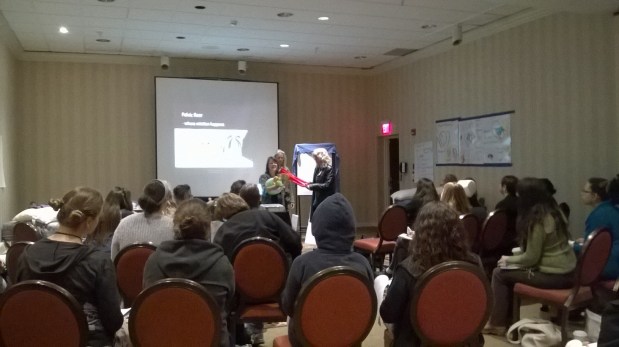
At the end of April, I had the special opportunity to take the Spinning Babies workshop taught by Gail Tully at the Midwifery Today Conference in Harrisburg. While the day was packed with information, I enjoyed every minute of it…I honestly felt excited about the prospect of having another baby myself after learning so many practical tips on how to promote optimal fetal positioning for both the baby’s sake and the mother’s comfort. Gail has a wealth of information at her fingertips, and I think I’d have to take the class several more times before I could really retain it all (even though I took lots of notes!), but I wanted to at least give a few pointers from things that I learned. Visit her website at: http://spinningbabies.com/ to learn more yourself.

To begin with, Gail showed a diagram about the structure of the uterus, and how it is covered in fascia, just like all of our other muscles. When the fascia is pulled or stretched in an unnatural angle, it is going to affect the way that the baby is positioned in the uterus. This is one reason why it is important to watch your repetitive movements…do you carry a child on your hip? bat a baseball? If the muscles and ligaments are too tight, too loose, or twisted, the baby will NOT be able to settle into the correct position. The balance of your soft tissue can be more important than your pelvic size. Thus, doing specific exercise techniques throughout your pregnancy (and during labor when needed) in order to help align these muscles can make a big impact on what position the baby settles into. When the womb is symmetrical, the baby will naturally assume a more flexed position.

When it comes to the “perfect position”, the place to aim for is having baby settled on the left side. The tendency is for baby to settle on the right side, as our uteri have a natural propensity towards this direction. However, the shorter, curved left side encourages the baby to flex his head and assume a “C” type position-his physiology is actually enhanced by this flexed position, as well as this position providing more consistent, even pressure on the cervix, which in turn encourages dilation. When the baby is on the mom’s steeper right side, the baby naturally wants to assume a more “military presentation”, where the head is not flexed-this causes uneven pressure on the cervix, and can really reduce progress in preparing the cervix for labor, and stalling progress during labor itself.

Spinning babies2

Demonstrating how the different muscle layers work to support or constrict the uterus

Another interesting aspect Gail brought out is how thyroid malfunction can cause the baby to assume a negative position. A root metabolism issue can affect the way in which the uterus operates, as well as causing it to be more susceptible to twisting. Making sure your entire body is working optimally can help prepare you for a better pregnancy and birth! The fact that we spend so much time sitting both in the car and in a reclined position also contribute to a asymmetrical uterus. Women used to be encouraged to sit “like a lady” with good upright posture, which can also help to promote good posture of the womb.

In presenting exercise techniques, Gail focused on three separate types of exercises that she calls the “3 Sisters” to provide balance and room for mom and baby. Each of these exercises helps the mom to relax, and thus in turn helps to relax the fascia of the uterus, which then helps to provide the balance to help the uterus to become more symmetrical. She would encourage pregnant mamas to do these exercises at the minimum of once a week, but once a day would be even more ideal! Besides encouraging baby to engage in a good position, these exercises can also help to improve mom’s comfort by relaxing the muscles that receive so much strain during pregnancy. In labor, these techniques help to promote descent of the baby, and can be done multiple times. Rather than try to explain these techniques myself, I’ll point you in the direction of where you can find instructions on her website:
– First, encourage deep squats and calf stretch. Then move on to the “3 Sisters of Balance” http://spinningbabies.com/techniques/activities-for-fetal-positioning/423-the-3-sisters-of-balance- :
1.  Rebozo sifting: helps relax the broad ligament and get the mother loose and relaxed herself. http://spinningbabies.com/techniques/activities-for-fetal-positioning/rebozo-sifting
2. Forward Leaning Inversion: This is best for resolving a transverse lie, and helps to encourage healthy circulation. http://spinningbabies.com/techniques/the-inversion
3. Side Lying Release: Helps relieve pressure on ligaments.

Once these techniques have been performed to help achieve balance, your next goals are Gravity and Movement-especially to help during a pause in labor.

During labor, you can use these techniques to help whenever you reach a point where progress is being stalled. Gail encouraged us to rethink the usual question of “what is dilation?” and instead think “where’s the baby?”. If the baby isn’t descending, then something needs to change, regardless of what dilation is. And depending on where baby is at, different techniques are needed to get the baby to descend. For any stall, she recommends trying the “3 Sisters of Balance” in order to relax mom and balance the uterus.

As you attempt the three above techniques, consider where baby is: If he is stuck at the brim of the pelvis (characterized by a long latent phase, or start-and-stop labors for days), then the baby needs to flex his head in order to enter the pelvis. Tight round ligaments can prevent baby from descending. At this point it is much more important to get the baby to enter the pelvis, rather than trying to get labor to become more regular. Dilation won’t do any good if the baby isn’t in the pelvis! Trying Gail’s Abdominal Lift and Tuck followed by Walchers, can help to flex that little guys head and get him to descend. http://spinningbabies.com/techniques/activities-for-fetal-positioning/abdominal-lift-and-tuck  http://spinningbabies.com/techniques/activities-for-fetal-positioning/walchers

If baby is stuck in the mid-pelvis (right at the ischial spines), labor tends to stall around 5-7cm. This can often be caused by a tight pelvic floor, and special attention to the side-lying release technique can help to relax those tight muscles. Trying a lunge, and the “Shaking the Apple Tree” techniques can also help to get the pelvic floor relaxed and help baby to descend.

When labor stalls around 9-10 cm (think anterior lip, etc), realize that you must address the root cause, not just push back the lip. Trying positions that open up that part of the pelvis can provide more room (deep squat, McRoberts, hip press, toilet, etc.). Sometimes putting pressure on the sacrotuberal ligaments can help them release and provide more room for birth. If there’s not an urge to push, try to rest, and wait until the body is ready-sometimes mama just needs a break!

There were many, many more things that Gail taught and shared…not to mention all the stories of different complicated, stalled labors where these techniques were used. If you ever have a chance to sit in on one of Gail’s classes, I would highly recommend it! Much of her information is located on her website, as well, which is an excellent resource for both midwives and mamas alike.

Spinning babies1

Where is baby’s position in relation to the mom’s pelvis? How can we use that information to help us decide which technique(s) to try?

Pictures from the “Office Project”

Today I’m taking a break from educational and informative posts…I finally had a chance to take some pictures of my newly finished office, and thought it would be fun to let you all take a peek! When we moved into this house, I was excited about one room that had built in counters and cabinets, plus a little desk that faced a window. The room had alot of potential, but it also badly needed lots of work and paint! It was one of the big projects that my husband and I tackled this winter, and as usual, it took longer than what I was anticipating. 🙂 But now that it is finished, we are both really pleased with the results! So here’s a little peek, along with an updated family picture that my sister took this weekend…

My favorite corner-it's perfect for studying, sewing, paperwork and so many other things!

My favorite corner-it’s perfect for studying, sewing, paperwork and so many other things!

The lovely tree that my mom painted while she was here visiting

The lovely tree that my mom painted while she was here visiting


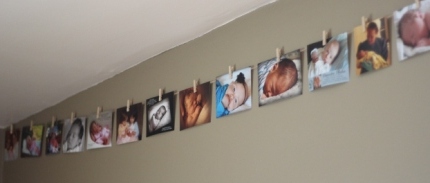
The "baby wall" with many pictures of babies that I've either delivered or given care to

The “baby wall” with many pictures of babies that I’ve either delivered or given care to


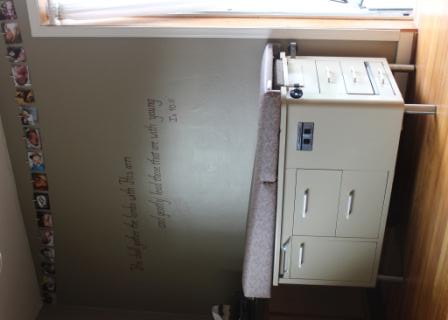
The beautiful exam table that we just purchased...it even matches the color scheme!

The beautiful exam table that we just purchased…it even matches the color scheme!


More of the "tree wall"-the angles in this room make it hard to get good pictures

More of the “tree wall”-the angles in this room make it hard to get good pictures


Another side of the room

Another side of the room


Our little family - April 2014

Our little family – April 2014

Fussy Babies, Tongue-Ties and Nursing Challenges

Fussy Babies, Tongue-Ties and Nursing Challenges

Matthias Johann 133Recently there have been alot of articles floating around on Facebook and other blogs regarding tongue ties and the challenges they pose for nursing babies. Reading these have reminded me of the very difficult six months following my last baby’s birth. In the past few months I’ve been wanting to write about this phase of my life, and I’m hoping that maybe it can be a help to others who might find themselves in similar shoes. While our family found some answers, I still have questions that I’m studying and researching…so this may end up being part one in a series! 🙂

For starters, a little background: my first pregnancy was challenging, especially for the first 20 weeks during which I was very sick. Towards the end, I ended up being border-line preeclamptic, and we were grateful that our little princess came safely, and a week early. Quite honestly, my labor and delivery the first time was “textbook” perfect: 8 hrs from start to finish, no complications, and with what we call in birth lingo an “uneventful postpartum”. While I never had an abundant supply of milk, nursing was fine, and she gained slowly but surely, being more of a petite little girl. She was on the fussy side (which, incidentally, runs in my husband’s family), and around 4 months I cut dairy out of my diet, which made a big difference in her personality. I still can’t say she was an “easy” baby, but she wasn’t excessively difficult, either. So, when little brother was on the way, I was happily surprised with how much better the pregnancy went the second time around. While I was queasy at times, and felt a bit picky about what I ate, I didn’t have the months of throwing up and severe nausea and weakness that I had the first time. The last couple of weeks I once again struggled with keeping my BP from going too high, but all in all everything went extremely well. Which, in turn, made me expect that nursing and baby care would go that much better the second time, as well. However, that was not to be the case…

When our little boy was born, he was an even 9 lbs, and nursed well right off the bat. Because he was doing so well with nursing those first two or three days, I made what I believe was my first mistake: I gave him a pacifier so I could sleep at night. I figured that he was nursing so well and so strongly, and since he was so chunky to begin with, and that it wouldn’t cause any problems…he was nursing constantly, and I just wanted a little bit of sleep! By week two, nursing started to become a battle. He would latch on for a second or two, then howl, arching his back, and fighting it. It wasn’t every time, but it increasingly got worse, so that by the time he was 3 weeks old I didn’t want to try to nurse him in public anywhere, as it took so much work. Like most babies, he lost weight the first week, but it took him an entire 3 weeks before he was back to his birth weight. At that point, we took his pacifier away, hoping that we were dealing with a case of nipple confusion, and that maybe after a few days we would be nursing fine. Those days were rough…he cried SO much, and wanted to suck constantly…and yet would fight me when I tried to nurse him. After a few days it got a bit better, but still not that great. By that time I wondered if maybe he was dealing with a sore tummy and food allergies, so I went off of dairy, hoping it would make a difference. After several days he seemed to be a little better, but not the drastic difference that his sister had made when I cut those foods out.

I still remember the day when he was about 6 weeks old. Joel was gone all day for a meeting (it was a Saturday, which normally was my day for a “break” in having daddy’s help with two little ones!), and I was expecting company for supper and for the night. My baby seriously cried ALL DAY LONG. I think he wore himself out enough to take two short naps, but that was it. Feeding was a battle, and I didn’t have a CLUE what to do with him. I laid him on the bed, and watched him cry, and all of a sudden it dawned on me that he could hardly move his tongue! He was howling, and his tongue literally looked as though it was tied to the bottom of his mouth. Now, being a midwife, I had seen tongue tied babies before, but all of those I had seen had been what they call “anterior ties”, meaning that you could see the membrane that tied the tongue. My baby had what I came to find out was a “posterior tie”…you could only see the membrane when you used your finger to lift his tongue up. After consulting with several midwife friends, I decided to take him to a doctor to have him checked out, and hopefully take care of the tie.

Monday morning I took him in to see the family practice doctor, which proved to be a disappointing visit. The doctor was very concerned about baby’s lack of growth, but totally shrugged off the tongue tie possibility, and instead wanted to do testing for a heart defect. I told her that I didn’t think a baby with a heart defect could scream as long as my baby could without wearing out, and declined the testing, telling her I would continue to monitor his heart and growth, and bring him back if there was any other concerns. I then returned home, called my dear nurse friend/fellow midwife down the road, and she agreed to come up and help me attempt to take care of the tongue tie. We did, and all of a sudden he could move his tongue unlike he had ever moved it before!

I was hoping this would be the end of the struggles, but it wasn’t the miraculous cure that I was hoping for. While he latched better, it still wasn’t where it needed to be. I could feel my milk supply dropping, despite eating quality and quantity foods (I gained 7 lbs. just trying to increase my supply!), and taking different herbs. A week later, my sister came to visit, which was a huge boost as I felt like all I was doing those days was trying to feed and console a crying baby. By the end of the week, after another long crying spell, my husband said “I really think you need to feed him a bottle of something and see if he needs more to eat.” Now, he had suggested this before, but I adamantly refused. I always taught that breastfeeding is the BEST way to go…once you start a bottle you’re on a downhill slope…etc, etc, etc. I had all the arguments as to why I would never feed my baby a bottle. But here he was crying, and we were desperate. So, I used some of the formula samples I had on hand, and decided to try it….and the little man ate as if he was starving. He drained the bottle dry in no time, and looked the most happy and content as he had ever looked. I cried. Here I was, thinking I was doing the best thing by pushing nursing, and my baby was starving. And talk about eating all the words you ever said…how could I EVER feed this baby a bottle in public?!?

But I wasn’t ready to give up on nursing…and the next several months held quite the times, as I continued to try to get him to nurse first, and get a bottle last. I tried a nipple shield-that really helped, but I felt like I had so much “equipment” along for nursing that it was no fun to go places. And after awhile I realized that not only dairy would cause his tummy to get upset, but so did wheat. So I kept to a very strict diet, which helped alot. But after dropping my milk supply so much, I never was able to get back enough to feed him 100% breastmilk. So that prompted another journey…researching formula alternatives. With all the additives, corn syurp solids and other things in powdered formula, I did not feel right giving it to my baby, and I was delighted to find the recipe for home-made formula on the Weston Price Foundation website (www.westonaprice.org). We were blessed to live just down the road from an organic, grass-fed dairy, and I began mixing up home-made formula on a daily basis. While it was more work, it was amazing the difference it made…no more constipation, and his stools and spit up were identical to a 100% breast fed baby. And he started gaining weight!

We continued the partial breast-fed, partial supplement feedings until he was about 6 months old, when one day he refused to nurse, and continued to refuse. I bemoaned the lack of bonding that would come from not nursing…and my husband wryly commented that he thought giving the baby a bottle peacefully was more bonding than forcing a screaming, back-arching baby to the breast. 🙂 Good point! Little Matthias continued to grow and develop normally, and once he could crawl around and eat solid food, he no longer had any food allergies. When he was 10 months old, I one day read an article about how lip ties can also affect nursing…and sure enough, he has a very pronounced lip tie. Which finally makes sense to me why he never was able to get a really good latch…his upper lip never was able to flare very well.

In retrospect, I feel like I’ve learned a number of things: first, I won’t quickly give another baby a pacifier. It really is best to let nursing get off to a really good start, even if you’re tire. Next, I wish I would have thought to investigate the tongue tie sooner. I am paying really close attention to the babies I deliver these days, to make sure it looks right! I also wish I would have searched longer and harder for a professional who could have maybe found both his tongue and lip tie and taken care of it right away. I think if it would have been done when he was 3 wks old, we would have had many less problems. I have also learned to never criticize another mom for the way she feeds her baby. Many times you have no idea what she has been through, and what may have brought her to the point that she is at. As mothers, we want to do what is best for our babies, and sometimes it looks different in other situations. I also STRONGLY recommend looking into making your own formula if you need to bottle feed! And lastly, I’m doing some research, and I haven’t figured it all out yet, but I’m really hoping that by possibly taking a different form of folic acid during my next pregnancy, I may be able to help reduce or prevent the significant food sensitivities/stomach issues and tongue ties in the next baby. I haven’t read enough to be able to share it yet…but I’m hopeful that maybe things can be different the next time around!

So, that’s the story…God’s grace was sufficient, though I really thought I was going crazy numerous times during those months. A fussy baby equals little sleep, and I went months without sleeping more than 2 or 3 hrs at a time. But our little fellow is worth it all, and brings us much joy…and I know I’ve learned an extra level of sympathy for those experiencing nursing difficulties and challenges with fussy babies!For more information on tongue ties, check out:http://www.cwgenna.com/ttidentify.htmlhttp://kiddsteeth.com/dental_topics.html#evaluate_and_diagnose_a_posterior_tongue_tie

Matthias around 1 week old


Matthias around 1 week old