Questions to Ask When Interviewing a Potential Midwife

Questions to Ask When Interviewing a Potential Midwife

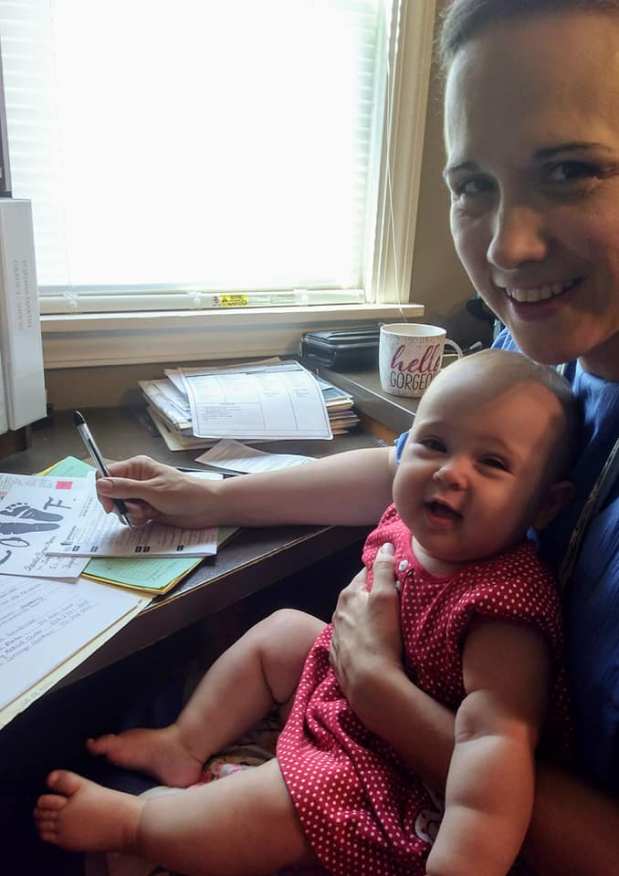
Baby Tirzah helping Mommy do office work!

Are you looking into the possibility of working with a midwife, and trying to decide if it’s the right choice for you? If you’re blessed to live in an area with several options, it can be a great idea to take the time to “interview” each one, and see which one feels like the best fit for you and your family. Most midwives (myself included) offer free consultations that can give you a chance to sit down and ask your questions in person, and this can be a great opportunity to explore whether or not you and this care provider will be a “good fit”.

While I think it’s a good idea to look into your options for ANY medical provider, it can be especially important when thinking about a homebirth. Your midwife will be coming into your space, and you want both yourself and your husband to feel completely comfortable with this person, which facilitates clear & open communication, thus providing you with the best care possible. So besides some specific questions (which we’ll get to below!), also think about the intuitive side of how you connect and communicate throughout the interview. Another important component in this interview is dad’s perspective, so whenever possible please have him attend this initial consult, as this can give him the opportunity to ask questions he might have, and help establish a good working relationship from the beginning.

There are many posts out there that cover long lists of questions, but I want to get you started by giving you a few basic questions, which might bring up more as you go along. It’s a good idea, too, to do your own research before you meet with a perspective midwife. For instance, does she have a Facebook page or website? Are there reviews you can read by previous clients? Is there information listed about the types of services she offers, or things that set her apart from other options in your area? What type of credentialing/training does she have? Do the philosophies expressed on her website correspond with what you are looking for? Do what you can to find out as much as possible before meeting up, as this will enable you to get the most information out of your time together, and may raise specific questions that you might have missed otherwise. It will also keep you from wasting time that you could be spending looking into other options!

So let’s get started:

  1. What kind of training did you go through to become a midwife?

Some midwives have attended midwifery school, others have been trained strictly through apprenticeships. Some midwives have credentials that indicate a certain level of training, and require a stated number of continuing education hours to be maintained. There are midwives who have gone through rigorous school programs and have delivered few babies outside of the hospital, and others who have done minimal studies and have only delivered babies at home. This question is not meant to dictate which type of training and educational experience is best, but rather to help you think through whether the training this midwife has received is adequate for your own comfort and safety concerns and desired birth location.

  1. How would you describe your style during labor & delivery? Hands-on or hands-off?

Depending on your preferences, this may help you determine if you can work together well. If you know you want someone very involved, or you want to be left alone as much as possible, the midwife’s answer may shed some light on how her style could affect your labor. Some midwives are very good at adapting to their client’s wishes, and some have their own set way they want to see things happen.

  1. What do you provide or include in your services, and what will be my responsibility?

Depending upon your state, local regulations and/or your community options, a midwife’s care package may include the ability to obtain lab work and/or ultrasounds or refer you to providers for these items, or you may be responsible to figure these things out for yourself. Some midwives include a “birth kit” as part of their package, while others ask clients to purchase this separately. A birth pool is included in some midwives care bundle, while others provide options for rental. Some midwives are able to give your baby vitamin K or provide mom with RhoGam if needed, while others need you to get these items from your pediatrician if you want them. Most midwives are able to file the needed paperwork to obtain a birth certificate and social security number, while there are a few who need you to do this legwork. Asking clear questions and getting an idea of what is and isn’t included will hopefully eliminate unmet expectations and surprise expenses as you continue through your pregnancy!

4. What tests & procedures do you routinely offer, and am I given the freedom to decline when I prefer?

It’s great when your midwife is willing to discuss the pros and cons of different tests and procedures, and allows you to make a true informed choice on each of these. Depending on the political environment, local standards of care, protocols, etc the midwife may have more or less freedom in these areas, or she may have personal preferences as to certain tests.

  1. What are some of your recommended resources for pregnancy and for birth preparation?         

This question may give you some insight into the birth philosophies the midwife has, as well as indicate how in-touch she may be with more up-to-date resources and educational material. Some books and resources are old classics, but there is also a wealth of more recent publications that can help you to be prepared. Are her health suggestions in line with your perspective and preferences? Does she require certain books to be read or DVD’s to be watched? Does she provide some resources for clients, or are you expected to purchase certain materials? Does she encourage a parenting style or lifestyle that you may be uncomfortable with, or that you find helpful?

  1. What is her client load typically, and what happens if two mamas are in labor at the same time?

While this doesn’t happen often, it does occasionally, and it’s a good thing to discuss. This question will reveal what sort of back-up plan the midwife does or doesn’t have, and will give you some indication with how well she works with the midwifery community around her. It also helps you to think about the “what-if’s”, since birth can’t always be controlled like we wish!

  1. What do you see as your role during labor, and would you encourage me to hire a doula?

It’s great if a prospective midwife can be honest about the support she can provide. Some midwives operate with a large team or a small client load that allows them to spend more time coaching and supporting a mom throughout labor. Most midwives are glad to support in whatever way they can once you’re in active labor, but they need to conserve their resources so that they have the energy and alertness they need for the time of birth, which means that if you really want hours of support early on, you’d probably be best served by considering a doula. This question can help you determine what the midwife’s expectations are for when she would come to you, and what sort of support you can expect, and will help you to define the role she would see herself filling at your labor.

  1. What are some of the reasons I would be risked out of care?

This gives you an idea of the midwives range of comfort, and whether she takes a more cautious or more relaxed approach. Each approach has it’s place, but you need an approach that makes you feel most comfortable and safe. It’s also good to remember that each midwife should only operate within a realm that they truly feel is providing safe care, so this is not a “good vs. bad” topic, rather a way to understand and communicate. Is this midwife comfortable with breech delivery? With a mom that goes past 42 weeks? With a baby that decides to come before 37 weeks? Continuing if gestational diabetes develops?

  1. What happens if I need to transfer care for some reason?

Does the midwife typically accompany clients to the hospital, or send them in by themselves? Does she have a doctor she works with, or a preferred hospital? Why or why not?

  1. How do you handle emergencies, and which ones have you encountered the most often?

This question will give you some insight into the midwife’s perspective: does she rely only on herbal remedies? Does she carry medications? Is she trained in NRP? Does she take a proactive approach to prevention? Does she see many emergencies? The answer may vary according to your area, too, as some incidents of complications can depend upon the clientele and area the midwife works in.

I hope this list can help you as you think through what is most important to cover as you interview your potential midwife! If you find it helpful, or if you have other questions you think should be added, I’d love to hear from you. Feel free to comment below, and be sure to share this list with others that might be looking into hiring a midwife for their maternity care!
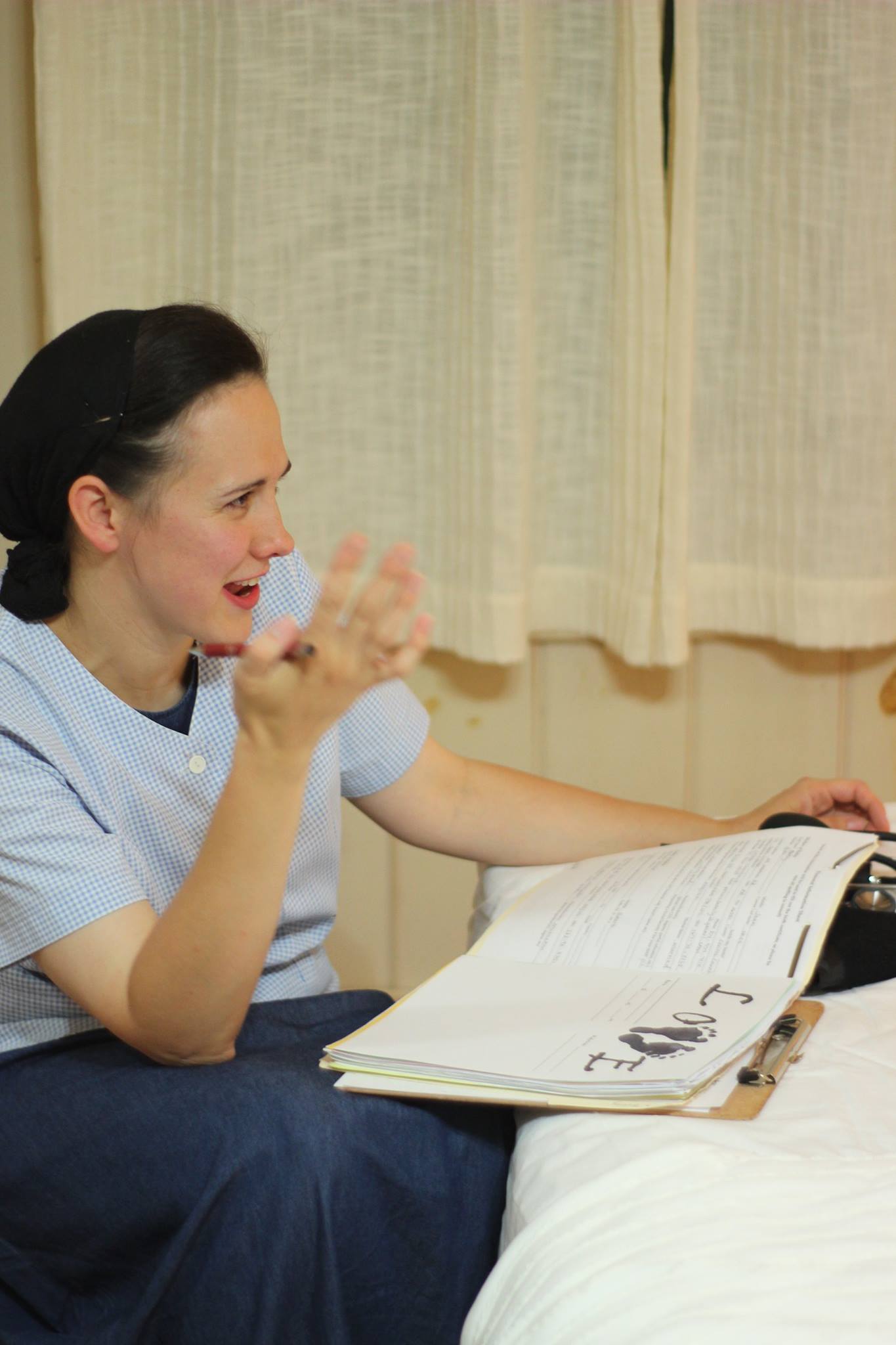
answering questions after a birth…
End of Year Update for 2020!

End of Year Update for 2020!

Some highlights of the year!

Dear friends and clients of Gentle Delivery,                                                

      As 2020 comes to a close, I am reminded of the fact that we really do not know what the next day or year will hold. Last year at this time our family was anticipating the arrival of our fifth child, little knowing how many strange twists and turns the New Year would bring to everyone all over the world. I am grateful to rest in the confidence that nothing takes God by surprise, and that He cares about the details of our lives, which provides strength & courage to press ahead into the future!

       After adding baby Tirzah to our family last December, I enjoyed a lengthy maternity leave, and felt so blessed and cared for during those first postpartum weeks. Thanks to many of you for your part in this! It’s true that you learn some things by experience that you couldn’t learn through academic study, and I am more committed than ever to encouraging moms to get adequate rest, adjust expectations, and take the time to really recuperate during those first postpartum weeks. It really is worth it! This baby has been our most contented, too, and while there are many things that probably play into this, one key factor that seemed to make a difference was the addition of infant probiotics into her daily routine from the very beginning. If you have struggled with fussiness in your baby, please take a minute to check out the blog post I wrote where I detailed this information—I really want to see more families benefit from my own challenging experiences!

            As you can imagine, the COVID pandemic has affected midwifery in more ways than one. After the initial quarantine I have been doing prenatal and postpartum care visits for local clients in their homes, as it reduces the exposure for those coming in and out of my home office. I’ve also had more inquiries into homebirth this year than ever before, as many families are concerned about hospital restrictions and germ exposure. Between this added level of interest in midwifery care and my added family responsibilities, I have needed to limit the distance I can travel for births, which has meant turning down requests in outlying areas even for a few clients I’ve worked with before.  

            One fun aspect of care this year has been the large amount of repeat clients I’ve been privileged to serve! It was really special to catch my first “fourth baby” for a family, and have the opportunity to see babies that I have caught in years past welcoming baby siblings. With one more 2020 baby left to go, the current stats for the biggest baby this year was 8#14oz, and the smallest was 5#14oz. The earliest baby came around 2 weeks early, and the latest was almost 2 weeks late, which goes to show that there is much variation in the range of “normal”. Assisting my back-up midwife with the home delivery of twins was another extra-special experience this year! Speaking of my back-up midwife, I am grateful to have the assistance of RoseMarie Spicher to care for clients when I am unavailable, and I’ve been glad to have a working relationship with a community of midwives in the general area who have all needed to pull together to cover for each other at times due to COVID exposure or for other reasons. I’m also excited to be working regularly again with Lynelle, as she plans to attend births as my assistant this next year after taking some time off to welcome her own baby this past summer.       

            Heading into 2021, I’m anticipating meeting many sweet babies, and I’m enjoying making new connections with many families who are choosing midwifery care and homebirth options for the first time. I continue to feel a sense of gratefulness towards each of you for giving me the privilege of working with your family as you journey through this intimate season of life. It truly is a gift to witness the miracle of birth and the wonder of that first cry, and the wonder of that moment never grows old!

            As I close, I also want to thank my family for their support as I do this work, and in particular thank my husband as he quickly and competently cares for our home and children during my random absences. It takes a special family to deal with the unpredictable aspects of having a midwife for a wife and mother, and I’m grateful for all they do behind the scenes to make this option available to the families I serve. It’s a joint effort, and I could not do what I do without Joel’s encouragement and work behind the scenes.

            May God bless you and your family throughout this next year!

           ~Kelsey Martin/Gentle Delivery Midwifery

Be sure to regularly check out this blog and the facebook page to stay updated on current news, helpful information, health suggestions, birth stories, and announcement of special events. I’m really hoping that playdates can resume again sometime in 2021!

2019 Year End Update

2019 Year End Update

img_3054.jpgDear Friends & Clients of Gentle Delivery,

As we come to the end of the year, I have to think about how blessed I have been to work with so many families during 2019 and to experience the special privilege of being involved as you welcome new life into your homes and families. Thank you for allowing me the opportunity to participate in these sacred times!

I’m also grateful for the women who have served alongside me as assistants.  Due to a variety of reasons (maternity leave, relocation, etc.) there were a number of faces to the assistant role, and I am thankful for each one! I also enjoyed getting to involve several students who were completing their requirements for certification, and I’m grateful for those of you who allowed these young ladies to participate in your care. A big thank you to Kristina, Marcile, Hannah, and Lynelle, as well as to my back-up midwife, RoseMarie, whose willingness to cover several times made it possible for me to enjoy some quality away-time with my own little family throughout the year.

It’s always fascinating to see how a year plays out and the variety that it can contain. Baby sizes ranged from 6lb 10oz up to almost 9 lb. Families served were expecting everything from baby #2 to baby #7, and I especially enjoyed serving several families for the second and third times-it’s special to be able to work with families for multiple pregnancies, and to see the older babies growing up! As usual, there were fast births (one little lady didn’t wait for me to arrive!) and those who took their time, and smooth pregnancies & births as well as those who experienced numerous complications—we were so thankful to see God answer specific prayers for the health of these moms & babies who are all thriving and doing well now.

IMG_20191112_111510082

One of our recent playdates!

I’ve enjoyed the opportunity to continue connecting with clients during our quarterly playdates throughout this past year. If you haven’t joined us, please consider it! You can watch the Facebook page for updates, or email me to be put on the update list. It’s a great way to stay in touch and meet other moms and homebirth babies who are in similar stages of life!

My own family is doing well, and the children are growing up so quickly, making us want to treasure this time we have while they are young. The biggest event in our lives this year was welcoming Tirzah Raquel into our home on December 14! Once she IMG_0933decided to make her appearance she came quickly, and we were once again thankful for Lynelle’s help as there was no way our midwife could arrive in time. I had really hoped to try using the birth pool this time, and was so grateful for how this helped the intensity! (I’ll post her birth story on the website sometime this next year, so be sure to follow so you get the notification, or watch the Facebook page!) We are thoroughly enjoying time to relax and recover as we adjust to adding a fifth child, and our older children are thoroughly smitten with her. It’s so special to see how much they love having a baby sister to snuggle and love on.

IMG_2695    As 2020 begins, I’ll be taking some time off call to concentrate on my own newborn, and to do some traveling as a family. But I’m already looking forward to the anticipated arrival of babies as we head towards the summer months. In closing, thanks again for your support, and blessings as you head into the New Year!
~ Kelsey Martin for Gentle Delivery Midwifery Services

“The First Birth”: A Story from 18 Years Ago

“The First Birth”: A Story from 18 Years Ago

Not the baby featured in this story, but another baby born early on in my training!

From the time I was young (8 years old or so!), I had an interest in midwifery. I’m sure it stemmed from the fact that my mother used midwives for her pregnancies and the births of my five younger siblings, which gave me exposure to this “alternative” type of care. This was back in the day when having babies at home was NOT the popular, photographed and blogged about way to have your baby as it has become today! The midwives that cared for my mother seemed like an extension of our family, and as a young girl growing up, they were certainly some of my heroes that I wanted to become like when I “grew up”.

I think I was about 14 when I seriously felt like midwifery was something I wanted to pursue. Still very young and extremely inexperienced…with no idea what all this profession entails! I had read lots of missionary biographies, and a common experience in most of them included helping in some way (either unexpectedly or because they were prepared!) in childbirth in various countries.  So it seemed to my 14-yr-old mind that this was certainly a skill that would be good to know, and I pictured myself helping women in some far-off jungle or desert clinic someday. As I got older, I continued to feel a major pull towards midwifery that wouldn’t go away.

By the time I was 16, I was convinced this is what I needed to start pursuing. My parents wisely recommend that I begin by doing some reading, and they told me that they thought I should probably try to attend a few births before diving in head-first in a midwifery study program. Their reasoning was that perhaps this was just a passing whim, and why sink all sorts of time, energy and money into something only to find out that I would faint at the sight of blood, or have some other sort of aversion to what all comes with the birth territory. This is no joke. I personally know people who were SURE midwifery was what they wanted to do, but when they faced the nitty gritty, it didn’t take long to realize that it wasn’t their calling after all!

So, the next question was how on earth was I going to get any birth experience in, seeing as I was so young and inexperienced?!? I figured I would have to wait years for the opportunity, though I was reminded that if God wanted it to happen, He could figure out a way. That’s what makes my first birth experience so special-it was completely unexpected!

The summer that I was to turn 17 found me helping several families out on a weekly basis, going in to care for children, clean, cook, or do whatever was needed as a mother’s helper. One family was expecting their fourth child that summer, and they were excitedly planning their first homebirth in our state. Seeing as they had several young children, and that I had been spending a lot of time with them over a number of months, they asked if I would be on call to come and help babysit when the mom went into labor. This was the plan, with a backup plan being set where the children could go to a neighbor family’s home if the mom decided she could relax better without children in the house.

So one hot (Kansas is REALLY hot in July!) day, I got a call that the mom was in early labor, and that they would be glad if I could come care for the children so she could concentrate on resting and relaxing. I went over and made supper, took care of some household things, and entertained the children so mom and dad could focus together. An hour or so after supper, the mom decided that she would prefer the children leave the house, which left me thinking that I should probably go since my job was done. But the mom looked at me and said “I want the children to go, but you are to stay. I don’t want you going anywhere.” I sure wasn’t going to argue with that! She then went on to tell me that she wanted me to rub her back “just so” while her husband finished setting up the birth supplies and called the midwives, which I was more than happy to do. All of a sudden things kicked right in, and I vividly remember both parents bemoaning the fact that they hadn’t studied better on how to catch a baby if the midwife didn’t make it! I was blissfully ignorant, as I was only aware of my own mother’s very long labors, and figured we still had a very long night ahead of us. Little did I know!

I continued my “job” applying back counter-pressure as dad set up birth supplies, sweated nervously as he watched the signs of his wife progressing rapidly, read his childbirth class manual, and gave his wife emotional support. Thankfully, the midwives arrived just as mom started feeling more pressure, and all the last details were quickly set up and ready to go. About half an hour after the midwives arrived, a beautiful, howling, red little boy made his safe and smooth appearance, and I was in awe. I had no idea birth could be this beautiful, and I was so very, very grateful for the amazing opportunity. I was flying pretty high for days after this experience, and as you can imagine, I was totally convinced that this was what I wanted to do.

What is really hard to believe is that this baby will turn 18 this summer…I cannot believe that time has flown, and this many years have passed. After this first birth, I attended random births that I was invited to (word started getting around that I was interested, and some very sweet, very brave women invited me to share in their experiences, for which I will always be grateful!), and eventually began midwifery school when God opened the doors. It’s now been over 10 years since I graduated and started my own practice, and I continue to be thankful for those who initially helped me to start down this path by allowing me to be present at such personal, private life events.  As I continue to reflect back on memories and celebrate 10 years of practice, I want to especially thank each of you moms and midwives who took this very young girl under their wing and gave her experiences that will last a lifetime!

I’m so privileged to be involved in this work of ushering life into the world!

Midwifery and Mom Life: 10 Year Anniversary Interview ~ Part 2

Midwifery and Mom Life: 10 Year Anniversary Interview ~ Part 2

IMG_20180215_135835185-001


Interview: 10 Year Anniversary of Gentle Delivery ~ Part 2

Thanks again to each of you who contributed questions for this “virtual interview” as Gentle Delivery celebrates 10 years of practice! I’ve enjoyed this opportunity to connect with various readers, and I’ve loved hearing from so many of you. If you missed the first post, you can check it out here.  Here is installment two as I continue working my way through the questions entered:

How do you manage being a midwife and a mom?

Sometimes I’m not sure that I do! But seriously, it comes down to having a very supportive and involved husband. I could not do it without his help & support, and without him having a flexible job. He works from home, and generally speaking is able to set his own schedule. Without these key factors, I don’t think it would be possible. We both feel strongly that our children need to be our priority, especially while they are in their young, formative years, and Joel’s job situation allows us to almost always have one parent present. If I need to run off to a birth or client emergency, than Joel changes his schedule for the day and takes care of the children, which greatly simplifies my life! I honestly do not know how midwives serve year after year with a busy client load combined with stress of needing to figure out babysitting, especially at the last minute. A few months ago, I was called to cover for another midwife who had two moms in labor at once, and the second mom was moving fast. Without having the ability to just load up the car with my gear and run, I would have missed the birth! But since Joel was working from home (his office in our basement), I was able to be out the door in ten minutes, and he took over managing the children. His work-from-home arrangement also allows me to sleep in after a birth, and he will sweetly get children up, feed them breakfast, and care for things while I get some rest.

WP_20160314_003

Hot breakfast made by Joel and snuggles with the baby after being gone all night at a birth!

There are also some practical ways we have found that help to maintain balance, as well. As much as I am able to, I schedule appointments during my youngest children’s nap times, and I try to keep appointments confined to one day each week. This way I am limiting the amount of scheduled time I need to spend away from my children, especially since I never know how much unscheduled time I will be away at actual labors/births/emergencies. Another practicality is hiring cleaning help during especially busy months. My husband maintains that if I’m enjoying midwifery work and getting paid for it, then I might as well pay to get some of my other work done, instead of getting exhausted and stressed out! Oftentimes after a birth we will purchase supper (or take the family out) as a way to get some quality family time AND as a way to provide me with some extra time to do paperwork and miscellaneous business projects. I also get help with school, which is HUGE! My school-age children are part of a hybrid model co-op, where the parents help to teach classes, but they also have a classroom teacher who covers the “basics” and stays on top of the school details. If I was homeschooling full-time there would be NO WAY to do midwifery on top of it.

2015-06-032

Each of my children have attended births with me as babies…quite the adventures we’ve shared together!

Balancing midwifery and mom life includes another factor when I have a nursing infant myself. Whenever I interview with potential clients who would be due after I have a baby, I make it clear that if you hire me, you’re also getting my baby.  I always have an assistant or specific helper along who can care for my baby whenever I need to focus all energies on the laboring mom (and who needs a baby crying in the background when they are ready to push?!?), but otherwise I keep my tiny ones close so they can nurse and be with mama as much as possible. Some families are not okay with this arrangement, and that is their choice. I would much prefer they know what to expect ahead of time, and decide if they are comfortable with my boundaries, are there are always other options out there for them to consider!

One more key factor has been working with a midwife who is willing to trade call at times, which provides me with occasional time off to take trips and spend some focused time with my family. Without this arrangement, I would be tied to my phone and location almost 24/7 all year round! But this has allowed me to still spend some quality time making memories with my children, while knowing that clients are cared for, which is a tremendous blessing. While I still try my best to make it to my clients births, it’s also a relief to know that I can go “off call” occasionally for special events such as a school program.

Downloads9

Twice I’ve caught babies just before delivering my own…one time a week before, and another time two days before!

 Is it realistic to consider being trained as a midwife, and starting your own practice as a midwife, with small children? What advice would you give?

This is a good question that deserves considerable thought. I had the opportunity to do my midwifery training when I was single, which was ideal. In my opinion, training to be a midwife was decidedly more of a time and energy commitment than practicing as a midwife. Here’s the reason why: when you are training, you need LOTS of experience. You need to be able to be completely available to your preceptor midwife, and willing to take advantage of every opportunity you can be part of. The only way to get the experience you need to be a good, safe midwife is by spending an incredible amount of time immersing yourself in pregnancy, birth, postpartum and women’s health. There are a number of midwives who did this training while they were balancing a family, but it is HARD, and you need to be prepared that it will take a long time. As a single young woman, I had the flexibility of time & energy which enabled me to finish my studies and obtain my required clinical experience in about two years. But this included spending 18 months at a birth center where we literally immersed ourselves in the world of birth by living, speaking, and breathing everything birth related. Seriously! I don’t remember a day passing that didn’t include a significant discussion about something to do with an ongoing client situation, lab values, birth stories, complications, etc.  This type of immersion would have been impossible had I been trying to spend time with family, and it certainly sped up the training process.

Now that I am an independent midwife, I can make my own decisions about how many clients to take on in a month, what risks I am comfortable with, what my parameters of practice will be (for instance, when I do prenatal appointments, or what seasons I may not be available for first time moms), and when I want to take personal time off to give my family some breathing space. In most apprenticeships, a supervising midwife counts on a student midwife to be available whenever needed, and the student cannot set these types of parameters and still get the training she needs along with keeping a good preceptor/student relationship. So these factors all need to be considered, and I think there needs to be some serious conversation with your husband and family about whether your family is at a good place to make the sacrifices that training would require. I don’t think one will ever regret spending quality time with her children while they are young, but you might regret not spending that time later on!

I would encourage any young mom interested in midwifery to read as much as you can, as learning more about your body and about the birth process is going to be beneficial no matter what. There are excellent books out there that can lay a great foundation of knowledge about how the pregnancy and birth process works. Watch videos & documentaries, read birth stories, connect with other moms and learn about their birth experiences. Look for opportunities to get involved on a small scale. Perhaps you’d be able to provide doula services for a friend, which would give you and your family the opportunity to experience what it is like to live an “on call” lifestyle (ready for mom to leave at any time day or night!), seeing how it works to have mom leave and how to figure out babysitting fast. This would give you a chance to see what this aspect of being involved in birth can be like. I don’t think any birth experience is wasted time, especially if you’re hoping to be a midwife, so slowly looking for opportunities and taking advantage of them as doors open can help as you consider further commitment. Always remember that if God wants to be a midwife, He will make a way for you…but in His timing, and in a way that it will be a blessing to your family. Be patient, pursue the small opportunities as they arise, and see how He directs as time goes on…one older midwife told me once that “women will always be having babies, but you won’t always have young children, so make sure you don’t regret not enjoying them while you have them.” Excellent advice!

I’d also recommend that any aspiring midwife read A Midwife in Amish Country, as Kim does an excellent job of detailing her experience training to become a midwife as a homeschooling mom of young children, relating her experiences and lessons along the way.

How many births do you take on, and why that many?

This really ties in with the whole mom/midwife balance topic, as this is another way we try to walk this line. As a general rule, I cap a month with two due clients. Occasionally I will take on a third, if my family is at a stage where this is more possible, and if I have a slower month before or after. As a mom approaches her due date, her prenatal visits need to take place more frequently, resulting in more mamas needing to be seen each week. Then you factor in a home visit (an additional afternoon besides my usual appointment day), the birth (for anywhere from 3-30 hours), birth paperwork, another visit to their home for a postpartum check, and the frequent contact via phone/text/email that takes place over this time, doing this more than twice a month in additional to caring for other moms is about what I can do and still enjoy my work. Here again, if I didn’t have young children, and all the unexpected things that factor into life as you care for little people, it would be much easier to add more clients due in a month. But I want to enjoy both my own children and the opportunity to do births, and this number seems to be working well for this stage in life!IMG_0031

Thanks for taking the time to read this second installment in this interview series! If you’d like to contribute a question for a future post, feel free to add it in the comments below. As always, thanks for sharing, and feel free to check out Part One if you haven’t read it yet. See you next month!

Interview: 10 Year Anniversary of Gentle Delivery, Part 1

Interview: 10 Year Anniversary of Gentle Delivery, Part 1

dsc_3446

The year 2019 marks ten years since I started my practice as a midwife, after having spent several years studying, training and preparing to serve families in this way. I still remember the excitement of catching my first baby as a graduate midwife in January of 2009, after having moved home from TX (where I completed my academic training & clinical experiences here in Dec. 2008), and I cannot believe how quickly ten years have passed! Since that birth, I have been privileged to catch babies and care for moms & families in four different states, I’ve moved crossed country, married, and have had four babies of my own. All of this has certainly helped to mold, shape and broaden my experiences and skills, and I am so very grateful to each of the families I have been privileged to work with.

In honor of reaching 10 years, I thought it would be fun to see what questions some of you might have, and I was delighted by the questions that were thrown out on the Gentle Delivery Facebook Page. Here is Part One of a series in which I’ll start answering these questions…and I would love to hear yours, so if you haven’t left a question yet, feel free to do so below in the comments!

  • How and why did you get started in the field?

The “how” is the fault of my mother, who pursued homebirth after two negative hospital experiences, back when birthing at home was not such a popular idea. After her first birth at home with midwives, she went on to use them for care with the rest of my siblings (there are 7 of us!), and I grew up with the idea that having babies at home is a normal experience, and much preferred over the standard hospital setting! The midwives became close family friends, and were certainly heroes one would aspire to be like, in the eyes of a 7 to 14 year old girl growing up watching these women serve, care for and love on our family.

img_20190131_094356109

My 11# 8 oz cousin!

The “why” part is two-fold: one, I had a dream of serving God on the mission field somewhere, and thought that having a skill to offer would be an amazing way to connect with and become friends with women, while hoping to make a difference in an area where women were at high risk during pregnancy & birth. I was interested in pursuing midwifery with this dream/idea in mind, and several friends and relatives knew of this interest. My dear aunt then invited me to be present at the birth of her son, and I still treasure the memories of the time I spent with her and my uncle while we waited on my cousin to make his appearance. This not-so-little cousin of mine still tops the record as the largest baby I’ve ever witnessed being born, and it required a great amount of skill on the part of the attending midwife to not only deliver him, but also to help him breathe and recover from his rocky transition. While this was not your typical smooth, low-complication normal birth, I learned a tremendous lesson through this experience: a skilled midwife can make a difference between life & death, and that this is a serious responsibility to consider. After this birth, the thought that kept playing in my head was that I never wanted to be in a situation surrounding birth and wish I had learned what to do to help. It also helped to solidify that this was something I wanted to pursue, but it also gave me the reality check I needed as I began.

In light of the fact that my original dream was to work with women in another country without access to good maternity care, I do find it a bit humorous how God has taken me down a completely different path as I serve women in a very prosperous, beautiful little university town in Central Pennsylvania!

  • What changed in your approach / practice as a midwife from before you had children to after you experienced birth first-hand?

This is a good question! I find that I have a totally different perspective on the intensity of labor…there were times I seriously wondered if I could actually do it when I was in labor myself, and experiencing that has certainly helped me to understand what moms are going through. I also don’t look down on anyone for getting an epidural after experiencing labor myself! Before I had children, it was like “why would you do that?!? Don’t you know the side effects??” but once I was in labor I totally understood why that option would be considered! I’ve also found myself trying to be more sensitive to each mom’s individual preferences, spoken or unspoken, as I found out in my own labor that just because someone thinks they are helping, it’s not always the case. I think it’s helped to soften my opinions, too, as I’ve realized on a different level how many things are actually outside of our control. For instance, while not specifically about birth, I always thought that any mom could nurse if she tried hard enough. Well, I learned the hard way that trying hard isn’t always enough, and nursing has been a complete battle for me, which has taught me that each mom must figure out what actually is right for her and her baby, and that might look different than what you anticipated. So maybe the simplest answer to this question is that it’s helped me to grow in empathy!

  • What is one “bucket list” experience you haven’t had yet but hope to in your midwife career (e.g. delivering triplets, delivering a breech birth, an en cual birth, etc.)?

4972_1163886411070_2868611_n

Newborn exam on a baby that I caught during my first year of practice.

To be honest, I don’t mind the un-eventful and un-exciting ones these days!  All midwives know that at some point they will attend a breech birth (usually a surprise baby that turns between that last appointment and birth, or when the head is mistaken for a butt), and I experienced my first surprise breech two years ago (I was called to cover for another midwife, so it was a REAL surprise!), so that one is off the “bucket list” with plenty of  gray hairs to prove it. I’ve missed several babies that didn’t want to wait for me to arrive (even if I was driving fast…my brother used to say he thought it would be fun to drive for midwives, so he’d have an excuse to drive FAST!), and I had the special privilege of catching twins & assisting with several sets. Two things I would love to witness yet would be an en-caul birth (I still haven’t had a baby born before the membranes have ruptured…though I’ve had plenty that ruptured JUST before birth, providing me with a shower of fluid!), and I’d like to top my current highest repeat client number of three babies for the same mama. One downside to moving across country (and then moving across several counties a few years later!) is that you don’t get to continue care with the mamas you might have started with. Up until recently, two had been the record I had been able to deliver for the same family, and I finally caught my third baby for the same family in 2018. If we can stay put long enough (and I can convince my clients to keep having babies-ha!), maybe that record will be higher eventually…though I’m guessing that not of all my clients want to help accommodate my wishes on that one!

So, after reading these, what are your questions?? Feel free to let me know, and stay tuned for Part Two of this 10 Year Anniversary Interview. Thanks for sharing & adding your comments!

2018 End-of-year Note

2018 End-of-year Note

Recent & current clients received this letter in December. I’m posting it here to keep readers and followers current with Gentle Delivery as we head into a New Year:

Dear past & present clients of Gentle Delivery,

Downloads6.jpg

Many of my #bornathome babies from 2018!

As the year draws to a close, I want to express my appreciation to each of you for allowing me to work beside you as you have welcomed new members to your family, or are anticipating new arrivals. It is such a privilege to be included in these beautiful times of life, and I am grateful to each of you for your continued trust and friendship.

In 2018 we welcomed many more boys than girls, with the smallest arrival being 7#1oz, and the biggest being 9#12oz. An interesting note is that about 75% of our babies were born in water this year! Lynelle continued to assist me with births this year, until she welcomed her own little boy in September. Since she has been taking a break, I’ve been grateful for the help of several other ladies including Kristina (who has been working with a local doula agency for some time) and Hannah, a midwifery student from the Lewisburg area. My latest birth was assisted by Rose, a long-time friend and soon-to-be licensed CNM!

I also continue to appreciate the help of my back-up midwife, Rose Marie. Having her available to cover when there is a special occasion, or being able to travel knowing that clients have someone local to call in case of emergency is a gift I don’t take for granted!

Downloads7.jpg

Thankful to have such an array of great assistants and back-ups!

Another new feature that I was excited to add this year was connecting with an actual insurance biller who specializes in billing for midwifery care. This will hopefully result in better coverage and faster payment for those wishing to utilize insurance. More info is available at Napier Midwifery Billing.

I’ve enjoyed seeing many of you at the playdates we held every few months! This has been a great way to connect other local homebirth-minded mamas, and will hopefully help to build relationships in the community. I hope to facilitate more of these throughout 2019, so stay tuned for details.

My own family continues to keep me busy, with my oldest two being in 1st & 2nd grade. They attend a small co-op type school each morning, and I’ve enjoyed spending time helping out with some classes there, too. The two preschoolers are trying their best to catch up to their older siblings! We enjoyed several family trips this year, and are trying to treasure this time while our children are little. My husband, Joel, continues to work full time for All-Nations Bible Translation, and he’s been busy this fall finishing up his graduate work online. I am thankful for his support and help in making midwifery work feasible, as without his flexible work schedule and willingness to babysit, there would be no way I could keep up with midwifery responsibilities!

I’m looking forward to meeting a number of new babies already in the new year, and it looks like 2019 will be a busy one! May your new year be blessed, and thanks again for your interest in midwifery and home birth options in Centre County and beyond!

IMG_1664 - Copy - Copy

The Martin Family – Fall 2018

The Return on Your Midwifery Investment

The Return on Your Midwifery Investment

KeoniThe beginning of October found us celebrating “National Midwifery Week”, and the posts on social media about midwives and the personal care that they provide to so many moms and families got me thinking about the investment that midwifery care requires, on the part of both midwives and clients. Of course, one of the biggest investments that clients make is the cost involved. Sadly, many insurance companies are not willing to cover the costs of midwifery care, especially when it comes to delivering at home. This means that families have to weigh the costs, and determine if they can afford care out-of-pocket.


Oftentimes, it is easy to see the price tag (midwives are good at giving you all the costs up front, so you know what you are paying for at the beginning!), and think that a midwife must be making pretty good money.  But I wonder, have you ever stopped to think about all the “hidden costs” that are involved with midwifery? It’s easy to think that the only time the midwife is investing is the time you are with her…your appointments, your birth (and maybe you’re one that has quick births, so it doesn’t seem like THAT much time!), and a handful of home and postpartum visits. In communication with other midwives, I have realized that many clients don’t realize all the “behind the scenes” time and costs that a midwife incurs in order to offer safe, up-to-date, competent  & individualized care to each of the families she serves. So here’s an attempt to help you realize how much you are actually receiving in return when you choose to invest in midwifery care:

  • TIME: and not just the time you see her for your appointments and birth. On average, I spend about a minimum of 20-24 hours total with a client in-person (8-10 prenatal visits, 3-4 postpartum visits, and the birth…and of course, this amount of hours can be much more than this depending upon many factors!). However, there

    IMG_20180813_070116134

    After-birth paperwork

    are many hours spent on each client that you don’t see: writing notes about your history and ongoing care, filing paperwork for records, birth certificates, & tests, research when clients have questions or develop issues, answering questions via email, text & phone, submitting reports when required, attending state-required conferences, creating handouts with updated information, and the list goes on…

  • ONGOING TRAINING: if you stop and think about it, you don’t want to trust your life and the life of your baby to someone who practiced something 10 years ago, but has never reviewed her training OR has not continued learning, right?? But ongoing training takes time & money, especially when it oftentimes requires traveling for classes. Maintaining current CPR, Neonatal Resuscitation Certification and accumulating the needed CEU’s to keep your NARM certification current, CPM re-certification fees, and regular peer reviews are all ongoing commitments and costs that a midwife must stay on top of.
  • COLLABORATING CARE & NETWORKING: When a client develops a complication the requires more medical intervention, it can take a number of hours to locate medical professionals willing to see them, copy and fax records, contact the proper offices, and obtain referrals.
  • COMMUNITY RELATIONSHIPS: Another aspect of good midwifery care that is oftentimes overlooked is that of having good relationships with the local midwifery community. In order to have back-up arrangements (both for planned trips AND for unpredictable emergencies, which will occur at some point in a midwife’s career), a midwife MUST have a solid relationship with other midwives, and facilitating these relationships doesn’t just happen. Another aspect of community relationships is the side of the local medical community. To facilitate good transports when needed, a midwife needs to have a good relationship with local care providers.

    IMG_9783

    Grateful to have good relationships with my back-up and colleague, Rose Marie!

    This translates into taking the time for peer reviews, staff meetings, staying up to date on local situations and politics, taking the time take thank you gifts and notes personally when services are received, and so much more. Having a positive relationship with local hospitals and doctors translates into better, quality care for clients, so it is a very worthwhile investment of the midwife’s time and energy.

  • OFFICE FEES: These costs are more obvious, but real nonetheless. You want to be able to reach your midwife anytime, ASAP, right? So she must maintain cellphone service and a working phone. Then there is the fax service that most medical offices require for sending/receiving medical records. Internet for research, copier for providing records for other medical providers & clients, ability to print forms, handouts, etc. I might also add that most midwives are doing all of their own office work, too, so time to order supplies, keep track of bills, payments, answer inquiries and all the paperwork that is required to run a business has to happen at some point!
  • EQUIPMENT & SUPPLIES: quality equipment must be purchased and maintained in order to provide excellent, safe care. Dopplers, birth stools, testing machines, ability to sterilize instruments, repair of equipment when needed…all of these go into maintaining a midwife’s supplies.

    IMG_9706

    Birth supplies ready during a labor

    Medications also need to be purchased in order to always have them on hand (even if you don’t use them frequently, you want your midwife to have them-and many of these items are not cheap!). Keeping emergency supplies to deal with the unexpected is also a real cost, as these things need to be keep up-to-date, which mean some items need to be purchased regularly, whether they are consumed or not.

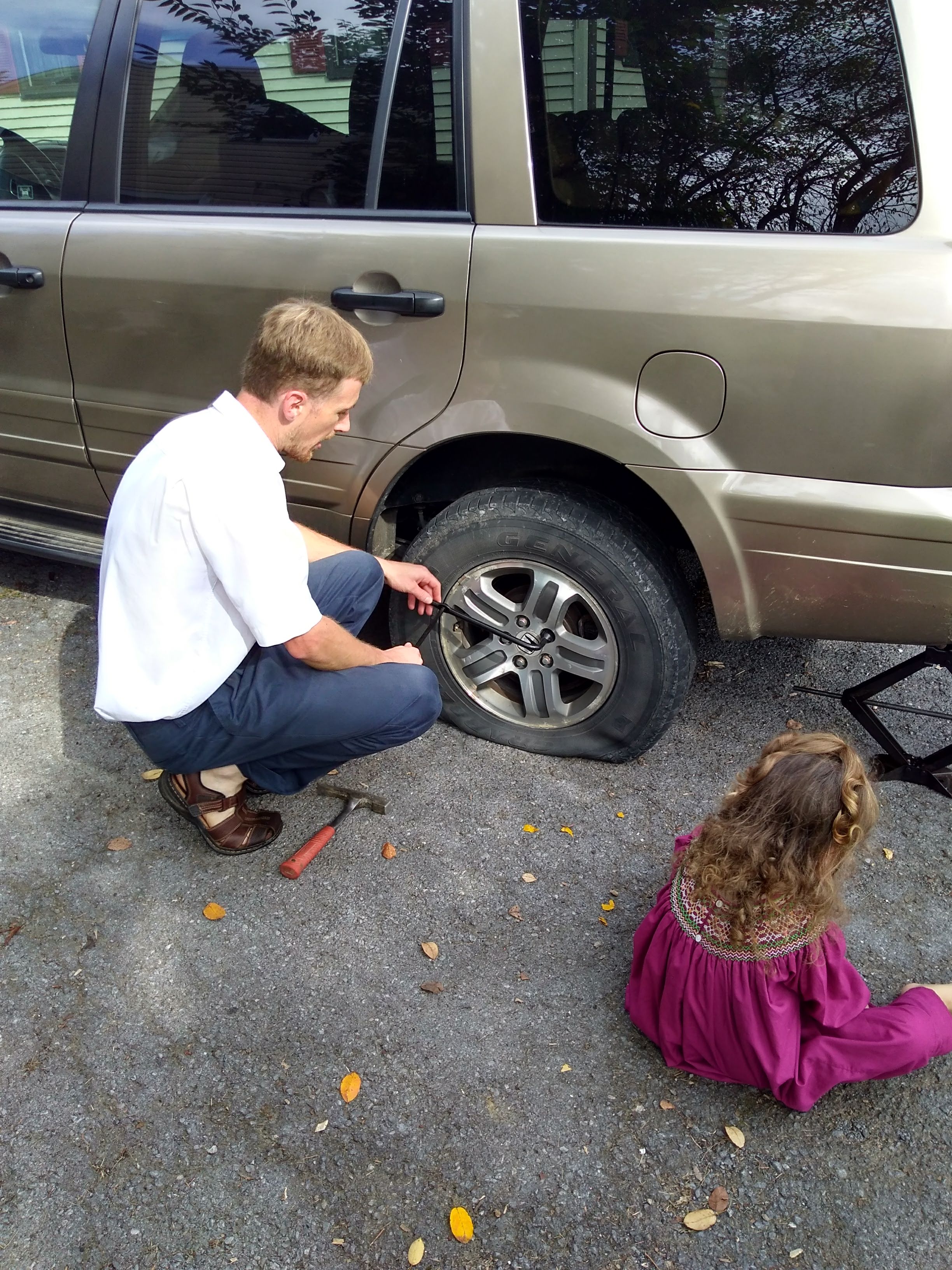
  • RELIABLE TRANSPORTATION: You want your midwife to be able to get to you anytime…which means she needs a reliable vehicle in working order. Just last month we replaced all the tires on our vehicles, as my husband felt they were getting too thin to count on them during the winter weather. We also pay more to run an AWD vehicle as we have lots of snow & ice in PA. A midwife always needs to keep her gas tank full, and regular maintenance is a must.

    IMG_20180902_095323117_HDR

    A flat tire meant new tires for the vehicle had to be purchased ASAP!

    Oftentimes a midwife will routinely drive a separate vehicle to events in order to be able to leave at a moment’s notice, instead of driving with friends or family. This is additional expense she must pay for!

  • HOME & FAMILY COSTS: Another aspect of midwifery life, especially if your midwife has a family, is that of having reliable and available babysitting at a moment’s notice. Meals that can be prepared quickly, or household help during times when mom has missed lots of sleep attending births are also very real costs. A family certainly must work together in order to let mama help other families, and I am blessed to have this type of support from my husband and family. But we do pay for it-bringing in food/eating out at times and getting regular cleaning help are two ways our family has made midwifery life sustainable.
  • ON CALL STRAIN: The last item I will mention on this post is the physical, emotional and mental strain of being on-call. While most midwives stay in this field because they genuinely love serving families as they bring their babies into the world, there is the very real downside of always being on-call. If a midwife has a small, independent practice, this generally means that she is the one who always answers the phone unless she has arranged back-up. No matter how much you love what you do, there is a toll that it takes on your body to always be available. You honestly never know when the phone will ring, and you will need to totally re-arrange your plans and be ready for whatever is at hand, day or night. Most midwives’ friends get used to all plans being made with the contingency of “unless I’m at a birth”, but the honest fact is that sometimes it’s not a birth. Sometimes a client has an emergency right when you’re in the middle of a much-anticipated event, or right as you closed your eyes after being up for 40 hours, or…you name it! I’m not sure how one can put a price tag on this aspect, but it’s well worth whatever your midwife charges!

My hope is that this post can encourage families that they are making a wise investment when they utilize midwifery services, and perhaps give you a greater appreciation for all your midwife is doing to ensure that you receive quality, informative, excellent care. I’d love to hear your thoughts as you’ve read through this. If you’re a midwife, what would you add to this list (I know I haven’t covered everything!)? If you are a client who has benefited from midwifery care, what would you add or comment? Did any of these factors surprise you? Thanks for sharing your comments!

New Resources to Help You Achieve a Healthy Pregnancy, Lovely Birth & Successful Postpartum Recovery!

New Resources to Help You Achieve a Healthy Pregnancy, Lovely Birth & Successful Postpartum Recovery!

IMG_0015

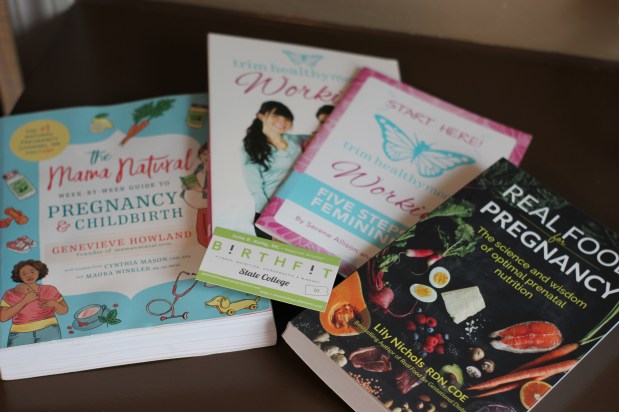
Some of the resources featured in this post

Hoping for a Healthy Pregnancy, Lovely Birth & Successful Postpartum Recovery? Here’s some resources to get started!

**Note, I am NOT affiliated with ANY of these resources, and I do not receive any financial gain or otherwise for promoting these products!**

As you might know, I love trying to stay up-to-date on current research and information about having a healthy pregnancy and postpartum recovery. I really want to be able to give clients good, solid information, and help them to achieve their desires for a low-risk pregnancy, beautiful birth, and end up with a supported, successful period of postpartum recovery. None of these things just happen, though. It takes concerted effort on the part of mom and her support team, and having some quality resources available to you can make all the difference in the world to achieving these goals!

These days, there are so many resources available, that it’s often hard to know where to start. And so many places have conflicting information, which only adds to the confusion about who to believe, and what is actual fact. Between blogs, articles, mommy boards, books and free advice, you might be wondering just where to concentrate your efforts in getting some basic information.

I have been so delighted to be made aware of some great resources that are available, and the purpose of this post is to introduce you to a few of these. This is by no means an exhaustive list, so if you have more resources to suggest, please add them in the comments so we can all learn from each other!

Nutrition:

This is a MUST READ for all pregnant women, and anyone even thinking about having a baby. Optimal nutrition starts now, and builds a foundation for a healthy mom and healthy baby. Real Food for Pregnancy: The Science & Wisdom of Optimal Prenatal Nutrition by Lily Nichols is the BEST book on nutrition that I’ve read in a long time. She will help you to understand how lacking our standard American diet is in real nutrients, and why so many moms end up with gestational diabetes, high blood pressure & pre-ecclampsia. For all the incredible information, it’s written in a very easy-to-understand style. She will help you understand why you need quality vitamins that utilize activated forms of B vitamins and folate, how much protein and good fats you need, what type of salt your body actually needs, how to reduce your carbohydrate intake, what type of exercise you need, and so much more. There is seriously so much more in this book than JUST nutrition, and your body will reap benefits from applying the information it contains! There is another book by the same author entitled Real Food for Gestational Diabetes that is especially geared towards helping moms to balance their blood sugars and manage gestational diabetes through quality diet changes.

Pregnancy Guide:

Have you seen the old “What to Expect” series for expectant moms? Well, you can think of The MamaNatural Week-by-Week Guide to Pregnancy & Childbirth by Genevieve Howland as a new, up-to-date version from a natural, holistic perspective. It’s great, and I think it should be a standard baby shower gift for every expectant mom (though they should probably have it well before the baby shower, honestly!). With input from a CNM and a doula, this guide goes through all the typical questions you face week-by-week, and gives advice on nutrition, tests to consider (and why you’d do them or why you might opt out), what you should be thinking about and preparing for, and how to go about choosing the right caregiver, birth location and options that are right for you. I love the fact that the book gives great info on home, birth center and hospital options, helping moms to achieve a great birth no matter where their location, but helping them to do so as healthily and naturally as possible.

Exercise:

So, while the other two books I mention touch on exercise, there are also some resources available that FOCUS on exercise. As I’m sure you know, exercise is important during pregnancy especially as you prepare for birth (you wouldn’t expect to run a marathon without training for it, right? We should think the same way about training for birth…), but did you also know that exercise is important for your body AFTER pregnancy? Our bodies go through some pretty amazing transitions as they grow a tiny human from smaller than a speck to 7-9lbs, which pushes our stomach up, our bladder down, and challenges our circulation. And then the baby has to come out…and our internal organs all must shift and readjust, and the muscles are stretched and then must get smaller…which means that there is A LOT of changes and stress for the body to recover from!

You’ve probably read or seen articles that talk about healing from diastasis after pregnancy, and/or about incontinence issues, pelvic pain, etc. that can occur postpartum, which can increase in possibility as you have more children, or have babies fairly close together without a lot of time for needed healing. But did you know there are actually things you can do about these issues? And that there are answers out there which can help you recover from pregnancy, and help you go into and through another pregnancy in even better physical condition than before?

One of the resources that can help is to take a prenatal or postpartum class through BirthFit. I love their motto: Giving birth might be the most athletic event of your life. Train for it. Isn’t that true?? In our area, classes are taught by Julie Kulig, a local chiropractor who uses her extensive knowledge to help moms develop a program that works for them. Her prenatal classes focus more on exercise, diet and birth options, and her postpartum classes focus specifically on helping the body to heal and recover from birth. She helps moms to strengthen their core in the correct way to heal any disastasis recti,  guides you in exercises to tone and strengthen the pelvic floor, and teaches you how to move (picking up fat, chunky babies off the floor, anyone??) correctly so as to prevent injury. I personally took her BirthFit Postpartum class, and have been very excited with the benefits I received…and it was really good for me to realize I was capable of doing more than what I realized I could do when it came to good workouts. You can check online to see if there is an instructor near you, and you can also access a lot of the BirthFit information on their website-they offer online classes, as well.

Now, maybe you don’t have access to a BirthFit class, or have lots of little people around, and wonder how you could ever fit something like this into your life. I get it! I’ve been on the lookout for years for a good, tailored-for-moms exercise program that could be done in 20 min. or less each day. Honestly, there are times in my life where I just don’t have more time than that, and if an exercise program is going to take longer, it just won’t get done. So I was really excited to get ahold of the Trim Healthy Mama “Workins” DVD series. What has been fun is to see so much of what I learned at BirthFit being re-affirmed by Serene & Pearl, only this program is one that I can do at home, and working along with the DVD helps to provide me with more motivation than going at it alone.  Each exercise routine can be completed in 19-20 min, using mostly items you have at home, and they are geared specifically towards moms in the childbearing stage. This means they are specifically targeting pelvic floor strength & core stability, and they include modifications to use during pregnancy, or if you’re just getting started postpartum or in exercising regularly in general. I love their down-to-earth style-it makes you feel like you’re working out with your girlfriends. You can find out more and watch an intro video about the program here.

IMG-20180820-WA0000

I hope you can find some of these resources helpful in your own journey to better health, especially in relation to pregnancy & postpartum! I’d love to hear what you would recommend, so please feel free to share!