The Peaceful Birth of Talitha ~ Part 2

The Peaceful Birth of Talitha ~ Part 2

Here is the promised second part to Talitha’s birth story. If you want the background leading up to where this story begins, click here.

By this point in the afternoon, the noise from downstairs was almost constant, as Chris was doing his best to finish the basement project up by evening.  Lucy had called telling us that their ETA was around 8pm, and just ecstatic to hear there was a good possibility that she might get to be around to see her nieces’ birth (we had told her before that we would love for her to be there, but also told her not to get her hopes up, as there were still two weeks until the due date. I think she prayed pretty hard!). I think it was around 5 or 6 that I went ahead and took a dose of castor oil, hoping that it might help things move along in order to have a baby by morning. We were just getting ready to sit down for supper around 6:30, when Rose arrived at the door-she thought she’d just come hang out, and check in on us! During supper, she noted that I was having to breathe through contractions pretty consistently, to which I replied that “I can still talk through these so I’m trying not to notice them”. She just smiled.  Chris ended up clearing out of the basement around 8pm (Joel finally told him he’d better just clear out-he hardly had time to finish the project after waiting so long to start in the morning!), giving us about 20 min. to sweep, dust, and start getting the bed ready, when Daniel & Lucy arrived at 8:15. Lucy assured me that she could make the bed.  By now I was starting to notice the contractions, so I took Rose to see where baby things were, and we talked more about where we were planning to do the birth, etc. We opted to “camp out” on the main floor, as Daniel was going to be banished to the basement, and we were hoping the toddlers would sleep through the birth in their own beds upstairs. One huge blessing of home birth is the ability to be flexible with the birth location! (oh, and we became more flexible as the evening wore on…)

At 9pm, I felt that release of pressure and felt the trickle that made me think my water had broken…and sure enough, the next contraction confirmed that! Now THIS felt like the “real deal”, and I knew I didn’t have much time before needing a place relax free from distraction. I told Joel that it might be a good idea for the children to go to bed (they were still super excited about the arrival of their aunt and uncle), and he caught the drift, and hustled them off to bed. Daniel disappeared, and it didn’t take real long for our living room/fireplace room to be transformed into a birthing room! Joel had borrowed a large air mattress which he set up in front of the wood stove, and Rose & Lucy got all the supplies out and in good order. I found it most comfortable to sit on the ball, as it helped to be able to move and relax at the same time.

I had always dreamed about having lovely music playing while I labored, and during my pregnancy had been very blessed by the “Sleep Sound in Jesus” CD by Micheal Card. Joel so sweetly made sure to put it on, and I can still remember how special it was to meditate on some of those lovely songs between and during contractions. The mood of the room was so peaceful, with the lamps turned low, Rose & Lucy quietly chatting in the corner, Joel holding my hand (and not minding my squeezing him…during labor I DO NOT want to be touched, but I sure need his hand to squeeze!), and these sweet songs filling the air. The one in particular that stood out to both of us was “Even the Darkness is Light To Him…the lyrics that kept repeating in my mind were “so you are safe as the light grows dim, even the darkness is light to Him…The Father above does not slumber or sleep, He wakefully watches our ways, then there’s no reason for you to weep…would not Jesus safely keep…?” Even though it was intense, it was also amazing to me to feel so at peace and at rest, after so many events, activities, responsibilities, etc. that had taken place those last weeks and months.

Time seems to stand still during labor, or at least you lose all ability to gauge time. I think I spent about 45 min. or so laboring on the ball, and feeling grateful that this time I had a chance between contractions to completely relax and prepare for the next one (so unlike my previous birth!), even though they were coming about every 2-3 minutes.  Joel would encourage me, Lucy would ask questions about labor and birth, we’d all chat for a little bit, and then another one would hit. Although I have such peaceful memories, I’m also struck with the fact that I vividly remember thinking “this is the hardest work I have ever done in my LIFE…how on earth can women forget how hard it is to have a baby?!” So there is one perspective on the roller coaster of emotions in labor! Another thing, that when I’m not in labor I can laugh about, but the one piece of instruction that stands out the most to me from all my years of working with other midwives and childbirth educators, the thing I remember is “if your lips are loose then your cervix is too”. I can’t remember who said it, but it sure is practical! For some reason, that is a point I can focus on, trying to keep my face muscles loose, and thinking about how it means everything else is loose and open, too.

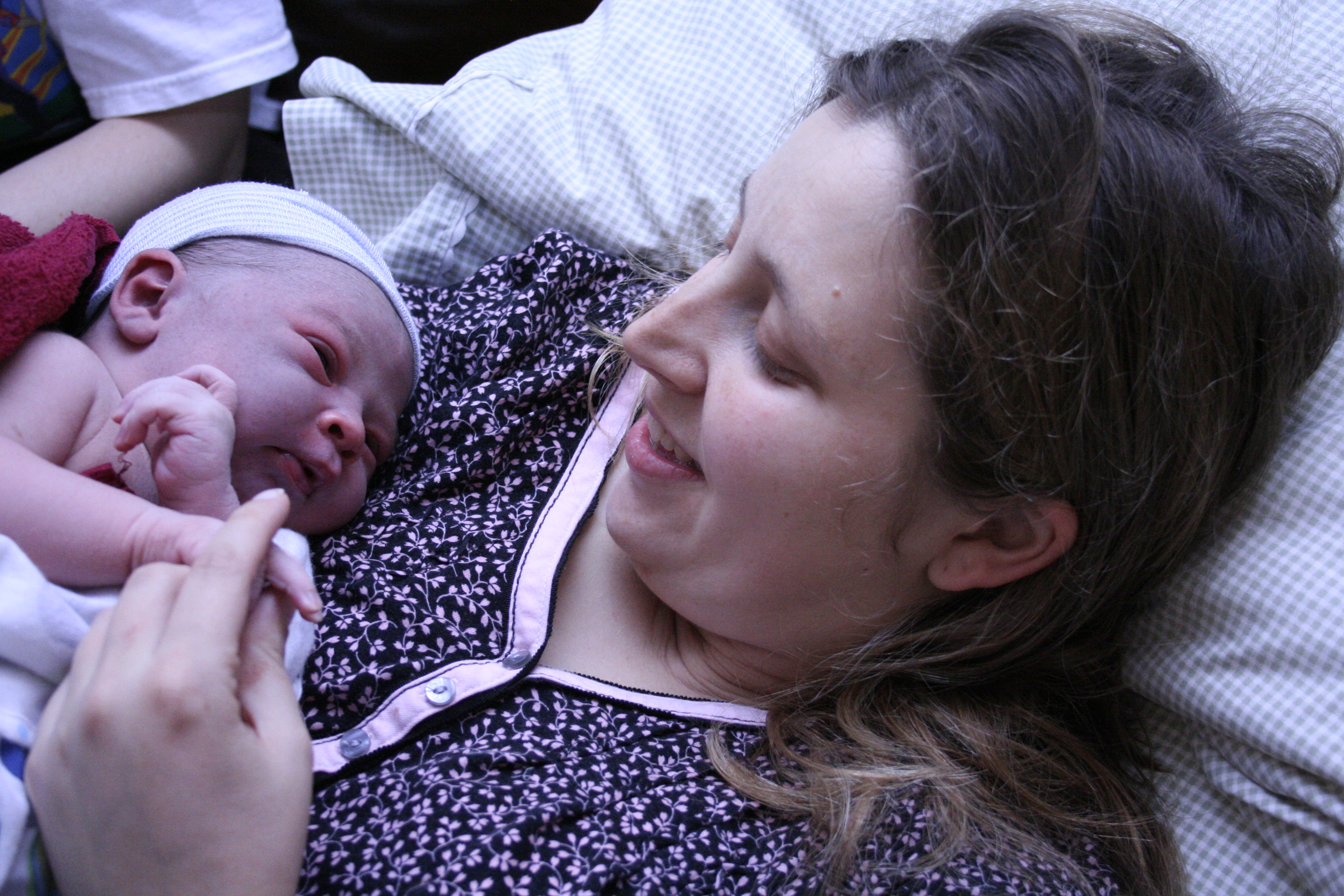
Sometime between 10:15-10:30, I all of a sudden wanted to go to the bathroom. Once again, you’d think I’d know, but when Rose asked if I thought it was time to push, I told her that surely things weren’t that far yet, and that I was positive this was just a result of the castor oil. She looked skeptical, but being the sweet midwife that she is, she just said to go ahead. As I moved to the bathroom, Joel left to get something in the kitchen. Once I sat down, I felt one massive contraction coming on, and immediately needed his hand. After several extremely intense back-to-back contractions, there was that massive feeling of pressure, and instant change in tone. At this point, Joel strongly encouraged me to move off the toilet…and I’ll admit that inside I was thinking that that was a totally crazy suggestion…lots of babies are born on the toilet…and how on earth can I move now?!?  However, Rose had quietly brought in the birth stool, and when I saw it next to me it looked possible to move, which we did as soon as the next contraction was over. I can honestly say that I don’t find pushing enjoyable…it’s like the last sprint in a long race, and I wonder if I’m going to be able to do it…but within 2-3 contractions, our little Talitha entered this world at 10:46pm. Only 1 hr. and 46 min. after my water broke and active labor started-and the castor oil wasn’t even necessary!  She seemed a bit stunned, and took a bit to pink up and really cry…I kept rubbing her over and pinching her toes and telling her to breathe…Rose commented that I sure couldn’t quit being a midwife, could I? Once she gave a good long cry I held her close, and was amazed-she was no little baby, and she had a lovely head of dark hair!

WP_20150218_006

Less than an hour old here, I think!

The remainder of postpartum went well…I moved from the bathroom (seems like births have a habit of happening in the tight, small quarters of the house!) and snuggled into the temporary bed set up in front of the cozy woodstove (that night was one of the coldest we had that winter!), then Rose did the newborn exam. Even with all my determination to grow a smaller baby (her brother had been 9#), and all my attempts to eat a strict diet and exercise regularly, this baby girl weighed 8#15oz, and that at a good 2 weeks early! And no, my dates weren’t off! Big

WP_20150219_012

Yoanna meeting her sister

sister Yoanna got to come down and kiss the baby, and her eyes full of awe were so sweet as she gazed on her little sister. After some food, and an absolutely lovely shower, I was packed off to my own bed upstairs. The ladies had the house looking normal again, Rose headed home (by now the snow had stopped, and the snow plows had gone through), and we enjoyed the pampering of Aunt Lucy for the next 4 days. Having her around to entertain the toddlers, cook meals, clean the house, and take care of all the little details was a tremendous blessing, and another gift from God.

Talitha Shalom means “Little Girl of Peace”, and it’s our prayer that she will embody this name as she grows, and that her life can be filled with God’s peace…just like the night of her birth was!

WP_20150219_027

The children meeting baby the next morning

DSC_0691

Three little ones to nurture!

Talitha 2-27-15 288-MIX

Capturing her expressions

Winter 2015 028

Dear Aunt Lucy and Uncle Daniel!

WP_20150219_018

Less than 24 hours old!

photo77

Mama has her hands full!

20150301_184501

Talitha with baby E-the one I caught just two days before my birth…this was their first time at church!
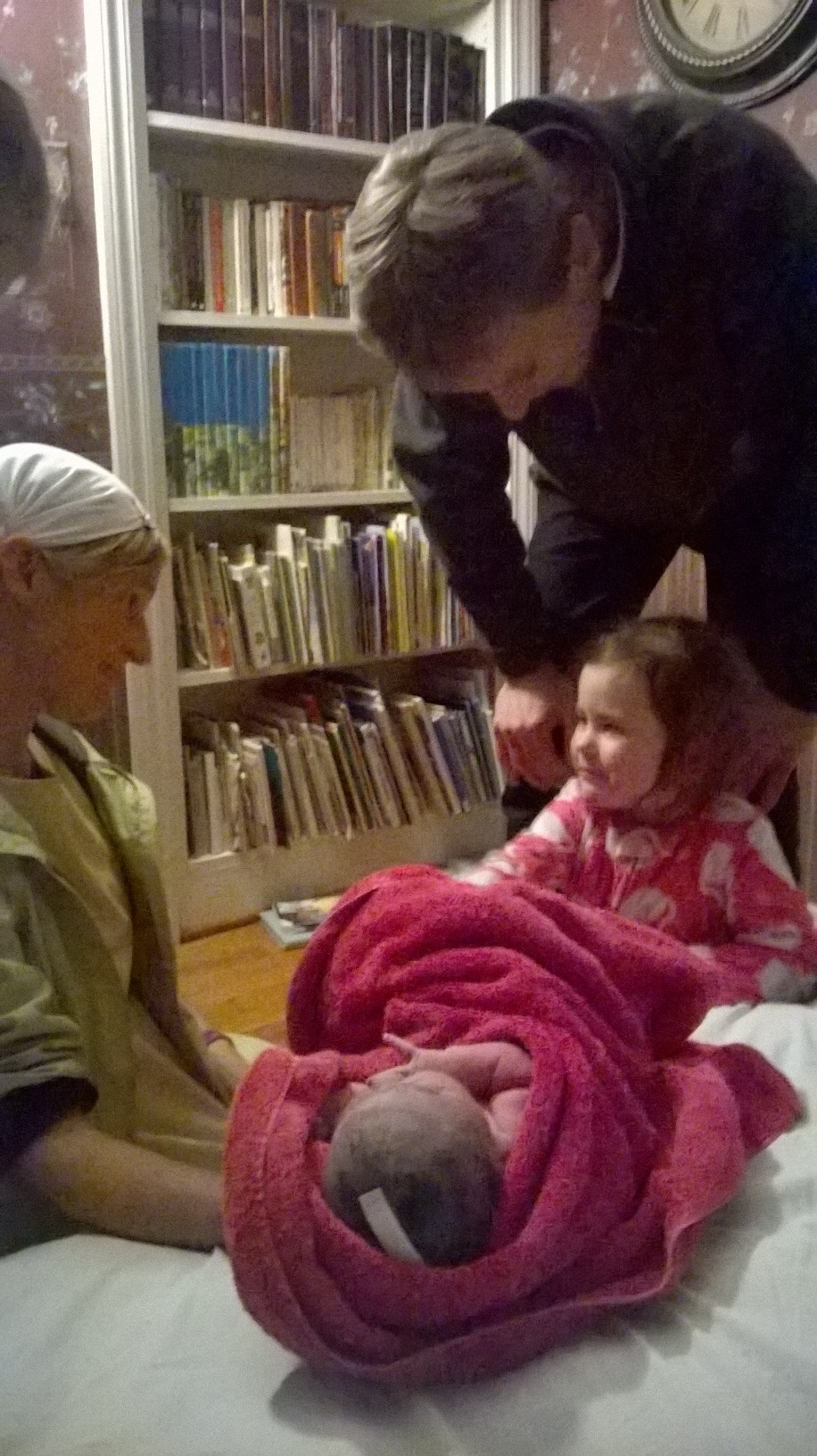

Announcing our new arrival…

Baby Talitha joined our family on Feb. 18th, born at home, and weighing in at almost 9#! We are thoroughly enjoying her, and this explains why I may not have responded to your emails or other communication if you’ve tried to get in touch with me recently. More details regarding her birth will be shared eventually, once I have a chance to process everything, recover, and become a bit more accustomed to life with three little ones. 🙂

For now, here’s some pictures of our sweetheart:

WP_20150219_012

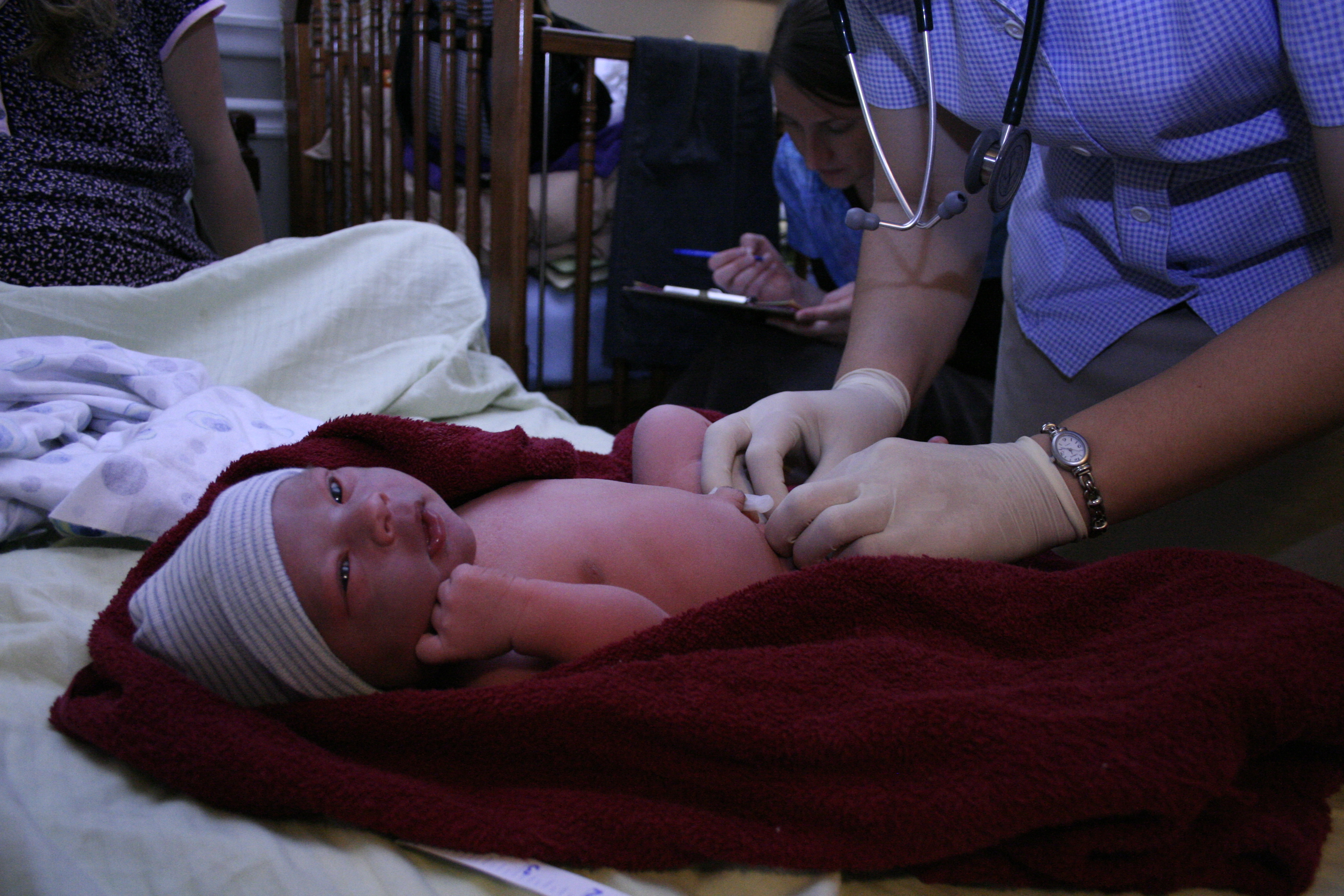
Sisters meeting for the first time…midwife getting ready to perform the newborn exam

WP_20150219_054

Happy siblings!

WP_20150219_064

2 days old…

WP_20150224_001

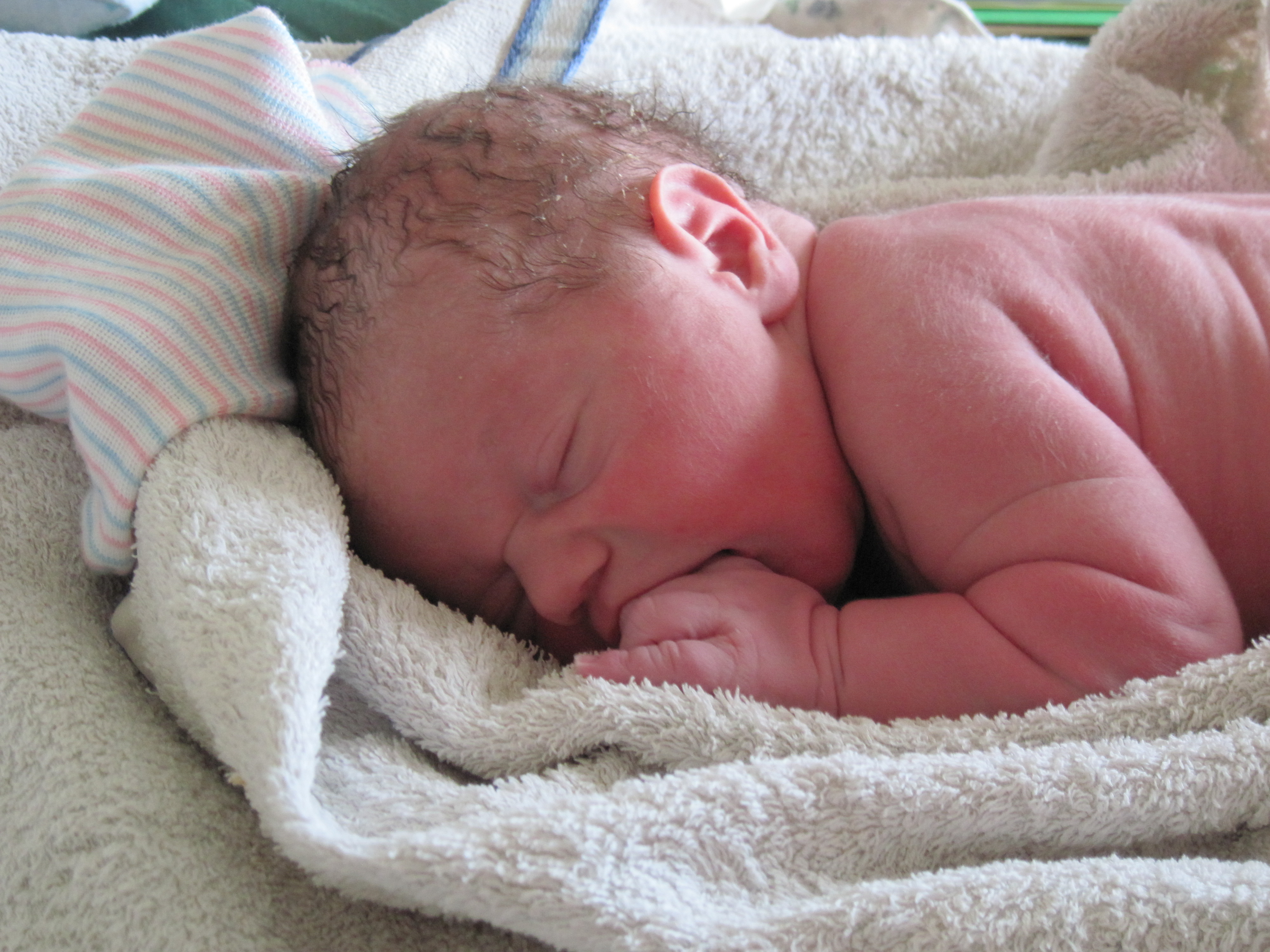
Sleeping peacefully all wrapped up

We love her!

We love her!

Frequently Asked Questions

Frequently Asked Questions

If you are considering a home birth, perhaps the following are questions you have wondered about. Don’t hesitate to contact me with any specific questions…I’d love to help you in any way I can! Please note, these questions and answers pertain specifically to my practice here at Gentle Delivery Childbirth Services, and may not apply to other midwives and practices.

Q. At what point in my pregnancy should I contact you?
A. You are welcome to contact me at any time-with preconception questions or as soon as you find out your pregnant. A free no-obligation consultation where you can ask questions and see my office can occur at any point, but I typically schedule your first actual appointment once you are between 10-12 weeks along, as that allows the baby to be mature enough to hear the heartbeat. The earlier you are in touch, the greater chance I will have an opening over the time you are due, though it’s never too late to talk with me about your options, either…we can begin care late in the pregnancy when necessary, too!

Q. What does a normal prenatal look like, and where does it take place?
A. Prenatal appointments normally take place in my home office, usually on Tuesday and Thursday afternoons, although other times are possible. I generally expect to take anywhere from 30 min. to an hour, with the goal being able to spend enough time to answer any questions or concerns a couple might have, as well as including education regarding exercise, nutrition, positioning, childbirth, etc. At each visit a urine sample is checked, weight is recorded, BP is taken, and baby is listened to, measured, and palpated to see his or her position. Other testing and/or procedures will be performed as needed. The normal schedule for visits is every month until 28 weeks, followed by bi-weekly appointments until 36 weeks, and weekly visits thereafter. A home visit is performed at 36 weeks, in order to give myself and any other birth attendants a chance to see your location in normal daylight hours! 

Q. Do I need to see a doctor besides seeing you for prenatal care?
A. That honestly depends upon your personal preferences. The prenatal care I give would be similar to what you would receive from a doctor, including labs and referrals for things like sonograms. Most of my clients do not see a doctor while receiving care from me, as it keeps costs down and keeps them from multiple prenatal care visits. If your OB office is open to co-care, it can provide you with a seamless transition in case of transport, especially if it is covered by your insurance provider. If care with an OB is covered in full by your insurance provider, you may benefit from continuing care with them in order to have the costs for your labwork and other testing covered completely.

Q. Will my insurance cover your services, or how can I afford it?
A. Sadly, many insurance companies do not cover home midwifery care, though it is always worth checking into thoroughly. I would be happy to provide you with some information on how to best discuss this with your insurance company, and I am also willing to give you a written statement complete with insurance codes to submit to your insurance company. In order to keep my own costs down, I do not file insurance, but I do try to make care accessible to all families by charging a sliding scale fee based upon your family’s income. Keep in mind, too, that when using insurance, you will have a co-pay, and for some people the cost of my services are either similar or lower than the co-pay amount you would be paying with a hospital delivery.

Q. I notice you have a student working with you. How does that influence my care?
A. When a student is interning for midwifery training, their level of involvement varies according to where they are at in their studies. A student midwife begins by observing all aspects of midwifery care, and applying the academic knowledge she has already received to practical, hands-on situations. As her experience expands, so do her opportunities-she assumes more responsibility depending upon her level of experience and skill. Students are always grateful for any opportunity afforded them to learn, and would love to be as involved with your care as you feel comfortable with. I always strive to make sure the client feels completely comfortable with any care provided by a student, whether that is allowing the student to feel for baby’s position and fundal measurement, or whether it is as extensive as allowing the student to participate in a high level of care during delivery. Whether you prefer lots of involvement or minimal involvement, a student generally acts as my birth assistant during the actual labor and delivery, helping to provide labor support, take notes, and in general act as my second set of hands. 

Q. Who will attend my birth? Is is okay to invite others to be present in addition to the birth team?
A. Normally I attend births with one or two qualified assistants. These ladies are usually either skilled students or birth attendants, and enable me to know you are getting the best care possible, allowing both baby and mom to be cared for in case of emergency. Besides this, whomever else you choose to have present at your birth is up to you. I’ve been at births where it was the bare minimum of people, and I’ve been to births where there was a crowd! The main issue is that you feel totally and completely at ease and comfortable with whomever is present, as that can majorly impact your experience.

Q. Are children welcome to attend the birth?
A. It’s your birth, so you get to decide if you want your children present or not! If you are planning on having your children attending, I strongly recommend you having an extra person handy whose sole responsibility is caring for your child(ren) so that you can focus on the delivery.

Q. Do you do waterbirths?
A. Yes! Laboring and delivering in the water are both options. For many people, their home tub is comfortable enough, but if you’re wanting to use an actual “birth pool”, I can put you in touch with rental possibilities.

Q. I had a cesarean with my previous delivery, does that rule out a home birth?
A. I am happy to help women VBAC whenever possible. For most women, a VBAC at home is statistically safer than a repeat c-section. Make sure you get a copy of your previous medical records, and we can discuss your particular situation in person in more detail.

Q. What birth positions are options at home?
A. There are about as many options as there are women!  One benefit to delivering at home is the flexibility to figure out what works the best for you…whether that is squatting, laying in bed, standing in the shower, or wherever you are the most comfortable. I have a traditional “birth stool” that I bring along to births which gives you the option of a low squat, but most women instinctively find a position that works the best for them.

Q. Are you prepared for possible emergencies?
A. Yes. I maintain current certification in both neonatal resuscitation and CPR, bringing along emergency equipment in case of a baby with breathing difficulties. I also carry equipment to assist with stabilizing a mom in the rare case of hemorrhage. It’s my goal to make your home birth experience as safe as possible, which includes careful monitoring of both baby and mom during and after labor, so as to catch any concern that is out of the scope of “normal”. Consistent prenatal care combined with healthy, low risk moms lowers the chance of emergency procedures drastically, but your birth team stays alert for any signs of possible surprises. We can discuss this question in more detail during your consultation if you wish.

Q. So, laboring at home sounds nice, but what about the mess that comes along with birth?
A. Most people are surprised at how little mess is involved. I have families purchase disposable underpads (available at most drugstores) and a cheap shower curtain, which we use to protect surfaces such as the bed and carpet for the actual birth. These things get thrown away afterwards, and myself or my assistant will start laundry before we leave your home. We also make sure to tidy things up so that you aren’t left with clean up!

Q. How do I go about getting documentation for my child?
A. I will file all needed paperwork with the state, which includes the official birth certificate and request for a social security number. I also perform the newborn screening test on your baby during the home visit which occurs 24-48 hours after birth.

24413_1380390063526_5477660_n

Sweet baby feet as baby is being weighed during the newborn exam!


Fussy Babies, Tongue-Ties and Nursing Challenges

Fussy Babies, Tongue-Ties and Nursing Challenges

Matthias Johann 133Recently there have been alot of articles floating around on Facebook and other blogs regarding tongue ties and the challenges they pose for nursing babies. Reading these have reminded me of the very difficult six months following my last baby’s birth. In the past few months I’ve been wanting to write about this phase of my life, and I’m hoping that maybe it can be a help to others who might find themselves in similar shoes. While our family found some answers, I still have questions that I’m studying and researching…so this may end up being part one in a series! 🙂

For starters, a little background: my first pregnancy was challenging, especially for the first 20 weeks during which I was very sick. Towards the end, I ended up being border-line preeclamptic, and we were grateful that our little princess came safely, and a week early. Quite honestly, my labor and delivery the first time was “textbook” perfect: 8 hrs from start to finish, no complications, and with what we call in birth lingo an “uneventful postpartum”. While I never had an abundant supply of milk, nursing was fine, and she gained slowly but surely, being more of a petite little girl. She was on the fussy side (which, incidentally, runs in my husband’s family), and around 4 months I cut dairy out of my diet, which made a big difference in her personality. I still can’t say she was an “easy” baby, but she wasn’t excessively difficult, either. So, when little brother was on the way, I was happily surprised with how much better the pregnancy went the second time around. While I was queasy at times, and felt a bit picky about what I ate, I didn’t have the months of throwing up and severe nausea and weakness that I had the first time. The last couple of weeks I once again struggled with keeping my BP from going too high, but all in all everything went extremely well. Which, in turn, made me expect that nursing and baby care would go that much better the second time, as well. However, that was not to be the case…

When our little boy was born, he was an even 9 lbs, and nursed well right off the bat. Because he was doing so well with nursing those first two or three days, I made what I believe was my first mistake: I gave him a pacifier so I could sleep at night. I figured that he was nursing so well and so strongly, and since he was so chunky to begin with, and that it wouldn’t cause any problems…he was nursing constantly, and I just wanted a little bit of sleep! By week two, nursing started to become a battle. He would latch on for a second or two, then howl, arching his back, and fighting it. It wasn’t every time, but it increasingly got worse, so that by the time he was 3 weeks old I didn’t want to try to nurse him in public anywhere, as it took so much work. Like most babies, he lost weight the first week, but it took him an entire 3 weeks before he was back to his birth weight. At that point, we took his pacifier away, hoping that we were dealing with a case of nipple confusion, and that maybe after a few days we would be nursing fine. Those days were rough…he cried SO much, and wanted to suck constantly…and yet would fight me when I tried to nurse him. After a few days it got a bit better, but still not that great. By that time I wondered if maybe he was dealing with a sore tummy and food allergies, so I went off of dairy, hoping it would make a difference. After several days he seemed to be a little better, but not the drastic difference that his sister had made when I cut those foods out.

I still remember the day when he was about 6 weeks old. Joel was gone all day for a meeting (it was a Saturday, which normally was my day for a “break” in having daddy’s help with two little ones!), and I was expecting company for supper and for the night. My baby seriously cried ALL DAY LONG. I think he wore himself out enough to take two short naps, but that was it. Feeding was a battle, and I didn’t have a CLUE what to do with him. I laid him on the bed, and watched him cry, and all of a sudden it dawned on me that he could hardly move his tongue! He was howling, and his tongue literally looked as though it was tied to the bottom of his mouth. Now, being a midwife, I had seen tongue tied babies before, but all of those I had seen had been what they call “anterior ties”, meaning that you could see the membrane that tied the tongue. My baby had what I came to find out was a “posterior tie”…you could only see the membrane when you used your finger to lift his tongue up. After consulting with several midwife friends, I decided to take him to a doctor to have him checked out, and hopefully take care of the tie.

Monday morning I took him in to see the family practice doctor, which proved to be a disappointing visit. The doctor was very concerned about baby’s lack of growth, but totally shrugged off the tongue tie possibility, and instead wanted to do testing for a heart defect. I told her that I didn’t think a baby with a heart defect could scream as long as my baby could without wearing out, and declined the testing, telling her I would continue to monitor his heart and growth, and bring him back if there was any other concerns. I then returned home, called my dear nurse friend/fellow midwife down the road, and she agreed to come up and help me attempt to take care of the tongue tie. We did, and all of a sudden he could move his tongue unlike he had ever moved it before!

I was hoping this would be the end of the struggles, but it wasn’t the miraculous cure that I was hoping for. While he latched better, it still wasn’t where it needed to be. I could feel my milk supply dropping, despite eating quality and quantity foods (I gained 7 lbs. just trying to increase my supply!), and taking different herbs. A week later, my sister came to visit, which was a huge boost as I felt like all I was doing those days was trying to feed and console a crying baby. By the end of the week, after another long crying spell, my husband said “I really think you need to feed him a bottle of something and see if he needs more to eat.” Now, he had suggested this before, but I adamantly refused. I always taught that breastfeeding is the BEST way to go…once you start a bottle you’re on a downhill slope…etc, etc, etc. I had all the arguments as to why I would never feed my baby a bottle. But here he was crying, and we were desperate. So, I used some of the formula samples I had on hand, and decided to try it….and the little man ate as if he was starving. He drained the bottle dry in no time, and looked the most happy and content as he had ever looked. I cried. Here I was, thinking I was doing the best thing by pushing nursing, and my baby was starving. And talk about eating all the words you ever said…how could I EVER feed this baby a bottle in public?!?

But I wasn’t ready to give up on nursing…and the next several months held quite the times, as I continued to try to get him to nurse first, and get a bottle last. I tried a nipple shield-that really helped, but I felt like I had so much “equipment” along for nursing that it was no fun to go places. And after awhile I realized that not only dairy would cause his tummy to get upset, but so did wheat. So I kept to a very strict diet, which helped alot. But after dropping my milk supply so much, I never was able to get back enough to feed him 100% breastmilk. So that prompted another journey…researching formula alternatives. With all the additives, corn syurp solids and other things in powdered formula, I did not feel right giving it to my baby, and I was delighted to find the recipe for home-made formula on the Weston Price Foundation website (www.westonaprice.org). We were blessed to live just down the road from an organic, grass-fed dairy, and I began mixing up home-made formula on a daily basis. While it was more work, it was amazing the difference it made…no more constipation, and his stools and spit up were identical to a 100% breast fed baby. And he started gaining weight!

We continued the partial breast-fed, partial supplement feedings until he was about 6 months old, when one day he refused to nurse, and continued to refuse. I bemoaned the lack of bonding that would come from not nursing…and my husband wryly commented that he thought giving the baby a bottle peacefully was more bonding than forcing a screaming, back-arching baby to the breast. 🙂 Good point! Little Matthias continued to grow and develop normally, and once he could crawl around and eat solid food, he no longer had any food allergies. When he was 10 months old, I one day read an article about how lip ties can also affect nursing…and sure enough, he has a very pronounced lip tie. Which finally makes sense to me why he never was able to get a really good latch…his upper lip never was able to flare very well.

In retrospect, I feel like I’ve learned a number of things: first, I won’t quickly give another baby a pacifier. It really is best to let nursing get off to a really good start, even if you’re tire. Next, I wish I would have thought to investigate the tongue tie sooner. I am paying really close attention to the babies I deliver these days, to make sure it looks right! I also wish I would have searched longer and harder for a professional who could have maybe found both his tongue and lip tie and taken care of it right away. I think if it would have been done when he was 3 wks old, we would have had many less problems. I have also learned to never criticize another mom for the way she feeds her baby. Many times you have no idea what she has been through, and what may have brought her to the point that she is at. As mothers, we want to do what is best for our babies, and sometimes it looks different in other situations. I also STRONGLY recommend looking into making your own formula if you need to bottle feed! And lastly, I’m doing some research, and I haven’t figured it all out yet, but I’m really hoping that by possibly taking a different form of folic acid during my next pregnancy, I may be able to help reduce or prevent the significant food sensitivities/stomach issues and tongue ties in the next baby. I haven’t read enough to be able to share it yet…but I’m hopeful that maybe things can be different the next time around!

So, that’s the story…God’s grace was sufficient, though I really thought I was going crazy numerous times during those months. A fussy baby equals little sleep, and I went months without sleeping more than 2 or 3 hrs at a time. But our little fellow is worth it all, and brings us much joy…and I know I’ve learned an extra level of sympathy for those experiencing nursing difficulties and challenges with fussy babies!For more information on tongue ties, check out:http://www.cwgenna.com/ttidentify.htmlhttp://kiddsteeth.com/dental_topics.html#evaluate_and_diagnose_a_posterior_tongue_tie

Matthias around 1 week old

Matthias around 1 week old

February Travels…and what the CPM Title Actually Means

February 2014 - Costa Rica 155

Beautiful palms and lots of green-we soaked it up while we could, and then returned to 12 in. of snow still on the ground at home!

Happy March to each of you! I am really ready for winter to be over, especially since this one seems to be stretching on and on. This past month has been busy, and I even enjoyed a 6 day reprieve from cold when I took my 15 mo. old to Costa Rica in order to attend a dear friend’s wedding. It was a great trip, though not without excitement (like when I realized I left my wallet behind when I arrived at the airport and was ready to depart…or when flights were cancelled due to weather…and other such things….so grateful for how the Lord took care of every detail!). The chance to reconnect with old friends was very special, and it was fun to introduce them to my little fellow, though it would have been even better if my husband and 2 yr. old could have joined us. They seemed to manage quite well on their own, but we were all ready to be back as a little family once again!

February 2014 - Costa Rica 162

The way to travel with a toddler…

February 2014 - Costa Rica 098

Matthias LOVED playing in the water-this same day it was -10 in PA!

I was trying to come up with a good idea to write about this month, and then I thought that perhaps I could blog about one of the items on my list of things that I want to add to my prospective client handout folder. One question, or series of questions, that comes up frequently during the initial interview has to do with my certification, and what exactly it means. There are so many different names and titles out there that it can be confusing at times! When you go to figure out what care provider is right for you, it is helpful to have an idea of what his/her qualifications are, and what all is entailed with those. So, here’s a brief look at what the Certified Professional Midwife title means…

The North American Registry of Midwives (NARM) was founded in 1987 by the Midwives Alliance of North America, and they oversee the certification standards of the CPM credential. In order to become certified, one must first show that she can provide competent, safe, and qualified care to mothers and babies throughout the birth and postpartum process, both by completing academic studies and by demonstrating care in a clinical setting. This requires that a prospective midwife both study through a NARM-approved academic institution, as well as complete an internship under the supervision of other certified midwives. Proving that one has the mastered the skills necessary to provide knowledgeable care takes time, and there is an extensive set of qualifications that must be met before one can sit for the final exams that cover questions relating to each phase of maternal and infant periods. Once the exams are passed, re-certification must take place every 3 years, which requires ongoing continuing education and re-certification of CPR and NRP.

When I first looked into obtaining midwifery education, I decided to pursue getting certification, even though the state I was working in did not recognize the credential. It was important to me that I do my best to provide the best care possible, and submitting to the qualifications necessary to become a CPM helped prospective clients to know that I took my job seriously and that I had demonstrated the ability to pass the national standard for midwifery care. In areas where licensure is not offered for homebirth midwives, this certification also gives clients the assurance that a certain level of training has been taken, instead of not having any idea of what a midwife’s qualifications may or may not include. Interestingly, many of the states that offer licenses to midwives are using the CPM as the basis for their training requirements. While many midwives who do not have the CPM title are competent and experienced, I feel like having a standard of competency for certification helps to ensure safety and high standards of care for each mother who desires to birth out of the hospital.

Finally, I like the way this quote sums it up, taken from http://www.nacpm.org/what-is-cpm.html
“A Certified Professional Midwife (CPM) is a knowledgeable, skilled and independent midwifery practitioner who has met the standards for certification set by the North American Registry of Midwives (NARM). CPM is the only international credential that requires knowledge about and experience in out-of-hospital birth.”

If you’re interested in looking into this topic further, I’d suggest you check out these links:
http://narm.org/advocacy/narm-brochure-text/  gives a good overview of the Midwifery Model of Care and how CPM’s help to promote this, and http://midwifeinternational.org/how-to-become-midwife/certified-professional-midwife-vs-certified-nurse-midwife-whats-difference/  details the differences between the CPM and CNM titles.

Feel free to let me know if you have questions, or if you’d like to add a comment regarding this…thanks!

March 042

Little M ready for his newborn exam…a March baby who will be having a birthday soon!

If you’ve wondered about eye ointment used on newborns…

For those of you following this blog, you probably thought I had given up ever posting anything again! 🙂 Time seems to keep me from spending much time on the computer, and blogging is at the bottom of the priority list! But, I read this article today and just had to pass it on, as it refers to a question that often comes up during the newborn exam. Enjoy!

http://evidencebasedbirth.com/is-erythromycin-eye-ointment-always-necessary-for-newborns/

Photos from a home birth…

First, I have to mention that I am still excited about the special birth I had the honor of assisting with early yesterday morning. It was one of Heidi’s clients, and after much prayer and anticipation, we were thrilled to witness a lovely VBAC-it was a beautiful birth anyway, but the fact that it was her first vaginal birth following a c-section with her first pregnancy added an extra-special dimension. I barely made it, with only 20 minutes or so to spare!

Now, I’m excited to finally have pictures to post of a birth that occurred back in January. This mama had a photographer there, and has generously allowed me to use some of the photos in order to share her experience with others. Thanks, Kristina!

So, for those of you who enjoy pictures, or are just curious to know a little more about what a home birth looks like, here you go….

Mom was laboring in the tub as the birth was getting closer, with her support people and myself surrounding her

Doppler and other supplies sitting nearby

My dear assitant, Heidi, stands ready to lend a hand when needed, as an aunt peeks in to check on progress

Heidi charting progress as the labor continues

This mama worked beautifully with her contractions, allowing her body to relax and open

Baby Z in mom's arms just moments after birth

All snuggled up and meeting various family members

I begin the newborn exam, while Heidi charts in the background

Taking all his important measurements

Footprints

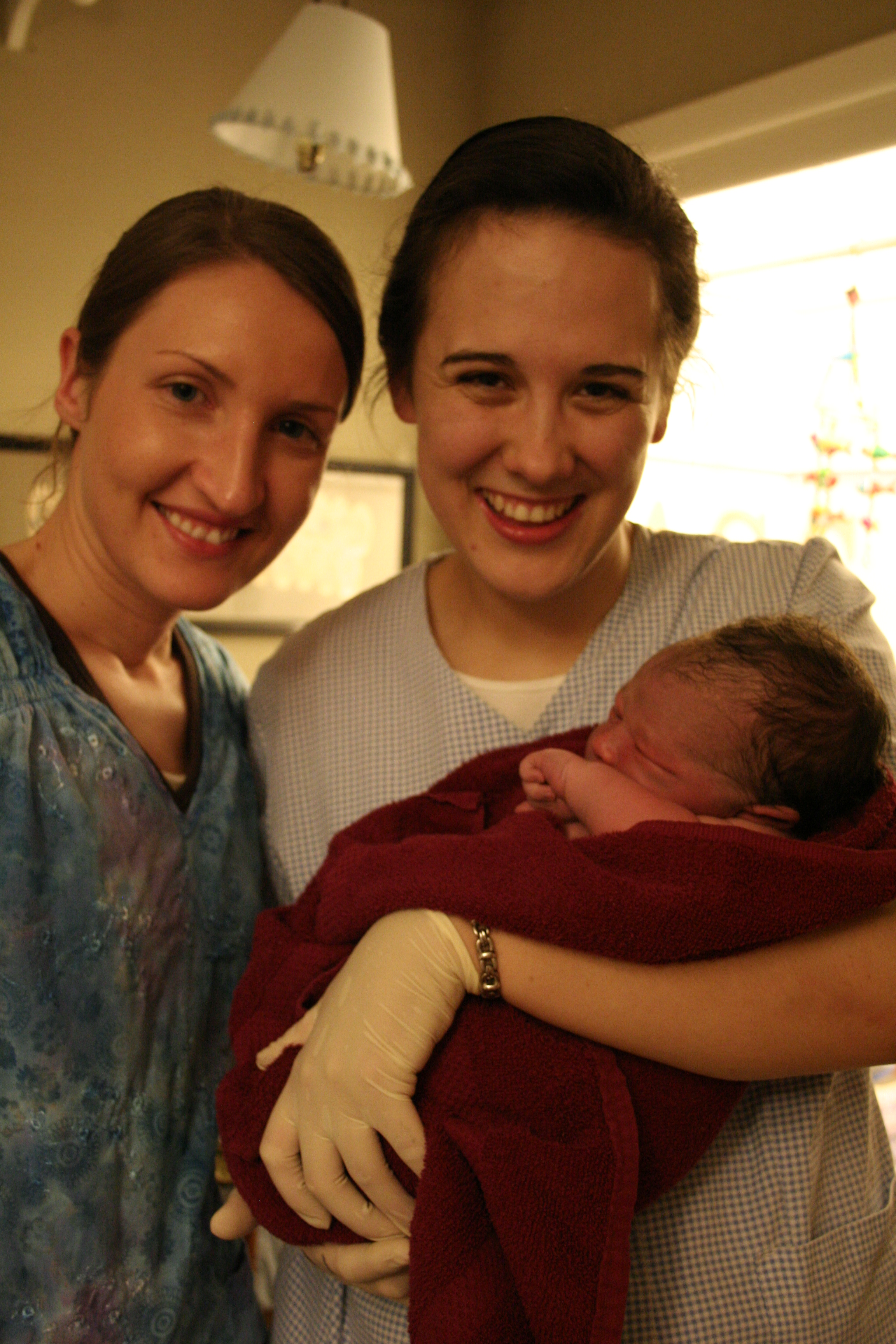
Heidi and I after everything is finished

Mom and baby enjoying some time together

New Arrival!!

A big welcome to little Andrew who was born late last night!

Andrew

Time for the newborn exam.


Andrew

He's a cute, cuddly little one-can't hardly resist a kiss....


Andrew

An extra treat-the first birth for Heidi and I to do together since graduating from our midwifery studies! We trained together at FBS in TX, and never expected to work together in KS someday, but God put it all together!!


Andrew

Just a couple of hours old!

Giving this a try…

Greetings! I am finally attempting to enter the realm of the web….for some time I’ve been wanting to get a website up, and was encouraged by several people to use a blog site for that purpose. My hope is that this will provide those of you who are interested in knowing more about myself and the services I offer with more information, as well as encouraging any of you interested in learning more about your options regarding childbirth. In the future, my goal is to offer book reviews, birth stories, and resources to you all, as well as giving you a look into my life.

Performing a newborn exam on sweet little Kalia within an hour of her birth

Performing a newborn exam on sweet little Kalia within an hour of her birth