As we head into flu season and continue to navigate the Covid-19 pandemic, I wanted to share some suggestions for pregnant moms wanting to boost their immune systems. There are so many ways we can proactively support our bodies in order to provide better resistance to germs and illness, and possibly prevent severe sickness. Many women find their immune systems face greater stress during pregnancy, so it’s extra important to try to support your body as it grows a baby while exposed to germs!
Before mentioning specific supplements, it’s important to remember that there are some key factors that also play into your overall health. These factors include:
Sufficient, regular sleep: you need ENOUGH sleep to support your body’s needs, and these needs are often increased during pregnancy. Make a habit of going to bed early enough to get the hours of sleep you need! If you’re having trouble sleeping, let your midwife know (I have some suggestions for pregnancy-induced insomnia, so don’t hesitate to reach out!).
Reduce Stress Levels: stress wears your body down, and makes it harder for your immune system work properly.
Eat a healthful, whole-foods diet with lots of variety. If you need information on what a good pregnancy diet looks like, I highly recommend Lily Nichols’ book Real Food For Pregnancy (check out her blog for helpful info, as well: Lily Nichols, RDN)
Stay hydrated: this helps to keep your body flushed and supported.
Add fermented foods to your diet, such as raw sauerkraut, kefir, etc.
Get 15-20 min of direct sunshine daily whenever possible!
Exercise regularly, especially in the fresh air: a 30 min walk outdoors daily is excellent for ALL pregnant moms!
Consider the following supplements daily (check with your prenatal vitamin to determine your needed dosage to reach the recommended levels below):
High Quality Probiotic: it’s no secret that our culture’s frequent antibiotic usage and lack of cultured and fermented foods are contributing to inadequate and/or imbalanced intestinal flora and correlating issues. A good probiotic with multiple different strains can help your body to work the way it should! One that specifically targets Candida overgrowth can be especially helpful in supporting the immune system. Klair Labs and Jarrow are two brands I recommend, but there are many options out there!
Vitamin C (preferably with bioflavonoids) 2000mg daily: this can be split up throughout the day.
Vitamin D34,000IU daily: for best absorption take with a meal containing fat.
Zinc lozenges5-10mg daily: preferably in the form of acetate.
Elderberry1-2TBL daily
When needing extra support (feeling run down, extra or direct exposure to illness, etc.) you may want to add the following to your regimen for 7-10 days:
Gargle with Salt Water 2-3x/day for 15-30 seconds.
Echinacea: 300-500mg dried herb (capsule or tablet) 3x/day or 2.5-5mL of tincture up to 3x/day
The following are some combination immune boosting blends that are wonderful to have on hand for extra immune support (they contain combinations of the above suggestions):
For clients of Gentle Delivery, you know that routine Group B Strep testing is offered to every expectant mom in accordance with the ACOG standards of care. While the pros and cons of testing and subsequent treatment plans are discussed in detail elsewhere, the purpose of this post is to help you to minimize your risk of developing Group B Strep colonization during pregnancy, thus promoting better health for you and baby (and increasing your chances of obtaining a negative test result!).
If you are interested in researching Group B Strep info, I’d strongly encourage you to read Aviva Romm’s article: Group B Strep in Pregnancy: What’s a Mom to do? You’ll find clear explanations of GBS, risks and benefits of antibiotic treatment, and tips on promoting health. This post by Wellness Mama also includes further links for study along with Katie’s suggestions for avoiding GBS colonization with natural methods: How I Avoided GBS Naturally And finally, this article provides a few other options to consider while making decisions on prevention and treatment: Decrease Your Chances of GBS
As a practicing CPM in a state that does not offer licensure, I am currently unable to offer IV antibiotic treatment to GBS+ clients. This increases my desire to do all I can to help support a mom’s immune system and decrease the possibility of a GBS+ test result, as it greatly simplifies the care protocols and necessary decision making for clients and their families!
So here are the primary suggestions for making your vaginal flora inhospitable to Group B Strep:
High Quality Probiotics (if not started early on in pregnancy, then beginning at 28-32 weeks orally, adding vaginal support at 32-34 weeks)
“Many species of Lactobacillus have been shown to be beneficial to the vaginal flora; Lactobacillus reuteri and Lactobacillus rhamnosis are species known to be especially helpful for supporting healthy vaginal (and bladder) flora, while these and others, including L crispatus and L. salivarius strains, have been shown to to inhibit the growth of vaginal pathogens including Gardnerella vaginalis and Candida albicans, and also reducing the frequency of bladder infections in addition to vaginal infection.
In one study, 110 pregnant women at 35-37 weeks of gestation who were diagnosed by GBS culture as being GBS positive for both vaginal and rectal GBS colonization were randomly assigned to be orally treated with two placebo capsules or two probiotic capsules (containing L. rhamnosus and L. reuteri ) before bedtime until delivery. All women were tested for vaginal and rectal GBS colonization again by GBS culture on admission for delivery. Of the 99 who completed the study (49 in the probiotic group and 50 in the placebo group), the GBS colonization results changed from positive to negative in 21 women in the probiotic group (42.9%) and in nine women in the placebo group (18.0%) during this period. The researchers concluded that an oral probiotic containing L. rhamnosus and L. reuteri could reduce the vaginal and rectal GBS colonization rate in pregnant women.
In another study involving 57 healthy pregnant women, L. salivarus was taken daily by the 25 GBS positive women in the group from weeks 26 to 38 of pregnancy. At the end of the trial (week 38), 72% and 68% of the women were GBS-negative in the rectal and vaginal samples, respectively. The researchers concluded that this seemed to be an efficient method to reduce the number of GBS-positive women during pregnancy, decreasing the number of women receiving antibiotic treatment during labor and birth.” (copied from Aviva Romm’s article here)
In light of these studies, and knowing that probiotics are vitally important to the health of both mom and infant for a variety of reasons, supplementing regularly with probiotics during pregnancy can be beneficial in more ways than one. For GBS specific support, it’s recommended that you begin supplementing orally at 28-32 weeks (though earlier is even better!), and then increasing your oral dosage and consider using a probiotic vaginally for at least 2-4 weeks before your Group B Strep test (and then continue the oral support through the rest of your pregnancy).
As you shop for probiotics, pay attention to the different strains it includes, as not all probiotics are created equal, and they will be most effective against GBS strains if it includes L. Rhamnosus, L. Reuteri and L. Salivarus.
Some brand suggestions that other midwives have given me are:
Eating a diet high in fermented foods/drinks (kefir, sauerkraut, kombucha, yogurt, etc.) help to promote a healthy gut flora.
Eliminating sugar and simple carbs are also effective in promoting beneficial gut flora.
Add 1-2 tbl of coconut oil into your daily diet for it’s antibiotic properties, specifically in the few weeks prior to testing.
Apple Cider Vinegar consumed daily or in capsule form may be helpful.
Vitamin C
Consuming 1000-2000mg of high quality vitamin C daily (in divided does) can help to increase your body’s immune response, which makes it more difficult for unhealthy microorganisms to grow. You can begin this regimen around 30 weeks.
Garlic/Allicin (active component of garlic)
Garlic has been used as an antimicrobial agent for generations, and for good reason. However, high doses of garlic can cause blood thinning, so I don’t recommend staying on high doses of garlic or allicin after obtaining your GBS test. But it is a treatment to consider to reduce the possibility of GBS colonization before getting tested. Currently there is a midwife practice conducting a study where participants are instructed to use Allicin Gel 2x daily for 12-14 days along with ingesting 180mg of Allicin capsules 2x daily for 12-14 days prior to testing. The basis for this study is from a preliminary study done in 2009 where Allicin was shown to reduce the possibility of early rupture of membranes and chorioamnionitis, both of which can be complications of GBS infection. Other methods of using garlic include: taking garlic capsules daily, consume raw garlic daily, and/or insert a raw garlic clove vaginally at night before going to bed.
While we still have a lot to learn about Group B Strep (how exactly it is transmitted, best ways to treat it, and how to prevent it from the beginning), and while there still seem to be a few moms who naturally carry Group B Strep bacteria in their vaginal tract no matter what they try to do about it (antibiotic or otherwise!), one of the benefits of utilizing these suggestions is that they promote health for mom and baby regardless of the GBS presence (or lack thereof). While obtaining a negative Group B Strep test does eliminate a certain amount of worry, risk and decisions, the benefit to your body of increasing the good bacteria and gut flora through healthy foods, probiotic supplementation and other factors may provide long-term benefits that you will see later on. I’d highly encourage every pregnant mom to consider these suggestions, and wish each of you a healthy and safe pregnancy and birth!
I’d also love to hear: did you try any of these prevention methods? How did it affect you and your GBS status? Did you test positive in one pregnancy and then negative in another? What was most beneficial for you?
If you’ve followed my blog for long, you’ll know that tongue & lip ties and nursing challenges are a passion of mine, especially after having experienced challenges with all of these factors with several of my own children. I’ve also been in contact with many moms who are struggling with nursing issues or fussy babies, and so many times there is a connection to either a tongue or lip tie (or both!). Recently, a mom shared her story in a Facebook Group for Moms that I’m part of. Her story touches on so many of the factors that I have seen and/or experienced, that I contacted her and asked for her permission to share her post with you all. I am so grateful, as Tanisha covers many factors to consider in her story, and I think it will be beneficial for many moms who might be struggling. If you are struggling with nursing issues, I really want to encourage you that you aren’t alone, and that there are answers out there!! And if you resonate with this story, I would love to hear about your experiences! It can help other moms when they can hear first-hand what worked for others in similar situations.
~Kelsey
Now on to our guest post, written earlier this year by Tanisha Gingerich:
**Shared by the author’s permission**
I thought I’d make a post for whoever it might concern, about our journey sofar with tongue and lip ties. They are becoming increasingly common it seems, and I thought sharing my experience might be a good way to bring awareness so that any other moms going thru something similar can benefit from (or add to) what I’ve been learning.
A week post partum, I was scabbed from nursing, and in a lot of pain every time I fed Micoma. She was gaining well, so we probably could have made it work (a lactation consultant can help you and baby work past a multitude of feeding problems), but I knew from experience that although I could “make it work,” my milk supply was going to tank around 4-6 months. Ties can also cause speech, dental, and sleep issues down the road, along with a host of other problems.
So in the interest of short-term pain for the long-term good, I took Micoma in at a week old for a consultation and ended up getting her lip and tongue ties lasered right away so we could begin the healing and retraining process as soon as possible before bad nursing habits were formed.
I cried and prayed over her before they did the 3 minute procedure, and sobbed compulsively while they swaddled her and used a laser to cut the ties open. The woman doing the procedure was a mom too, and was so compassionate and kind with Micoma. Then they left us alone in a cozy room to nurse, and I heaved more sobs as I comforted my baby. Being able to hold and nurse her was probably just as healing for me as it was for her.
Her latch was instantly better. Over the next few days I had to continually remind myself of the long term good, as I did stretches on her wounds. To my relief, the stretches were done in under 30 seconds, and Micoma always recovered quickly… I soon realized she was screaming louder over getting her diaper changed than she was over the oral invasion, so that made me feel better. I told her all the time how brave she was, and gave her every comfort to guide her through the rough patch.
That first week dragged on for me. I hated having to keep stretches in my mind every 4-6 hours even thru the night—got kind of sick with dread thinking about it. I kept Micoma on Tylenol the first 2 days, and again on day 4 when there was a flare up of discomfort. Other than that though, she continued to eat and sleep very normally (not everyone has it so easy, some babies will hardly eat for a day or two, and cry all the time. Thankfully Micoma nursed for comfort, and seemed to tolerate gracefully any discomfort she was feeling). At one week we had a follow up appointment and they said everything was healing well and there was no reattachment. I was so relieved.
By the second week all was routine, and the scars were nearly healed up. Sometimes she wouldn’t even wake up when I did the stretches so I knew they weren’t painful. Currently we have just passed the 3 week mark, which means I can de-escalate the stretches rapidly and they will disappear in a few days. Hooray! One hurdle over. Now on to the next. I had a lactation consultant come at week 3, to help me teach Micoma new nursing/sucking habits. I learned so much!
First of all, babies begin practicing how to suck from week 12 in utero. This is how they build the oral strength they need for nursing. Unfortunately, when a part of their tongue is tied down, they are unable to fully lift and tone those muscles. When they are born and begin nursing, the restrictions to their lip and or/tongue, make it hard or impossible for them to latch correctly or suck efficiently. As a result, nursing is laborious for them. You may hear a “clicking” noise or notice milk dribbling out the sides of their mouth, these are telltale signs. They frequently fall asleep while nursing, just from the strain it, and are unable to properly empty the breast. This can obviously cause low-weight issues, milk supply issues, and severe frustration to the baby. The baby will often resort to chomping or some other measure in an attempt to get milk, resulting it a lot of discomfort or pain for the mom.
But even after ties are released, there is still some work to do. Baby’s latch will probably be better right away, but you’ll need to help hertone her oral muscles and relearn how to suck correctly with the new range of motion in her mouth. I was given a series of simple tongue exercises to do with Micoma every day… they are more like games, and activate her reflexes to get her tongue moving, especially in the places she’s not used to lifting it.
Now, to back up a bit, there are two kinds of ties—lip ties and tongue ties. I’ve also heard of buchal ties (cheeks) but know very little about them at this point. A lip tie is easiest to spot (example of one in comments) and if a lip tie is present, a tongue tie is almost always present too—they tend to go hand in hand. Keep in mind that some care providers are not trained to look for *posterior* tongue ties (these are in the back of the mouth and not as obvious as anterior ones), so those often get missed. Ties vary in severity (where they are attached and how drastically they are affecting function of the lip/tongue. Sometimes it may be negligible).
Next thing I learned, tongue tied babies are notoriously “tight.” The tongue sits at the very top of the spine, and if there are restrictions in the tongue, you will see restrictions all the way down through the body. Sure enough, Micoma is very tight in her shoulder/neck area, has over compensated for it in her lower back, and has tight hips. Once again, I was given a series of simple rhythmic motions and stretches to loosen those areas up and bring everything into alignment. She has a bit of a “C” shape curve when she lies down, that’s another common sign of tongue-tie related tightness. (Pic in comments) I wish I would have known this with my oldest daughter Verona. She was incredibly C-shaped, and these stretches would have loosened up her uncomfortably tight muscles.
Looking back, both of my children before Micoma had ties of some kind. I always had to use a nipple shield with Verona, and I remember Benny getting so angry when I nursed him. My supply going down around 4 months was another telltale sign. Both children despised tummy time, which was most likely because of how tight they were in their neck and lower back. I suspect “ties” is some of why they slept so poorly and aggravated colic symptoms early on… In-efficient nursing brings more air into the stomach and causes gas discomfort/excessive spitting up. And in a very strange twist of fate, if the tongue cannot reach up to the top of the pallet and rest there while sleeping, the top of the mouth becomes domed, crowding teeth and restricting airway. This can lead to mouth breathing, sleep apnea, and dental issues.
Verona’s lip tie comes all the way down between her teeth, which is why she has a gap between her front teeth. Neither of the children seem to be having difficulty eating, speaking, or maintaining good dental hygiene and structure other than that. So I’ll just keep an eye on them, and only resort to doing anything about theirs at this point if I see it’s going to cause them major problems down the road. But I do grieve the suffering we all went thru with months of screaming colicky baby, and the eventual loss of breastfeeding bond. That pain far surpasses whatever me and Micoma went through the last month in laser-correction and recovery.
So for that reason, I would support moms in pursuing tie-releases if you feel it would be beneficial for your baby. As with everything child-related, there is controversy surrounding the issue—whether ties are really a thing, whether they’re a big deal, clipping or lasering, stretches or no stretches. In my case, I saw enough consequences in my last 2 children that I was willing to believe ties affect quality of life enough to warrant a minor surgery. Lasering has a lower rate of re-attachment and requires no stitches, so I went that route. And the stretches I did because Micoma tolerated them well and I was determined not to let the fibers re-attach while they were healing… and I grilled my caretaker about whether it was necessary, and she says she does see a fairly high rate of reattachment if stretches are not done. Albeit, I did the bare minimum I thought I could be get by with, and with good results. That was my story, you get to write your own. Decide what’s best for your child, whether that’s therapy to work past a tie, or a surgery to correct it, or whatever and don’t let people throw a lot of shame or fear onto you for it.
Currently I am pumping a few times a day and using an SNS (supplemental nursing system) several times a day to stimulate my supply and simultaneously get Micoma the extra food she sometimes can’t get herself. I’ll keep working with Micoma’s body and tongue to get everything loosened up and toned… hopefully within a month we’ll be at a place where she can keep my supply up on her own. In the mean time we’re not goning to go many places this month, just stay home and focus on the task at hand.
Many people take their children to chiropractors pre and/or post tie release for body work. It helps with nursing if your baby is aligned properly. For the time being, since I have bodywork I can do at home with her, I am skipping that… see if I can get by without it. Cranial Sacral therapy is another thing highly recommended… I don’t know, it could possibly be a legitimate thing with babies since their skulls are still un-fused and somewhat mobile, but I have heard of enough occultist ties connected to this practice done in adults that I plan to avoid it all together.
This post was not meant to diagnose or treat any illness. It’s my personal story and some things I learned along the way, left here for people to sift thru and take whatever is for them.
If, btw, you decide lasering is the right option for you (and you are local to central PA), I had a good experience with Dr. Katherman in York. Her office felt like such a warm and caring place to me, and she was on call at all hours if I had questions later. Also, do yourself a favor and hire a lactation consultant. You won’t regret it! Do a bit of research first and find one that people you know have had good experiences with (there are a few bad eggs out there). Again, I had a wonderful experience with the one I found, and I’ll link her website for reference.
The cost to get two ties lasered was $750. I am going to turn it into my insurance sharing plan, but I do not know yet if they will cover it. The lactation consultant fee for an hour and a half session was $175. So it is a good chunk of change. But when compared to the potential costs of not doing it, it is a very reasonable investment.
I hope that’s everything. My mind is still kind of whirling from all the things I’m learning, so this was my way of processing it. Hoping it will be helpful to someone else.
P.S. Out of curiosity, I asked both the doctor and lactation consultant if ties have become more common recently or if they’re just being diagnosed more, so we’re more aware of them. They both said ties are becoming increasingly common. I don’t think even my mom’s generation would have seen very many, so this seems to be a rapidly developing problem. Presumably, Western diet and lifestyle as well as the declining quality of foods (grown from nutrient-depleted soils) plays a role. There seems to be evidence to support that lack of folate and other B vitamins in the early stages of embryonic development contributes to ties forming—or the presence of the synthetic B vitamin folic acid commonly in prenatals and fortified foods. And others say there are indications that genetic mutations (the MTHFR gene) play a role. But no definitive studies have been done, that I know of. Everything is speculation at this point. Someone gave me two articles so I’m linking them below. My midwife gave me some resources to dig into and I’m hoping to do more research to see if this plague is avoidable.
I maintain a decently healthy diet and take quality supplements including methylated B vitamins so it’s hard to believe that was the cause of all 3 children having ties. Except that I was under exponential stress the past few years, and as I understand it B vitamins are created in the gut… if you have bad gut health or are under stress, B vitamins do not form well. So that could be a factor. Like I said, I’m going to keep digging and see what answers I can find.
If you are like many moms, struggling with low energy can be a challenge during pregnancy. Understanding how to support your body as it faces the increased demands of growing a baby can help you to have a better experience, and improve your recovery during the postpartum weeks. For many moms, the lack of energy is due to low hemoglobin levels, which can be linked to low iron. There are many ways to boost these levels naturally, thus providing your body & baby with the nutrients they both need in order to thrive!
What is Hemoglobin?
In a nutshell, hemoglobin is component of your blood that carries oxygen to your cells. If your hemoglobin count is low, you can experience some or all of the following symptoms:
Low energy
General Fatigue
Shortness of breath (especially after climbing stairs or exerting yourself)
Heart palpitations
Dizziness or lightheadedness
How do I find out if I have low hemoglobin?
Having routine labwork performed during pregnancy can tell you where your hemoglobin levels are. In my practice, we often check these levels towards the beginning of pregnancy, and then again after you reach 28 weeks of pregnancy. As you progress in pregnancy, your blood volume expands, preparing you to be able to handle the blood loss that occurs with delivery. For many women, their total volume increases over 25%, and tends to peak by the time you hit the beginning of the third trimester. Testing your hemoglobin soon after 28 weeks tells us how your body has handled this blood volume expansion, and gives us time to really hit support should your levels be low at this point in pregnancy.
What if my hemoglobin levels are low?
If your results are low, my first step is to look at all of your lab results to see if we can get a clue as to WHY they are low. There are a few different types of anemia, and the two most common in my practice are:
Iron Deficiency: caused by a lack of iron, which can show up as low hemoglobin combined with a low hematocrit ratio on your lab results.
B12/Folate Deficiency Anemia: caused by a lack of adequate B12 vitamins and folate, and can be indicated by an elevated “mean corpuscular volume” (abnormally large red blood cells) on your lab results in combination with a low hemoglobin level.
In occasional instances, low hemoglobin levels can also happen if a mom bleeds excessively after delivery. This is one of the reasons that it is so important to get your hemoglobin in an optimal place before birth, as it increases the body’s ability to handle blood loss. But if your hemoglobin is low and you need iron support after having your baby, the following suggestions will also pertain to you!
What can I do to bring up my hemoglobin?
Some key factors to consider as you weigh your options for iron and vitamin support:
Typically natural-based supplements take consistency and time to really be effective. This is why to start helping your body early, as the body will then have time to respond. Many iron and vitamin supports will take one to two weeks to really start working to bring levels up.
Look for products and options that are whole-food or plant based when possible, as these will cause less constipation and be able to be more easily utilized by your body.
Pay attention to labels, and stay away from supplements that contain synthetic ingredients. This is particularly key when it comes to “folate”, as you do NOT want the synthetic form called “folic acid”. Due to genetic issues, many women are unable to adequately absorb synthetic folic acid and synthetic forms of B vitamins, which increases the specific problem of B12/folate deficiency anemia. To understand more about folate and the importance of methylated vitamins, check out this article here by Wellness Mama.
Now onto options for increasing iron levels!
Borderline anemia: if your levels are borderline, and you are looking for some general ways to boost your levels and provide more support to your body, these are some great ways to start:
Use cast iron cookware for cooking.
Eat foods high in iron (beans, lentils, red meat, liver, spinach, turkey, pumpkin seeds, broccoli, black strap molasses, etc.)
Increase your vitamin C intake with a high-quality Vitamin C supplement once or twice daily.
Make sure you aren’t mixing calcium supplements with your iron-rich foods or supplements (they will block the absorption of the other, negating the benefits of either one!)
Alfalfa Tablets, Moringa capsules & Yellow Dock tincture.
Drink several cups Red Raspberry Leaf tea daily during the 2nd and 3rd trimesters (and during postpartum as well), or drink several cups of NORA tea daily (a combination of Nettles, Oatstraw, Red Raspberry Leaf and Alfalfa). To learn my favorite recipe for Red Raspberry Leaf, click here or for NORA tea, check out this link.
True Anemia Support: for those who need to seriously boost their hemoglobin levels, here are some additional supplements to consider, in addition to the list above:
Many moms have found this combination very effective at bringing up their iron quickly (combined with some of the above suggestions):
Liquid Chlorophyll (drink 2-3 tablespoons daily, and 1/4c. daily during the first week postpartum)
Hemaplex Tablets (make sure it’s these tablets, as they do not contained the synthetic forms of folate)
Desiccated Liver capsules (grass-fed organic is best)
Others have found the combination of Chlorophyll with one or two of the following to work for them:
Are you confused with the myriad of pregnancy supplements out there, and wondering how to make the best choices that are good for you & baby while at the same time not depleting your budget? Have you wondered, too, which supplements are key and which aren’t actually necessary? And which supplements are going to actually provide you with the nutrients you need? And what are the basic supplements you should focus on? You’re certainly not alone in your musings!
As a midwife and a mom, I’ve had the same questions. I also know that it can be overwhelming to sort through brands, AND remember to take multiple vitamins and pills every day, especially if they have to happen at different times. I also want to make sure the moms and babies I’m caring for are getting the nutrients they need, which means NOT relying on the cheapest brands and options. If you’ve spent any amount of time researching options, you know that there lots of things to consider as you think about vitamins and supplements. Ideally, you want to use a brand that focuses on whole foods, organic sources, and includes bio-available nutrients (such as folate instead of synthetic folic acid). Of course, these vitamins aren’t going to be the cheapest ones available, which means that you will want to choose wisely, and consider using fewer supplements and making sure the ones you ARE taking are high-quality!
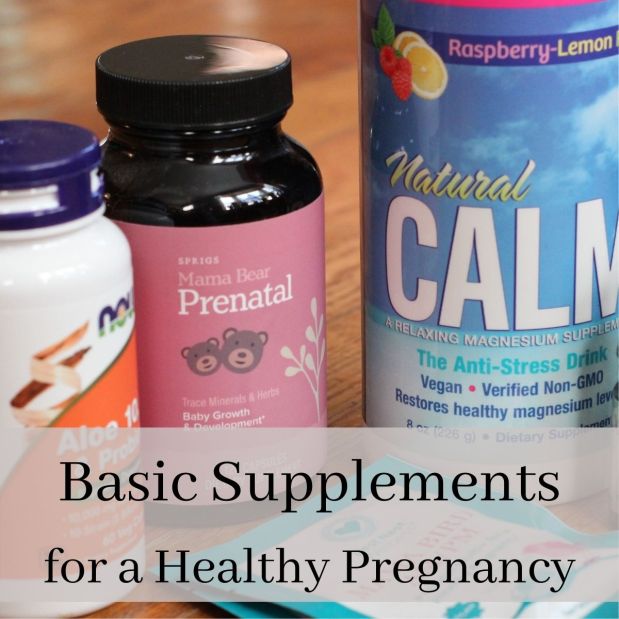
For those who have wondered, here is a list of the basic supplements that I routinely recommend to clients. Of course, more need to be added in the presence of specific conditions, but for most moms, these are the basics that I would encourage any mom to take during pregnancy (and while you’re nursing!):
For special considerations, these are typically the first recommendations:
B Vitamin (if dealing with low energy especially: your midwife can do blood tests to determine if it’s caused in part by a B vitamin or folate deficiency).
Most moms with low-risk pregnancies who are consuming a high-quality diet don’t need more than these to have a healthy pregnancy and healthy baby! For more information on understanding diet & supplements and their effect on mom and baby’s health (and what ingredients are important to be aware of!), I’d highly encourage you to check out the following sites:
And finally, if you’re looking for a place to purchase vitamins and supplements, I encourage all my clients to check out www.vitacost.com, as I typically find the best prices at that site!
I’d love to hear what prenatal vitamins and other supplements have worked for you! Feel free to share in the comments below so we can all learn together. And be sure to share this post with other moms that might benefit from the links and information!
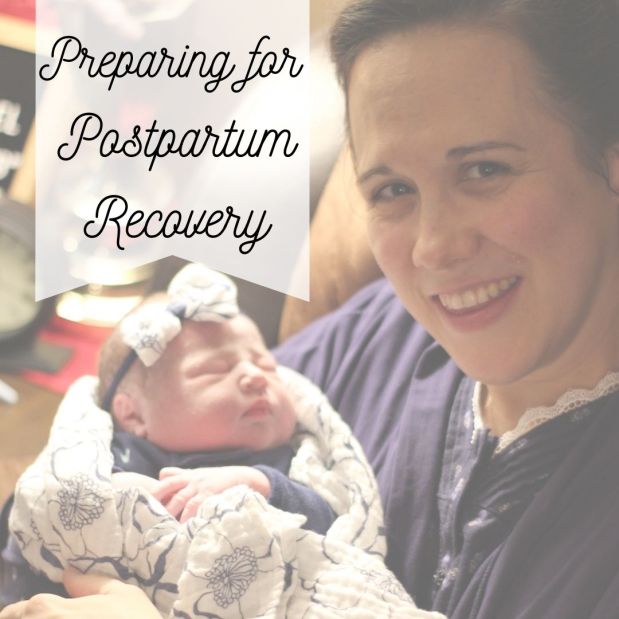
The first few hours, days and weeks after having a baby are special times to treasure as you recover from birth, transition to mothering baby from the outside, and spend time bonding and adjusting. Being adequately prepared ahead of time can make a key difference in helping postpartum to flow smoothly and successfully. Here are a few tips to consider as you prepare and plan for AFTER baby arrives. Remember that adequate rest, low stress, nourishing food, good support and planning ahead will help you to heal and promote a better overall experience for baby’s first few weeks. It’s important for your physical & mental health to take recovery seriously, and provide your body with the things it needs to continue nourishing a baby while recovering from the demands of pregnancy & birth. You won’t regret being adequately prepared!
Before the Birth:
Consider your support system. Do you have a close friend or family member that would be willing to be a resource to answer questions, let you talk with when you’re feeling low emotionally, or just need a listening ear? Is there someone you can trust and feel comfortable with who could come into your home to help care for the household (especially if there are other children) for a few days or weeks so that you can adequately rest and recover? Is Daddy able to take some extended time off of work? How does support look to you? Do you have some babysitting options?
Meal Planning: consider having some wholesome family favorites stocked in the freezer so you don’t need to think about cooking. Does your church or support group have a plan for after-baby meals? Do you need to reach out to someone to coordinate this? Would you have a friend willing to start a “meal train” after your birth? And just a note to Gentle Delivery clients: if an online “meal train” is something that would bless you, your midwife is very glad to start this after your baby arrives!
Consider stocking up on disposable plates, cups, silverware, etc. in order to simplify clean up and household chores.
Shopping (consider the below suggestions, and try to have these things together before your baby is due):
Immediate Postpartum (first hours after birth)– have these things handy in a basket or box for immediately after delivery.
Newborn Diapers & Baby Wipes
Preferred first outfit for baby, along with a swaddle blanket, socks and hat.
“Adult Diapers” or Depends (or whatever type of pad you prefer for heavier postpartum bleeding).
Comfortable Nightgown or Pajamas that are nursing accessible and easily work for skin-to-skin contact with baby.
Pre-made “padsicles” or perineal ice-packs and/or an herbal healing spray such as this one from MotherLove.
Heating pad or rice sock to help with sore muscles and after-pains.
Rhoid Balm, Tucks or other soothing support for hemorrhoids.
Large Water bottle that is easy to use, to remind & encourage you to drink lots of fluids!
Nourishing foods, drinks and snacks (think bone broth, energy bites, juice, etc.).
First Few Days–since you’ll be resting and nursing and taking it easy the first few days, you’ll want to consider having some of these items purchased ahead of time, and ready to be used during the initial few days after baby arrives, in addition to the items above (which you’ll continue using throughout the first few days/weeks).
Comfortable nursing-accessible clothes and nursing bras (remember that you may go through multiple changes of clothes due to leaking milk, bleeding and/or baby messes!). Comfort is key, since you will be resting and sleeping whenever possible.
Belly Support Binder (can use a Rebozo or scarf, or you can purchase something like Belly Bandit or MamaStrut).
If you have experienced challenges with milk supply, have supplements such as MaxiMilk or Legendairy products available to start once your milk begins to come in.
Stool Softener or Magnesium to help the first stools pass easier.
Pads/period underwear for a lighter flow (be sure to check out non-toxic options such as these JewelPads).
A journal or baby book to jot down thoughts and memories.
Something to read or do as you spend hours nursing your baby!
And finally, feel free to print/download and post this list of visitor guidelines to aid you in navigating the stress and joy of baby visits during those first days!
Are you looking into the possibility of working with a midwife, and trying to decide if it’s the right choice for you? If you’re blessed to live in an area with several options, it can be a great idea to take the time to “interview” each one, and see which one feels like the best fit for you and your family. Most midwives (myself included) offer free consultations that can give you a chance to sit down and ask your questions in person, and this can be a great opportunity to explore whether or not you and this care provider will be a “good fit”.
While I think it’s a good idea to look into your options for ANY medical provider, it can be especially important when thinking about a homebirth. Your midwife will be coming into your space, and you want both yourself and your husband to feel completely comfortable with this person, which facilitates clear & open communication, thus providing you with the best care possible. So besides some specific questions (which we’ll get to below!), also think about the intuitive side of how you connect and communicate throughout the interview. Another important component in this interview is dad’s perspective, so whenever possible please have him attend this initial consult, as this can give him the opportunity to ask questions he might have, and help establish a good working relationship from the beginning.
There are many posts out there that cover long lists of questions, but I want to get you started by giving you a few basic questions, which might bring up more as you go along. It’s a good idea, too, to do your own research before you meet with a perspective midwife. For instance, does she have a Facebook page or website? Are there reviews you can read by previous clients? Is there information listed about the types of services she offers, or things that set her apart from other options in your area? What type of credentialing/training does she have? Do the philosophies expressed on her website correspond with what you are looking for? Do what you can to find out as much as possible before meeting up, as this will enable you to get the most information out of your time together, and may raise specific questions that you might have missed otherwise. It will also keep you from wasting time that you could be spending looking into other options!
So let’s get started:
What kind of training did you go through to become a midwife?
Some midwives have attended midwifery school, others have been trained strictly through apprenticeships. Some midwives have credentials that indicate a certain level of training, and require a stated number of continuing education hours to be maintained. There are midwives who have gone through rigorous school programs and have delivered few babies outside of the hospital, and others who have done minimal studies and have only delivered babies at home. This question is not meant to dictate which type of training and educational experience is best, but rather to help you think through whether the training this midwife has received is adequate for your own comfort and safety concerns and desired birth location.
How would you describe your style during labor & delivery? Hands-on or hands-off?
Depending on your preferences, this may help you determine if you can work together well. If you know you want someone very involved, or you want to be left alone as much as possible, the midwife’s answer may shed some light on how her style could affect your labor. Some midwives are very good at adapting to their client’s wishes, and some have their own set way they want to see things happen.
What do you provide or include in your services, and what will be my responsibility?
Depending upon your state, local regulations and/or your community options, a midwife’s care package may include the ability to obtain lab work and/or ultrasounds or refer you to providers for these items, or you may be responsible to figure these things out for yourself. Some midwives include a “birth kit” as part of their package, while others ask clients to purchase this separately. A birth pool is included in some midwives care bundle, while others provide options for rental. Some midwives are able to give your baby vitamin K or provide mom with RhoGam if needed, while others need you to get these items from your pediatrician if you want them. Most midwives are able to file the needed paperwork to obtain a birth certificate and social security number, while there are a few who need you to do this legwork. Asking clear questions and getting an idea of what is and isn’t included will hopefully eliminate unmet expectations and surprise expenses as you continue through your pregnancy!
4. What tests & procedures do you routinely offer, and am I given the freedom to decline when I prefer?
It’s great when your midwife is willing to discuss the pros and cons of different tests and procedures, and allows you to make a true informed choice on each of these. Depending on the political environment, local standards of care, protocols, etc the midwife may have more or less freedom in these areas, or she may have personal preferences as to certain tests.
What are some of your recommended resources for pregnancy and for birth preparation?
This question may give you some insight into the birth philosophies the midwife has, as well as indicate how in-touch she may be with more up-to-date resources and educational material. Some books and resources are old classics, but there is also a wealth of more recent publications that can help you to be prepared. Are her health suggestions in line with your perspective and preferences? Does she require certain books to be read or DVD’s to be watched? Does she provide some resources for clients, or are you expected to purchase certain materials? Does she encourage a parenting style or lifestyle that you may be uncomfortable with, or that you find helpful?
What is her client load typically, and what happens if two mamas are in labor at the same time?
While this doesn’t happen often, it does occasionally, and it’s a good thing to discuss. This question will reveal what sort of back-up plan the midwife does or doesn’t have, and will give you some indication with how well she works with the midwifery community around her. It also helps you to think about the “what-if’s”, since birth can’t always be controlled like we wish!
What do you see as your role during labor, and would you encourage me to hire a doula?
It’s great if a prospective midwife can be honest about the support she can provide. Some midwives operate with a large team or a small client load that allows them to spend more time coaching and supporting a mom throughout labor. Most midwives are glad to support in whatever way they can once you’re in active labor, but they need to conserve their resources so that they have the energy and alertness they need for the time of birth, which means that if you really want hours of support early on, you’d probably be best served by considering a doula. This question can help you determine what the midwife’s expectations are for when she would come to you, and what sort of support you can expect, and will help you to define the role she would see herself filling at your labor.
What are some of the reasons I would be risked out of care?
This gives you an idea of the midwives range of comfort, and whether she takes a more cautious or more relaxed approach. Each approach has it’s place, but you need an approach that makes you feel most comfortable and safe. It’s also good to remember that each midwife should only operate within a realm that they truly feel is providing safe care, so this is not a “good vs. bad” topic, rather a way to understand and communicate. Is this midwife comfortable with breech delivery? With a mom that goes past 42 weeks? With a baby that decides to come before 37 weeks? Continuing if gestational diabetes develops?
What happens if I need to transfer care for some reason?
Does the midwife typically accompany clients to the hospital, or send them in by themselves? Does she have a doctor she works with, or a preferred hospital? Why or why not?
How do you handle emergencies, and which ones have you encountered the most often?
This question will give you some insight into the midwife’s perspective: does she rely only on herbal remedies? Does she carry medications? Is she trained in NRP? Does she take a proactive approach to prevention? Does she see many emergencies? The answer may vary according to your area, too, as some incidents of complications can depend upon the clientele and area the midwife works in.
I hope this list can help you as you think through what is most important to cover as you interview your potential midwife! If you find it helpful, or if you have other questions you think should be added, I’d love to hear from you. Feel free to comment below, and be sure to share this list with others that might be looking into hiring a midwife for their maternity care!
As 2020 comes to a close, I am reminded of the fact that we really do not know what the next day or year will hold. Last year at this time our family was anticipating the arrival of our fifth child, little knowing how many strange twists and turns the New Year would bring to everyone all over the world. I am grateful to rest in the confidence that nothing takes God by surprise, and that He cares about the details of our lives, which provides strength & courage to press ahead into the future!
After adding baby Tirzah to our family last December, I enjoyed a lengthy maternity leave, and felt so blessed and cared for during those first postpartum weeks. Thanks to many of you for your part in this! It’s true that you learn some things by experience that you couldn’t learn through academic study, and I am more committed than ever to encouraging moms to get adequate rest, adjust expectations, and take the time to really recuperate during those first postpartum weeks. It really is worth it! This baby has been our most contented, too, and while there are many things that probably play into this, one key factor that seemed to make a difference was the addition of infant probiotics into her daily routine from the very beginning. If you have struggled with fussiness in your baby, please take a minute to check out the blog post I wrote where I detailed this information—I really want to see more families benefit from my own challenging experiences!
As you can imagine, the COVID pandemic has affected midwifery in more ways than one. After the initial quarantine I have been doing prenatal and postpartum care visits for local clients in their homes, as it reduces the exposure for those coming in and out of my home office. I’ve also had more inquiries into homebirth this year than ever before, as many families are concerned about hospital restrictions and germ exposure. Between this added level of interest in midwifery care and my added family responsibilities, I have needed to limit the distance I can travel for births, which has meant turning down requests in outlying areas even for a few clients I’ve worked with before.
One fun aspect of care this year has been the large amount of repeat clients I’ve been privileged to serve! It was really special to catch my first “fourth baby” for a family, and have the opportunity to see babies that I have caught in years past welcoming baby siblings. With one more 2020 baby left to go, the current stats for the biggest baby this year was 8#14oz, and the smallest was 5#14oz. The earliest baby came around 2 weeks early, and the latest was almost 2 weeks late, which goes to show that there is much variation in the range of “normal”. Assisting my back-up midwife with the home delivery of twins was another extra-special experience this year! Speaking of my back-up midwife, I am grateful to have the assistance of RoseMarie Spicher to care for clients when I am unavailable, and I’ve been glad to have a working relationship with a community of midwives in the general area who have all needed to pull together to cover for each other at times due to COVID exposure or for other reasons. I’m also excited to be working regularly again with Lynelle, as she plans to attend births as my assistant this next year after taking some time off to welcome her own baby this past summer.
Heading into 2021, I’m anticipating meeting many sweet babies, and I’m enjoying making new connections with many families who are choosing midwifery care and homebirth options for the first time. I continue to feel a sense of gratefulness towards each of you for giving me the privilege of working with your family as you journey through this intimate season of life. It truly is a gift to witness the miracle of birth and the wonder of that first cry, and the wonder of that moment never grows old!
As I close, I also want to thank my family for their support as I do this work, and in particular thank my husband as he quickly and competently cares for our home and children during my random absences. It takes a special family to deal with the unpredictable aspects of having a midwife for a wife and mother, and I’m grateful for all they do behind the scenes to make this option available to the families I serve. It’s a joint effort, and I could not do what I do without Joel’s encouragement and work behind the scenes.
May God bless you and your family throughout this next year!
~Kelsey Martin/Gentle Delivery Midwifery
Be sure to regularly check out this blog and the facebook page to stay updated on current news, helpful information, health suggestions, birth stories, and announcement of special events. I’m really hoping that playdates can resume again sometime in 2021!
Introduction: To begin this post, let me start by saying that for most healthy moms and babies, there is NO need to interfere and induce (“bring about or succeed in persuading something to happen”) labor. If you have done your homework, you know that induction can bring about a cascade of interventions that can ultimately result in a different outcome than you may be hoping for. I also want to make sure that you realize the importance of discussing even the possibility of “natural induction” with your care provider, as this person will have valuable information to consider in your particular situation.
With those disclaimers, I want to also mention that there are situations that arise where it is in the best interest of mom and/or baby to get labor started sooner rather than later. These factors can include increasing blood pressure, presence of concerning signs of liver stress, prodromal labor (mom getting exhausted from nights of contractions), nearing 42 weeks of pregnancy, PROM without labor, and more. There are also moms who, due to being high risk or under an OBGYN who has strict protocols, want a more “natural” alternative to encouraging baby’s eviction over the traditional route of Pitocin or other medical induction methods, and the higher risk of interventions that accompanies these inductions. For moms who fall under these categories, I want to share with you a protocol that I have been following that has had great success with those needing an option of induction at home or without medication.
One of the biggest keys to making a “natural induction” successful is preparation. You can’t decide today that you need to have a baby and have it work nearly as well as preparing ahead of time as signs arise. For more information on general preparation (which can help make a needed induction that much more successful), check out my post HERE. For this post, I’m going to detail specific suggestions for induction. Each of the things I’ll mention below can help your body prepare for labor, and may even encourage things to happen without needing to get more aggressive. I use these methods in this way: if there are reasons to encourage labor (such as knowing you have a hospital induction date scheduled, or are post-dates and need to deliver by a certain date), we start this protocol about 4-5 days before we absolutely need to get baby out. Also keep in mind that the more ready your body is, the more likely natural resources will work. To me, that is a reassuring aspect of using natural methods to encourage labor, as if your body is not ready, it will NOT work. And if it doesn’t work, you’ll need to be patient for awhile longer, which is so very different that using Pitocin, for instance, where it is turned up in increasing increments forcing the body into labor, and creating contractions that are much stronger than what the body can naturally produce on it’s own. Experiencing contractions here and there and having a higher Bishop’s score definitely increase your chances of these suggestions working.
Now on to the method (and remember throughout these days that frequent sex and vaginal insertion of evening primrose oil gel caps at night can also help!):
The “Midwives Brew” is a vast improvement over the old method I used in my early days as a midwife. Up until recently, when faced with the need to induce, we used the castor oil recipe that was basically 2 oz. of castor oil mixed with EmergenC (or some drink/shake) which was repeated 2-3 times with a dose every 1-1 ½ hours, for a total of 6oz of castor oil consumption. Do you know how nasty that is?!? And it causes massive diarrhea, which is a miserable way to start labor! But the midwives brew doesn’t work the same way. You can research it further online, but it includes just enough castor oil to cause contractions, but the theory is that the oil binds with the almost butter to keep it from making you miserable. I also feel like the minimal amount of castor oil in this recipe also makes it safer from any concerns of causing the baby to pass meconium in utero, which is another positive aspect. The crazy thing is that this recipe really does work if your body is ready for labor, and it actually has an 85% success rate (see the link above for more info).
Day 1: MasterGland by Nature’s Sunshine taken in the following dosage: 2 capsules every half hour for 3 hours followed by 2 capsules every hour for 3-4 hours. Discontinue if you get a headache. This is an induction preparation method mentioned in Shonda Parker’s book “Naturally Healthy Pregnancy” with a quote from the book here.
Day 3: Sip on Mama Natural’s Labor Day Tea throughout the day, and consider having a membrane sweep (sometimes referred to as stripping membranes) from your care provider.
Day 4: Either repeat the previous cycle beginning with Day 1, or proceed with the Midwife’s Brew (recipe and information below).
Midwives Brew:
10 oz Apricot juice (Goya brand Apricot Nectar found in the Mexican section of the grocery store works well)
8 oz. Lemon Verbena Tea (hard to find, but you can use 4 bags of Bigelow “I Love Lemon” tea steeped in 8 oz of hot water for 10-15 min. Alternatively, some midwives use 3-4 drops of Lemon Verbena essential oil such as this one.)
2 Tbl. Almond butter
2-3 Tbl. Castor oil
Blend ingredients together in blender until well combined. Some prefer this over ice, but I’ll be honest that when I tried it, it was easier for me to get it down at room temperature.
The ingredients I have used for this recipe.
My suggestion is that you try to get some rest, eat a good breakfast, and then drink this mix around lunch time when your stomach is somewhat empty. A completely empty stomach can make it hard to handle, but if you’re too full you won’t be able to get it down either. It honestly isn’t as bad as it sounds, though it is a strange combination of flavors! After you’ve drank it, then eat whatever sounds good, and consider taking a good walk (avoid laying down for a bit until it’s settled).
Once you’ve taken this concoction, though, please be prepared! When this stuff works, it works much more gently than Pitocin, but it can cause efficient contractions…when I took it, my midwife missed my birth, and I almost didn’t make it home (a story for another day!). So learn from my experience, and don’t wait too long to get to the hospital or get your midwife on the way once contractions are consistent. Many of the moms I’ve seen take it end up with about 3-5 hour labors, though I’m not making any promises. Just wanting to not have anyone caught off guard!
So there you go! If you’ve used this method and it worked for you, I’d love to hear about it! Be sure to share this post with someone who might want to know that there are other (and much safer!) options out there than a medical induction, as this may help prevent them from heading down the cascade of interventions with their delivery!
One very uncomfortable (although very common!) challenge during pregnancy is varicose veins. “Varicose” actually means “distended”, this term describes exactly what is occurring. Due to a variety of factors (such as the increased blood volume, hormonal changes, weight of baby restricting blood flow, etc.) a mom’s veins will distend, which can cause considerable discomfort if not actual pain. Did you know that hemorrhoids are another form of varicose veins, just that these are located in the rectum?
If you notice the presence of hemorrhoids and/or extended veins (typically on your calves, but they can pop out in other places as well), it’s very important to start doing something about it right away, in order to have the best chance of keeping them from becoming a greater problem as the pregnancy continues.
Here are some practical ways to care for your varicose veins, and help to keep those veins strong and discourage further distention:
Exercise regularly (daily walks are great!) to keep your blood flow circulating.
Make sure your bowels are moving well, in order to prevent straining from constipation (this makes hemorrhoids worse). Take some extra fiber and magnesium if needed, and make sure your daily diet includes high-fiber foods such as flax meal, oatmeal, etc.
Take time to elevate your legs higher than your heart 2-3x a day for 20 min.
Whenever you need to sit, keep your feet elevated slightly and avoid crossing your ankles or knees.
Try not to stand or sit for long periods of time: keep your position changing!
Sleep on your side to encourage good blood flow.
Consider extra support: good quality support hose for varicose veins or a “V2 Prenatal Cradle” support for vulvar varicosities. Support should be put on first thing in the morning before gravity causes pressure on the veins.
Hot, moist compresses for pain relief.
Take care not to massage the veins, as this can dislodge clots.
Supplements are another way to build up the vein wall strength and encourage good blood flow:
Horse Chestnut (tincture or pill), Rutin and Collonsonia Root (also known as Stoneroot) are some of the most effective herbal supplements, and can be taken individually or in combination.
And finally, if you’re looking for some topical ways to get some relief from the burning, itching and heavy sensations that varicose veins bring with them, you may find some of these options helpful:
Witch Hazel applied as a wipe (Tucks) or topical compress
I hope these ideas and suggestions can be a help to you, and provide you with some relief from this pregnancy discomfort! If you have a recommendation of something that really worked for you, I’d love to hear about it!















 Gentle Delivery Midwifery Services (Centre Co. PA)