I’m not sure how time passes so quickly: here we find ourselves at the close of yet another year. It’s always good to take a bit of time to reflect over some of the highlights and challenges, and I’m once again grateful for those of you who have invited me to be part of your family’s story in such a special way.
The past year was intentionally a slower one when it comes to the number of babies I was privileged to welcome. I continue to find that life has various seasons, and trying to navigate how to focus more on my own children versus putting more energy into midwifery is a real part of life right now. As my children grow, the need for mom’s focus and presence seems to be more intense (in a different way than during the years when they were all tiny!), which in turn has caused me to pull back from too busy of a midwifery schedule. We also took some time this year for some out-of-the ordinary events such as Joel and I celebrating our 15th wedding anniversary, spending several days at a missions conference in Pittsburgh, a week-long trip to Mexico (visiting missionaries who are part of the ministry Joel works for), several camping/family trips, and then our most recent opportunity: spending 5 weeks in Thailand while Joel attended an international Bible Translation conference and then spent several weeks teaching at a missions training school for young people. This trip was such a rich opportunity and we have returned home with many amazing memories!
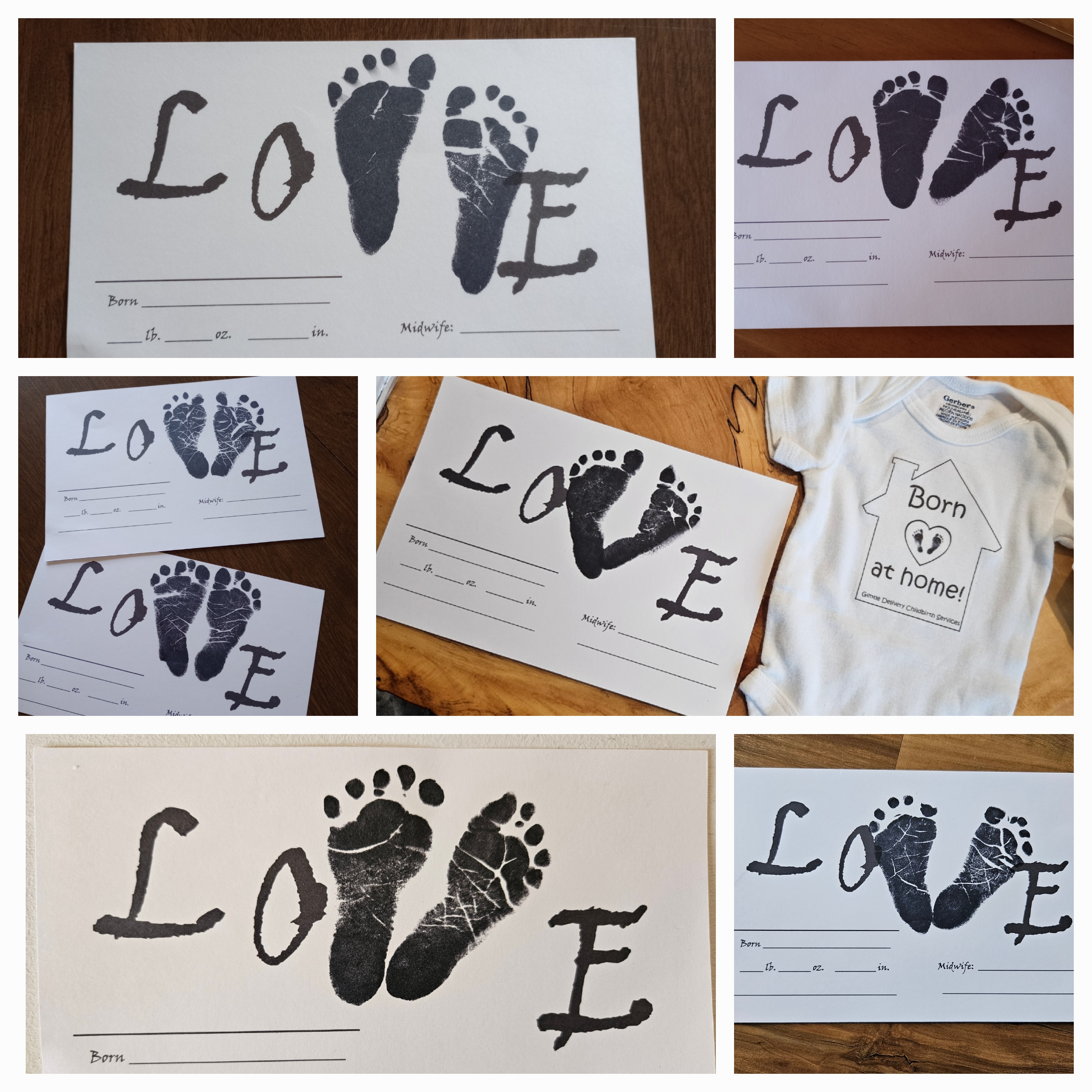
When it comes to babies in 2025, there were many sweet little footprints added to the board in the office. While some years include mostly repeat clients, this year I worked with quite a few families for the first time. The smallest baby weighed in at 6#15oz and the largest at 8#15oz, and these newborns ranged from being the first baby in the family to the fifth.
Births weren’t the only aspect of my midwifery work this past year: I also spent time working on renewing my Certified Professional Midwife credential for the 5th time, making this 16 years since I became certified. I was also involved in editing & looking over an exam that another group of midwives is putting together for a certifying agency. This was a great opportunity to brush up on fine details and give input on what is important for newly graduated midwives to be familiar with. I also ended up doing quite a bit of long-distance communication with women who are serving on the mission field or are in areas without midwifery care, so all of these opportunities keep me continually studying and learning so that I can pass on help to others!
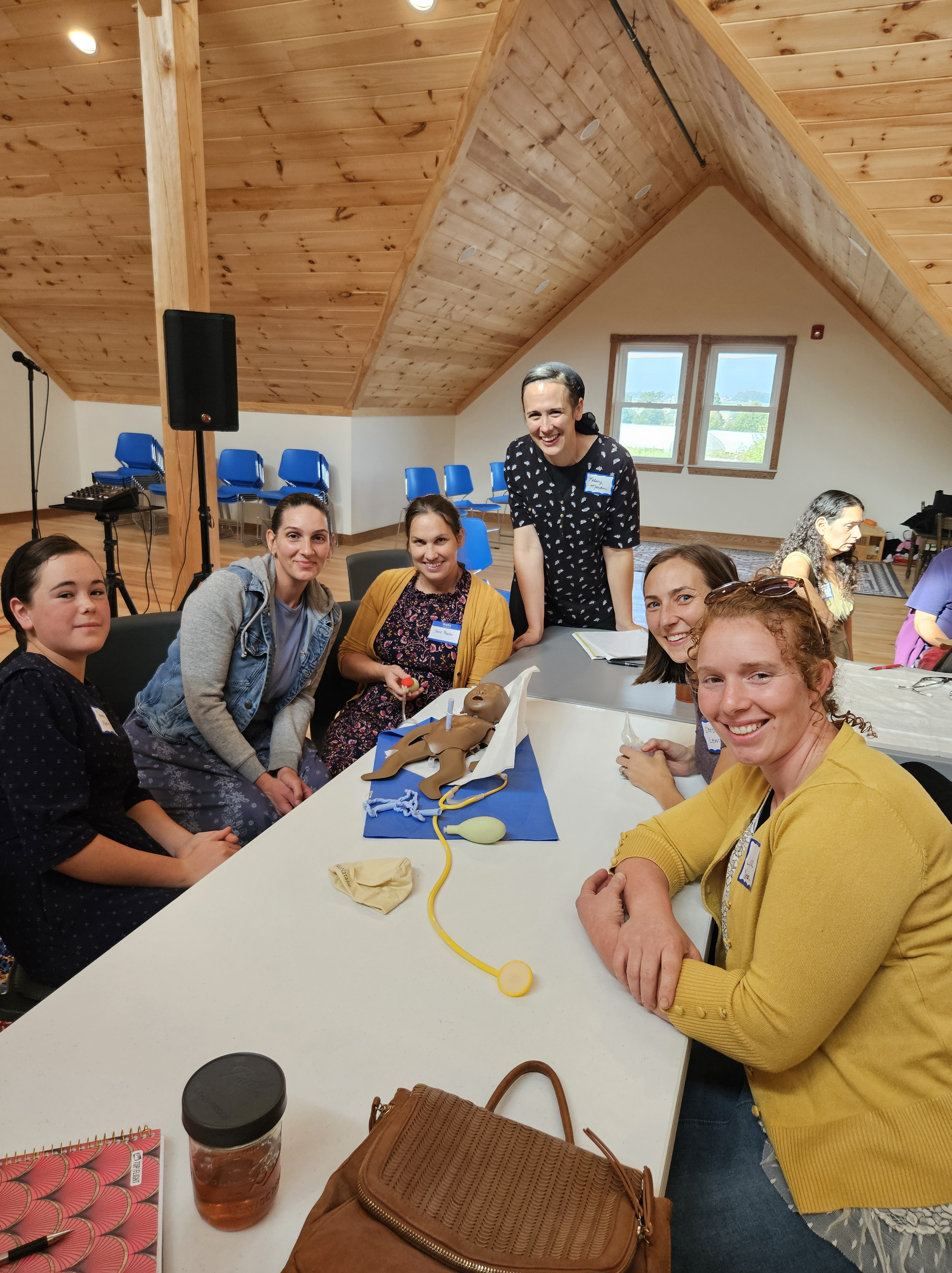
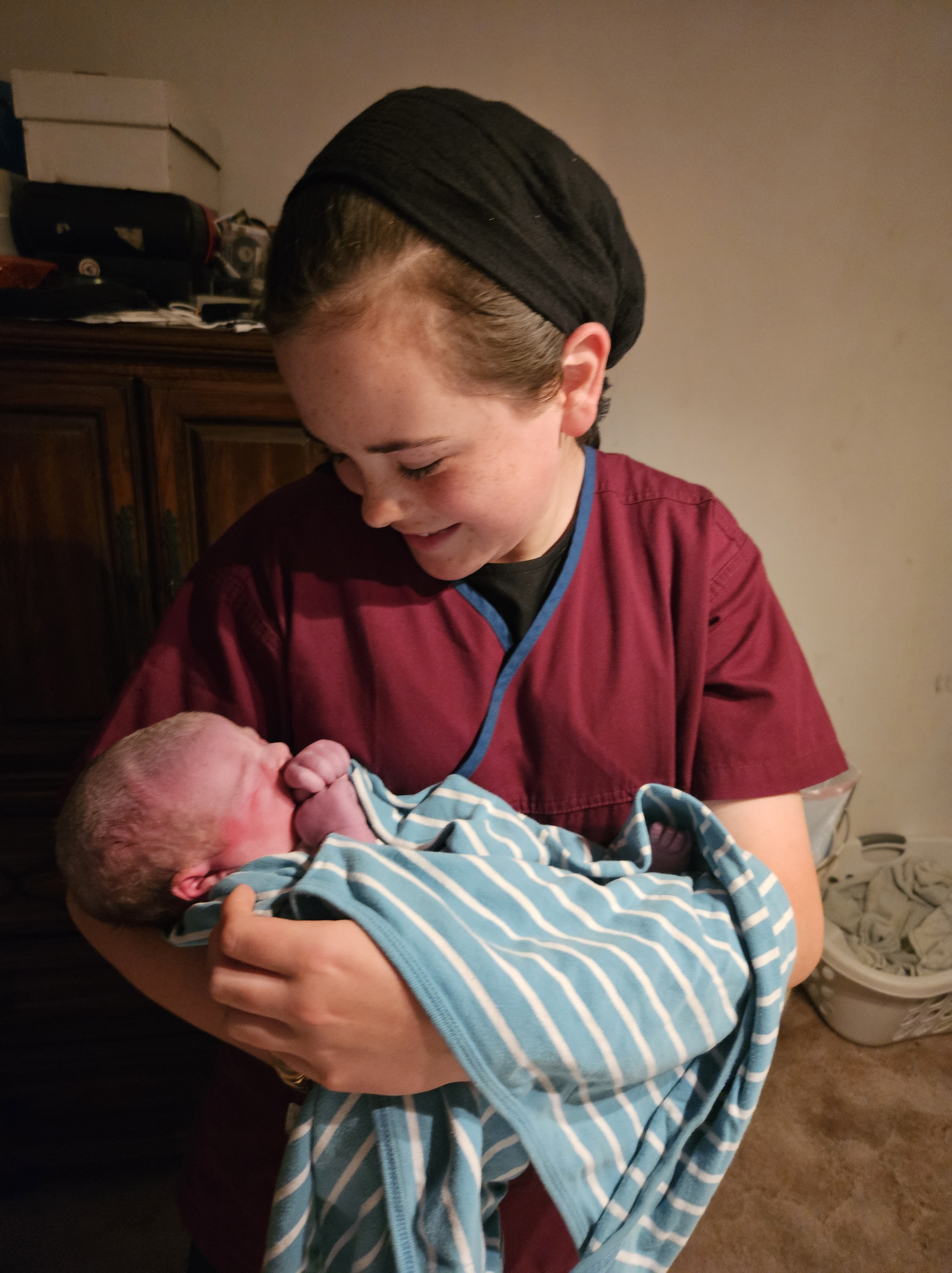
As I think about all it takes to provide midwifery care, I want to give a shout-out to the amazing assistants who drop everything at a moment’s notice to come assist me at births! These ladies do so much to make your birth experiences good ones, and I’m thankful to have Lanna, Emily, Janine and others willing to help out. One highlight of this year was when my own daughter Yoanna was invited to join me at a birth. She’s dreamed of training to be an assistant for years, and this was such a delightful experience for her. As we head into the next year, I plan to involve her more, as she has had the opportunity this fall to take a basic Neonatal resuscitation class as well as doing quite a bit of specific study in the field of midwifery. I’ve always hoped that one of my daughter’s might want to join me, and I’m excited about involving her more when it works out.
In closing, just a reminder that you can find quite a few helpful articles and links listed on the Gentle Delivery website, so be sure to check it out. Use the search bar function to look for topics you might need information about, and please feel free to pass these links on to friends! Our summer play date was a huge success, so stay tuned for more of those to happen in 2026 as I hope to get these on a more regular schedule again. If you want to be added to the email list for playgroup invites, send me a message and ask to be added to the list: gentlemidwife@gmail.com. Be sure to add the addresses of any friends who may want to join, as these are not limited to Gentle Delivery clients but are intended to build up the local homebirth community. May each of you have a blessed Christmas season!
As we approach the end of 2024, I’m grateful for the chance to reflect over the opportunities that presented themselves throughout this past year. I count it a privilege to work with so many sweet families, and to be present during such a special life event as when a new life enters the world.
2024 began bright and early with the arrival of a baby girl on January 1st, who decided to come fast enough to beat my arrival by a few minutes! Interestingly, my last baby due in 2024 arrived the same way on Christmas Eve, so I guess fast births were the theme of this year. It’s fun to consider the stats: most of the families I worked with this year were new to Gentle Delivery, and many were having their first homebirth. About half of the babies were born in water, most came close to or after their due dates (a few made us wait an EXTRA long time), and the majority weighed around 7#14oz. The largest was 9#3oz, and the smallest was 6#14oz: it’s so interesting what variety there is in the realm of “normal”. There were a few “first experiences” this year, as well: a flat tire on the way to a birth (yes, I drove on it and yes, I made it to the birth!) and parking tickets at 6am. There’s never a dull moment when doing birthwork!
I’m always grateful for the assistants who help me out at any time day or night, and there were many different ladies fulfilling this role this year. Many of you met Natasha, a midwifery student from VA who spent several months this winter helping me. She is still in midwifery school, and hopes to be finished before too much longer! Lanna, Maria, Lynelle and Janine have also pitched in depending on schedules, and these women do so much to make your experience that much better. I couldn’t do what I do without their help, and appreciate them sacrificing their time & plans when I need help.
Having a nursing baby who needed to be with me added another need for flexibility during the early months of the year, and I was so grateful for the help my oldest daughter Yoanna provided as she cheerfully got up any time day or night to come along and babysit. While I’m happy to be past the stage of needing to have Shekinah with me, Yoanna is eagerly looking forward to the day when she can graduate from babysitter to birth assistant, and that can’t come soon enough for her!
Our family’s move to Philipsburg was another big change. While that has shifted the radius that I’m able to serve, it’s also opened some new doors in an area that doesn’t have as many midwifery options. The midwifery office suite that we were able to finish out has made appointments and midwifery work SO much more sustainable for our family life, which has also been a tremendous blessing.
As my children grow and family life shifts into new stages once again, we find ourselves taking time to reevaluate our schedule and commitments as I move forward with midwifery responsibilities. I love the opportunity to serve families in this way, yet the constant demand and on-call schedule does make things challenging at times. My dream would be to be able to team with another midwife someday, thus being able to provide home birth options while at the same time having the opportunity to take off when needed for family time and other commitments. At this time, keeping midwifery sustainable for our family means limiting service radius at times, and taking off various months when we have other plans pending. It can be very hard to say no to former clients, but I’m thankful to have a number of other options that I can pass on when this happens. I couldn’t do midwifery without my family’s support, yet the only way to keep that support is to keep them priority whenever I can!
In closing, please note that there is a new office and mailing address for Gentle Delivery (if you need it, please email or message me and I’ll happily send it your way!). I would LOVE to get your family pictures & updates, and want to make sure they get to my new location! I’m hoping to get back into a schedule of doing Mommy Meetups again in 2025, so email me if you want to be on the list for those updates! gentlemidwife@gmail.com
Blessings to each one of you in 2025! ~Kelsey Martin/Gentle Delivery Midwifery
It’s hard to believe another year is almost completed! As we head towards the New Year, I wanted to take a few minutes to update you all on happenings here at Gentle Delivery, as well as thank each of you for your continued support. Whether it’s returning clients, new clients, supportive local services (lactation consultants, medical teams, ultrasound technicians, etc.), back-up midwives, students or assistants, I am blessed to be part of the local midwifery community, and I’ve been grateful to see the way this community works together!
So far in 2022 I’ve been privileged to assist in welcoming 15 babies, most of whom were little girls. Several of these were born to first-time mamas, and once again I was amazed, humbled and stretched throughout the experiences of assisting these families with the unique challenges and victories that accompany the unknown journey of becoming parents for the first time. Besides the first time babies, the rest ranged from being sibling #2 to sibling #8 for their families, and I had the special privilege of attending 3 moms for the 3rd time. Seeing children that I remember catching as tiny babies become big siblings is a fun perk that comes from providing ongoing care for client families! The smallest baby this year was 6# 4oz, and so far 8# 14oz was the biggest, with one more baby pending who could change these statistics!
Lanna and Christine, my usual assistants during 2022
The teamwork of our community stood out to me in greater ways throughout the pregnancies and births this past year. Over and over again I have been thankful for good working relationships both with other midwives and the medical community—which is such a key factor for providing sustainable, safe midwifery care options. There were times this year where additional medical help was needed in order to provide us with the ultimate goal of having a healthy mom & baby, which made me especially grateful for several MFM’s and CNM’s willing to provide consultations, input & care for clients as well as for a welcoming hospital environment when complications necessitated a transfer of care. Along the lines of providing good care options, it was exciting to add the services of a diagnostic ultrasound tech who has been able to regularly perform scans right in my office!
Birth teams have varied this year depending on availability of different assistants & midwives, but each one of these ladies have added to the birth experiences and help me in so many different ways, bringing their own special support and care to births. There are many behind-the-scenes details that these women take care of, besides their willingness to drop whatever they have going on to come help me in any way they can at any hour of the day or night, and I couldn’t continue to provide midwifery services without them! Due to a family emergency for one local midwife, I ended up covering at various times for her over the year, and catching several babies while she needed to be out-of-state. While I know it can be disappointing to not have your expected team for your birth, it was also a blessing for these families to still be able to continue with their homebirth plans despite the need for the original midwife to attend to important family needs. Along similar lines, I was very thankful for midwives willing to cover for me so that I could spend a few weekends away with my family, both for vacation and a family wedding. The strain of on-call life is challenging (especially with young children!), and being able to rest knowing that your clients are in competent hands while you take a break is a huge factor in maintaining a sustainable midwifery practice!
Denae, a midwife in Philipsburg who assisted and covered for meEmily, a local birth assistant who helped me out a number of times when I was in a pinchHannah, a midwife who covered for me and assisted with births & appointments…and Christine, my faithful assistant this past year
In closing, I also wish to express my thankfulness to my supportive family. The way they pray for me when I’m at births, pick up the slack when mama needs to rest or is away, and adjust their lives and schedule is such a vital part of midwifery work, and it really is a family effort. Also, I realize that none of this could happen without God’s continued blessing, provision and care. As we head into 2023, my children are very excited about the addition of a baby sister arriving in early spring, Lord-willing. I’ll be taking a few months off for maternity leave, and trying to put into practice the things I tell all of you about rest and recovery postpartum! Blessings to each of you in the New Year!
The photo we sent to our families, to let them know baby #6 was on the way!
If you’ve recently given birth, you’ve probably wondered how to really help your body heal as you navigate the postpartum period and adapt to your post-baby body. Over the years I have developed a greater passion to see women really cared for and their bodies aided in this healing process, realizing that taking the postpartum period seriously can have long-term benefits for mom’s health & well-being in a variety of areas.
One component to long-term women’s health that often lacks attention is that of the physical rehabilitation needed after birth. If you think about all the changes that the body goes through during pregnancy (stretching, repositioning of internal organs, increased blood volume, muscle strain, weight gain, uterine growth, etc.) and then during birth (the physical exertion, movement, muscle & tissue stretching, internal organ placement changes, and more!), we should consider it normal that our body might need some help in recovering and rehabilitating in order to be able to function optimally. But there are SO MANY voices out there telling you what you should & shouldn’t do, and it can feel overwhelming to know where to start and who to listen to! In light of this (and because I wanted some better information to give to my postpartum clients!), I reached out to several local experts who provide support and services to postpartum women in our area. I’m grateful that they were willing to share a little bit about themselves, the services they have to offer (if you’re local, they are great options to consider as you prepare for postpartum recovery!!), and give us a few tips when it comes to understanding the recovery process and how to integrate physical exercises that will actually help our bodies heal without causing further trauma or injury.
By introducing you to these women who are aiding local moms specifically in their pelvic floor and post-birth rehabilitation health, I am hopeful it can give you an idea of some of the options you have right here in Centre County. Any of these providers will be happy to aid you in recovery from the marathon of growing a baby and giving birth! I also know that many moms are hesitant to reach out for this type of support and therapy, sometimes due to having many unanswered questions about what physical therapy or other services might entail. After learning more about these professionals and the specific focus and background each one has in their respective areas of expertise, you will hopefully have some of your questions answered, and perhaps have a more informed idea of what care might be best for your situation, preference, and recovery.
Hi! I’m Dr. Julie Kulig, a chiropractor in Bellefonte at Kulig Chiropractic & Rehabilitation. I have a strong interest in treating pregnant and postpartum women (and their littles). I have 2 children currently of my own and find joy in observing and assessing these littles movement patterns and developmental milestones.
My educational background is Doctor of Chiropractic, Webster Certified (for all you pregnant mommas), Birthfit professional, DNS (dynamic neuromuscular stabilization), and MDT (the mckenzie method of mechanical diagnosis and therapy.) Previously I held BIRTHFIT postpartum classes 2x/ wk for 4 weeks to help women improve core and pelvic floor function postpartum. I still treat pregnant and postpartum women daily and am happy to offer this service alone if you are interested (no adjustment needed).
Dr. Julie gently caring for my own newborn!
The BIRTHFIT exercises are based on DNS: dynamic neuromuscular stabilization. These are a series of exercises based on the study of babies and their motor milestones that occur 0-18 months. We use these movements to help treat moms both pre – and post – baby! The exercises are based off of diaphragmatic breathing and the relationship the diaphragm has with the pelvic floor (much more intricate and we can talk about that more!!)
We treat: pain, pelvic floor pain, urinary stress incontinence, diastasis rectus abdominus and more. Trunk stability is the basis of all of our movements and essential in our recovery postpartum. Wondering if we could help you?? ASK: drjuliekulig@gmail.com. I’m always happy to chat more! www.kuligdc.com
Hello! I’m Becca Beck. Originally from GA, I live in State College with my husband and 3 sons. I am a Functional Movement Teacher who specializes in the Core and Pelvic Floor and a Certified Restore Your Core® Teacher. Restore Your Core® is a movement program, founded by Lauren Ohayon, that takes a whole-body approach to the Core and Pelvic Floor. It uses exercises that are a mixture of corrective exercises, yoga, pilates, and functional movement to help women reboot their core and pelvic floor. I educate my clients on the contributing factors to core and pelvic floor dysfunction, help them to uncover their movement blind spots and repattern their core and pelvic floor to be functional, reflexive, responsive, and supportive to their bodies.
Here are some things I want my clients to consider and try in their Postpartum Recovery
Rest. Even if you are feeling good, you still went through a dramatic physiological experience and you still have a dinner plate sized wound on your uterus. I hear all the time from women who regret getting back into things too soon after birth but I have never heard a woman regret giving her body time and space to rest and heal. You have to think of it as an investment. This time you take to rest now, sets you up for a better recovery and getting back to the things you love sooner.
Reconnect With Your Core. Your first 6 weeks do not have to be without movement but we want to be smart about how we approach it. You wouldn’t sprain an ankle, rest 6 weeks and then jump into the same movements you were doing before without doing some rehab. Your abdominal system just spent 9+ months rearranging itself and being stretched to new limits. Those early postpartum days are a great time to start reconnecting with your core, waking up your brain to this area of your body, and preparing your body to return to the daily movements of life and the activities you love.
Where to start: Dandelion Breath. Sitting, standing, or laying down. Place one hand on your lower abdominals. Imagine you are holding a dandelion right in front of your mouth. Inhale, and then on a long exhale blow all the seeds off your dandelion and keep blowing smooth and steady until you have no air left. Did you feel a natural drawing in of your abdominals away from your hand? It’s okay if you didn’t. Try a set of 5 about 1-2 times a day. You may not feel it right away, but the more times you ask the stronger that brain connection will become and you will get there eventually! When you feel more comfortable with this exhale and feel that natural corseting in use this Dandelion Breathing whenever you are going to lift or exert. Remember, “Blow before you go.”
Show Your Back Some Love. Early post-partum can be a beast on the low back with all the sitting, feeding, bending over for changes and lifting out of the crib.
A few tips to try:
When sitting, try to sit on your sits bones (the bony parts you feel where your legs and butt meet) instead of letting your pelvis tuck under (don’t feel militant about this advice, slouching isn’t evil we just want you to change it up some!). You may find it easier to sit up if you place a pillow under your sits bones.
When you bend over, think about sticking your bottom out vs tucking your tail like a sad puppy dog. Also consider putting a step stool by your baby’s crib so you don’t have to round as much in the upper back to get baby in and out of the crib. This will allow you to use a squat for lifting and lowering baby putting less strain on the low back.
Working with me or a Pelvic Floor PT can be a great way to learn exercises for early postpartum and how you can progress them as you move through the 4th trimester and beyond. It is never too late to get started. www.beccabeck.com or email: beccabeckmovement@gmail.com
Hello! My name is Kyla Dunlavey and I am delighted to be included in this group of women! I have been an orthopedic/sports med physical therapist for almost 25 years and I launched my private practice Core Physio LLC in February 2021 with a special interest in helping active women stay active. I am originally from NW Pennsylvania and spent 14 years of my career at Walter Reed National Military Medical Center in Washington DC before moving back to Pennsylvania in 2018. I started my own practice in order to practice the way I wanted to… Instead of the typical PT clinic ‘mill’, I wanted to see fewer clients for longer sessions, offering the true one-on-one, in-depth, unique, holistic attention to my active clients deserve. I don’t do any internal pelvic floor work, but rather I approach the entire system through exercise, pressure management, breath work, and mindfulness. I refer as necessary to pelvic floor PT. I look at the entire person and empower them with knowledge about their bodies, movement, and the breath, for greater carryover into activities like running, or even just picking up and carrying a child!
I have an endless curiosity and fascination about the human body and I constantly strive to keep up on the latest research and treatment techniques, as what we know about the human body is continually evolving! Case in point, over the past few years, research has started honing in on the pelvic floor and its connection to low back, SI joint, and hip health…and vice versa! Not only this, but also identifying it’s buddy the diaphragm and proper breathing technique, as part of a missing link in establishing true core stability, along with its teammates: the pelvic floor, the abdominals, spinal extensors, and intra-abdominal pressure. The way women stand, move, and breath typically changes during pregnancy, as the baby grows and hormone levels alter. Ligaments become more lax, abdominals are on stretch, the back extensors may become taut, it’s difficult to get a breath down into the abdominal cavity, and postural alignment changes impacting optimal muscle recruitment like the glutes. This often carries over into postpartum life, impacting return to activity or just simply keeping up with the demands of motherhood. Women may experience things like diastasis recti, leaking (with coughing, sneezing, laughing, or jumping), hip pain, SI joint pain, pelvic floor pain, or low back pain. A bonus, in establishing proper breathing technique, is tapping into our parasympathetic nervous system which gets us out of the tense fight, flight or freeze state most of us stay in all day! Try the 10 minute-Time Out: Go to a quiet area. Have hubby watch the kids. If you don’t have 10 minutes, do 2 minutes! Lie down on the floor with your legs up on the wall and a pillow under your head, (or on your bed with legs up on the headboard if it is flat). Without getting into specifics of proper breathing, just breathe through the nose slowly for 4-5 seconds, letting go of any tension in the body. Exhale. How long did you exhale for? It should be at least 4-5 seconds, if not double your inhalation! How do you feel afterwards? Hopefully relaxed and energized!
If you think you might be interested in tackling your issues, call for free 15min consultation: 814.314.8880 www.TheCorePhysio.com
I have 20 years of experience working as a physical therapist. Born and raised in Belgium, I graduated from the Catholic University of Leuven as a Physical Therapist in 2001. Afterwards, I pursued a 2 year program at the University of Ghent to become an Orthopedic Manual Therapist. I have worked as a physical therapist across the world: in Belgium, the Netherlands, Turkey, New York City and State College, PA.
Becoming a mom in 2010, I became more acutely aware of the need for pelvic rehab in the US compared to Europe. I decided to expand my practice and become a Pelvic Health Specialist. I have done extensive continuing education through Herman and Wallace, the APTA Women’s Health Section, Pelvic Guru, and others. I take pride in staying up to date in the emerging field of pelvic rehab, women’s health physical therapy and pre- and postpartum care with extensive continuing education, literature, and books.
I feel extremely passionate about providing the best possible care to all people experiencing challenges with their pelvic health. Being able to help people achieve their goals and highest potential is my biggest reward.
Why Pelvic Shanti?
Pelvic Shanti was founded to provide resources to women during their pregnancy and in the postpartum period (and beyond). A lot of the symptoms that we experience during this time in our lives are quite common but not normal.
We recommend a consultation with a pelvic floor physical therapist if you experience:
● Urinary or fecal incontinence
● Urinary or fecal urgency
● Heaviness, pressure, bulge or dragging in the pelvic area
We are here to answer all your questions and guide you as you return to your physical activities. To best support the new moms we work with, we offer office or in-home visits and remote consultations. www.pelvicshanti.com
I’m a licensed Doctor of Physical Therapy and a researcher at Penn State University. My clinical practice focuses on treating women with pelvic floor problems like incontinence, pelvic pain and prolapse (heaviness in the pelvic organs), and my research aims to better understand pelvic floor muscle function, how it works with the rest of the trunk, and develop innovative new treatments for pelvic floor problems.
Pelvic floor physical therapy aims to restore optimal function in the muscles that support bowel and bladder use, sexual function, and keep the pelvic organs lifted. These muscles get stretched and can even tear during pregnancy or delivery and can contribute to problems of leaking (bowel or bladder), scar tissue or painful areas of the muscles, and poor support of pelvic organs causing dropping or prolapse. Treatment with a physical therapist may involve local pelvic floor interventions to improve the scarring, strength, mobility and tone in the muscles. It may also involve exercises and movements focused on the whole integrated body so people can return to the movement that matters most to them, whether that is playing on the floor with babies or training for a triathlon. In my practice, I treat the pelvis and pelvic floor as a piece of the puzzle and will also address the whole body and the whole individual.
I will be resuming my private practice in the spring/summer of 2022 and will provide updated information on my website: www.centered-physio.com
NOTE: Dr. Rudavsky will also be recruiting participants for her research in pelvic floor functioning in the spring of 2022. For more information on participating in pelvic floor research, please email Dr. Rudavsky at axr5794@psu.edu
In closing, I want to thank each one of these women for taking the time to share their thoughts, suggestions & tips as well as providing us with an introduction to themselves and the services they provide. If you’re local and end up using one of these providers, please let them know you read about them here! And if you’re not local, it’s my hope that you at least learned more about the services pelvic floor therapists, chiropractors and other professionals can provide to postpartum moms, and perhaps you can use this information to aid you in your search for good postpartum care. I know you won’t regret taking care of your body now and avoiding potential long-term challenges!
If you’ve used a pelvic floor therapist, chiropractor or other professional during the 4th trimester and beyond, would you tell us about your experience?
As I think back over this past year, it is with a sense of gratefulness for the ways that God has led, protected and provided. 2021 has included more complications, challenges and adrenaline rushes than I’ve ever had in one year’s time since I began practicing as a midwife 12 years ago! The additional gray hairs accumulated over the months prove this, and I am ending the year feeling like I’ve gained a level of experience that I honestly wouldn’t have minded doing without. However, I’ve also been reminded that this is WHY a midwife takes training seriously, and I’m more committed than ever to doing my best to assist families in safe births, even when at times this requires a different birth location than what we had hoped for, or more invasive assistance than what I prefer to provide.
Besides being the most intense year complication-wise and the most stressful year when it comes to constant changes & research due to the ever-changing Covid landscape, it was also my busiest year baby-wise! I had the honor of helping to welcome 6 girls and 11 boys by the time the last December babies arrived. Weight ranges were fairly average: smallest was 6#8oz and the biggest was 9#9oz. While a couple of little ones came a week or two early, most typically went on the later side with two babies waiting until 13 days past their due date. Three babies made child #6 for their families, and two boys were the first ones for their families. While there were several long labors and many hours spent with a family before the birth, one little guy was in a big enough hurry that he made his appearance in his home before I did! As usual, birth always has an element of surprise that keeps us all on our toes.
Lynelle, Myself & Lanna
I was blessed to work with several great assistants this year! These ladies really help to lift my load, and add a lot to our team. After assisting with births throughout the past 6 years, Lynelle is sensing a need to step back for a time, so she won’t be seen as frequently in the next year. Lanna began helping this spring at the height of our busy season, and has been such a blessing! She will continue to assist as her schedule allows, and there’s the potential of another assistant joining the team in the near future. I’ve also been grateful for the continued help of the midwifery community here in central PA: other assistants and midwives have been willing to fill in as needed, and I’m thankful to have had help available whenever I’ve needed an extra set of hands or someone to cover for a trip or emergency. I was especially thankful for RoseMarie’s willingness to cover for me this fall when our family had COVID, and I was thankful for the baby who so beautifully cooperated in waiting to arrive until I was recovered and my family was past quarantine!
Guerrero, Mexico Summer 2021
On the home front, my little family is growing and doing well! In spite of lots of babies and the craziness this adds to our calendar, we were thankful to get to spend some time camping over the summer, as well as taking a family trip to Mexico to visit missionaries serving with the organization my husband works for. I couldn’t serve as a midwife without the amazing support of my husband Joel, who graciously steps in to care for everyone when mama disappears at a moment’s notice. With children ranging in age from almost 2 to 10, life at home is always exciting and active, and my girls can’t wait until THEY are old enough to “help mama at births”.
A big thank you to each one of you who have trusted me to support you as you navigated your pregnancies and deliveries—it is something I count a privilege and honor! I love to hear from families, so please feel free to send an update and picture when you have a chance!
Many blessings as you head into the New Year,
Kelsey Martin & Gentle Delivery Midwifery Services
Be sure to check out the blog and Facebook page to stay updated on current news, helpful information, health suggestions, birth stories, and announcement of special events such as playdates!
As we enter into the Christmas season again, I have to think about the year we were anticipating our own Christmas baby, and what a delightful time of year it was to cozy up inside with a newborn! Our little Tirzah had quite the dramatic entrance into the world, and it almost makes me laugh every time I recount it…
By the time I was expecting my fifth baby, I knew to expect lots of contractions and discomfort, and this pregnancy was no exception. Thankfully my blood pressure was staying within normal limits, and everything else was proceeding smoothly. But after several nights with contractions and signs that labor could be imminent, I was getting TIRED. Once you loose that much sleep and feel heavy and uncomfortable all the time, you start to wonder how on earth you are going to make it through labor yet! One night I was pretty sure it was the “real deal”, after being up for hours with regular contractions, only to find everything stopped once the birth team was here and the pool was filled! Funny that it took the fifth child to experience that “false run”, but after not calling the midwife soon enough last time, we were trying to not repeat that scenario—only to send everyone home after a couple of hours!
My previous baby had come after an extremely intense labor, and I was trying hard to not allow fear to overcome my anticipation of this birth. Lynelle, my good friend and birth assistant, had told me that I really should try the birth pool this time around, and even offered to take care of all the set up and prep to make that happen. So we had set up the pool in the office, and had everything ready to go, and I was really hopeful that it would make a difference in the intensity, especially at the end.
Everything set up and ready go for round #1!
Fast forward a couple of days: after getting a good night’s sleep, I woke up on Saturday feeling like this baby needed to be encouraged to come. I’ve taken Castor Oil before, but every time I thought about that option it made me want to puke. So I figured there had to be an alternative: enter the Midwives Brew! I had read about this recipe (used often by European Midwives), but had always figured that the small amount of castor oil combined with the other strange ingredients wouldn’t actually be effective. But by this point I was willing to at least TRY it and see! My husband was on board (he was ready to see me up at night nursing a baby instead of up at night with contractions!), but I warned him that I really didn’t think it would work.
Mid-morning, I took my youngest for a little “mommy date”, and we headed to Wegman’s for a few groceries and the ingredients for the brew (see this post to find out what those are!). I had fun picking out a few things that I thought would sound good to eat or drink IF I was in labor later on, and we had a pleasant little outing. Once I returned home it was about lunch time, so while Joel fixed lunch, I blended up the brew, and sipped it down before eating a little lunch. While not the best flavor I’ve ever tasted, it wasn’t nearly as bad as downing large amounts of castor oil in juice!! My stomach felt a little funny, but eating some food and then chewing some gum seemed to settle things.
strange blend of ingredients!
This was the weekend that one of our little local Victorian towns always holds an event called “A Victorian Christmas”. That event combined with the opening of an exhibit of an Underground Railroad station in one of the museums there had made me want to take the children out for awhile if we were still waiting on a baby over that time. Since Joel had a Bible Study planned at our house for the afternoon, it felt like a great opportunity to take out the older children for some educational distraction and let me get a chance to think about something other than baby waiting! Since all I had been experiencing for two hours was some minor stomach discomfort, I decided to head out around 2:30pm, despite my husband’s slight misgivings. Laughingly I joked with him that if I called him he’d better answer the phone, as it might mean I needed him to come pick me up!
Bellefonte is about 10 min from our house, and we parked and went through the historical museum, only to find out that it did not contain the Underground Railroad Exhibit like I had thought. The curator pointed us up the road about half a block to the right museum, and the children and I headed that direction. Right as we hit the steps (around 3:30pm), I felt a slight “pop” and had a thought that perhaps my water had broken. But I wasn’t sure, and decided since we were RIGHT THERE we might as well go in. I felt a bit of dismay when the museum volunteer cheerily told us that the exhibit was on the top floor…UP THREE FLIGHTS OF STAIRS!! We started up the stairs when I felt my first real contraction, and I immediately thought that we’d better not stay long. The children were oblivious, of course, and thoroughly enjoyed exploring, while I tried to act like nothing was amiss as the contractions quickly started getting stronger and harder. I hurried them through the exhibit and back down the stairs, stopping briefly in the bathroom where I confirmed that indeed my water had broken. As we headed outside, my children excitedly discussed the next place we would go…and I seriously informed them that we needed to get home NOW. They looked at me puzzled, and I told them I thought baby sister was going to be coming, to which my 6 year old son replied “how do you know? Your water hasn’t broken yet, has it?”. That made me laugh in spite of the situation, and when I told him it HAD, they all got really serious!
The half-block walk back to the car seemed to take forever, as the contractions were definitely picking up in speed and intensity. Once we pulled out and started on the road, I called Joel. The first time he didn’t answer, but then when the phone rang the second time he figured he’d better pick up! I told him that labor had begun, and to please have all the Bible study men out of the house by the time I got home and figure out where the boys were supposed to go…and to pray I could drive home safely! Next I called my friend Lynelle, as I knew that she would need to get a babysitter for her children, and I really wanted her free to get the pool started if things continued. Once I was finished with this phone call I knew I couldn’t make any more calls and drive, as things were just too intense. It was all I could do to stay focused on driving! I kept praying a policeman wouldn’t pull me over, as I had no bandwidth to explain why I was headed home instead of to the hospital!
I reached home, and our friend Daniel had his van running so he could pull out with the boys as soon as I arrived with Matthias. I pulled in the garage around 4:20, and had a massive contraction that made me unable to even get out of the vehicle. I heard Joel on the phone—he had called our midwife to see if I had called her yet (I hadn’t!! She was next, but I couldn’t make another call after I talked with Lynelle!), and she said she’d be on her way. I still remember running inside to the bathroom, trying to focus on relaxing, and coming to grips with the fact that at this rate I would not be having a water birth, then Joel calling through the door “the pool is warm and half way filled if you want to get in!!” He had so sweetly started filling the pool, turning on the music, and getting things ready the minute I called home! I told him he’d better call Lynelle and Priscilla (our friend who was going to come help with our girls and take pictures), and they’d better hurry, and I still remember the relief of settling into the warm pool.
Just a minute or so old! Pink all over except for her slightly bruised face which was caused by her speedy birth!
Once I got in the water, the intensity and closeness of the contractions subsided, and I had a chance in between to catch up Joel on all that had transpired. Lynelle and Priscilla don’t live far, and arrived within a few minutes, and I still remember us all laughing in between contractions as the craziness of how fast things were happening! It wasn’t long before I felt the pressure of Tirzah’s head descending, and Lynelle was ready to help in anyway she could. Priscilla called our girls in, and they all clustered around the pool, quiet with excitement and anticipation. This time around I didn’t want anyone to touch me (other than squeezing Joel’s hand!), and I have never experienced the awareness during pushing as I did with this birth. It was an incredible experience to actually breathe her out and catch her myself—something I don’t think I could have done without the help of the water! I pulled her up to my chest, she cried right away, and we settled back in the warm water, both amazed at all that had happened. It was 4:42pm, only 20 minutes after I had arrived home!!
Sisters!
My girls were so delighted to help welcome their little sister, and their eyes shown as they stroked her head, and I thoroughly enjoyed the chance to sit back and relax and catch my breath. Being in the warm water seemed to decrease my usual after-birth shakes, and we had a long chance to connect and rest. Rose Marie arrived about 20 min later, and since I hadn’t delivered the placenta yet, daddy and the girls took baby sister to the other room while I transitioned to the birth stool where the placenta came easily. I was feeling good enough (and minimal blood loss!) that I showered quickly, and then cozied up on the couch while our midwife and friends did all the baby checks, and Joel popped a pizza into the oven. Eventually Priscilla went to bring the boys home to meet their sister, and we had a lovely evening rejoicing in our new gift. I had never had a daytime baby, and I couldn’t believe how good I felt and how I was hardly even tired! After everyone had some supper and everything was cleaned up and taken care of, I took our new baby upstairs, and we cuddled up together for the night-so thankful for the amazing experience, and still in a bit of unbelief!
If you’ve followed my blog for long, you’ll know that tongue & lip ties and nursing challenges are a passion of mine, especially after having experienced challenges with all of these factors with several of my own children. I’ve also been in contact with many moms who are struggling with nursing issues or fussy babies, and so many times there is a connection to either a tongue or lip tie (or both!). Recently, a mom shared her story in a Facebook Group for Moms that I’m part of. Her story touches on so many of the factors that I have seen and/or experienced, that I contacted her and asked for her permission to share her post with you all. I am so grateful, as Tanisha covers many factors to consider in her story, and I think it will be beneficial for many moms who might be struggling. If you are struggling with nursing issues, I really want to encourage you that you aren’t alone, and that there are answers out there!! And if you resonate with this story, I would love to hear about your experiences! It can help other moms when they can hear first-hand what worked for others in similar situations.
~Kelsey
Now on to our guest post, written earlier this year by Tanisha Gingerich:
**Shared by the author’s permission**
I thought I’d make a post for whoever it might concern, about our journey sofar with tongue and lip ties. They are becoming increasingly common it seems, and I thought sharing my experience might be a good way to bring awareness so that any other moms going thru something similar can benefit from (or add to) what I’ve been learning.
A week post partum, I was scabbed from nursing, and in a lot of pain every time I fed Micoma. She was gaining well, so we probably could have made it work (a lactation consultant can help you and baby work past a multitude of feeding problems), but I knew from experience that although I could “make it work,” my milk supply was going to tank around 4-6 months. Ties can also cause speech, dental, and sleep issues down the road, along with a host of other problems.
So in the interest of short-term pain for the long-term good, I took Micoma in at a week old for a consultation and ended up getting her lip and tongue ties lasered right away so we could begin the healing and retraining process as soon as possible before bad nursing habits were formed.
I cried and prayed over her before they did the 3 minute procedure, and sobbed compulsively while they swaddled her and used a laser to cut the ties open. The woman doing the procedure was a mom too, and was so compassionate and kind with Micoma. Then they left us alone in a cozy room to nurse, and I heaved more sobs as I comforted my baby. Being able to hold and nurse her was probably just as healing for me as it was for her.
Her latch was instantly better. Over the next few days I had to continually remind myself of the long term good, as I did stretches on her wounds. To my relief, the stretches were done in under 30 seconds, and Micoma always recovered quickly… I soon realized she was screaming louder over getting her diaper changed than she was over the oral invasion, so that made me feel better. I told her all the time how brave she was, and gave her every comfort to guide her through the rough patch.
That first week dragged on for me. I hated having to keep stretches in my mind every 4-6 hours even thru the night—got kind of sick with dread thinking about it. I kept Micoma on Tylenol the first 2 days, and again on day 4 when there was a flare up of discomfort. Other than that though, she continued to eat and sleep very normally (not everyone has it so easy, some babies will hardly eat for a day or two, and cry all the time. Thankfully Micoma nursed for comfort, and seemed to tolerate gracefully any discomfort she was feeling). At one week we had a follow up appointment and they said everything was healing well and there was no reattachment. I was so relieved.
By the second week all was routine, and the scars were nearly healed up. Sometimes she wouldn’t even wake up when I did the stretches so I knew they weren’t painful. Currently we have just passed the 3 week mark, which means I can de-escalate the stretches rapidly and they will disappear in a few days. Hooray! One hurdle over. Now on to the next. I had a lactation consultant come at week 3, to help me teach Micoma new nursing/sucking habits. I learned so much!
First of all, babies begin practicing how to suck from week 12 in utero. This is how they build the oral strength they need for nursing. Unfortunately, when a part of their tongue is tied down, they are unable to fully lift and tone those muscles. When they are born and begin nursing, the restrictions to their lip and or/tongue, make it hard or impossible for them to latch correctly or suck efficiently. As a result, nursing is laborious for them. You may hear a “clicking” noise or notice milk dribbling out the sides of their mouth, these are telltale signs. They frequently fall asleep while nursing, just from the strain it, and are unable to properly empty the breast. This can obviously cause low-weight issues, milk supply issues, and severe frustration to the baby. The baby will often resort to chomping or some other measure in an attempt to get milk, resulting it a lot of discomfort or pain for the mom.
But even after ties are released, there is still some work to do. Baby’s latch will probably be better right away, but you’ll need to help hertone her oral muscles and relearn how to suck correctly with the new range of motion in her mouth. I was given a series of simple tongue exercises to do with Micoma every day… they are more like games, and activate her reflexes to get her tongue moving, especially in the places she’s not used to lifting it.
Now, to back up a bit, there are two kinds of ties—lip ties and tongue ties. I’ve also heard of buchal ties (cheeks) but know very little about them at this point. A lip tie is easiest to spot (example of one in comments) and if a lip tie is present, a tongue tie is almost always present too—they tend to go hand in hand. Keep in mind that some care providers are not trained to look for *posterior* tongue ties (these are in the back of the mouth and not as obvious as anterior ones), so those often get missed. Ties vary in severity (where they are attached and how drastically they are affecting function of the lip/tongue. Sometimes it may be negligible).
Next thing I learned, tongue tied babies are notoriously “tight.” The tongue sits at the very top of the spine, and if there are restrictions in the tongue, you will see restrictions all the way down through the body. Sure enough, Micoma is very tight in her shoulder/neck area, has over compensated for it in her lower back, and has tight hips. Once again, I was given a series of simple rhythmic motions and stretches to loosen those areas up and bring everything into alignment. She has a bit of a “C” shape curve when she lies down, that’s another common sign of tongue-tie related tightness. (Pic in comments) I wish I would have known this with my oldest daughter Verona. She was incredibly C-shaped, and these stretches would have loosened up her uncomfortably tight muscles.
Looking back, both of my children before Micoma had ties of some kind. I always had to use a nipple shield with Verona, and I remember Benny getting so angry when I nursed him. My supply going down around 4 months was another telltale sign. Both children despised tummy time, which was most likely because of how tight they were in their neck and lower back. I suspect “ties” is some of why they slept so poorly and aggravated colic symptoms early on… In-efficient nursing brings more air into the stomach and causes gas discomfort/excessive spitting up. And in a very strange twist of fate, if the tongue cannot reach up to the top of the pallet and rest there while sleeping, the top of the mouth becomes domed, crowding teeth and restricting airway. This can lead to mouth breathing, sleep apnea, and dental issues.
Verona’s lip tie comes all the way down between her teeth, which is why she has a gap between her front teeth. Neither of the children seem to be having difficulty eating, speaking, or maintaining good dental hygiene and structure other than that. So I’ll just keep an eye on them, and only resort to doing anything about theirs at this point if I see it’s going to cause them major problems down the road. But I do grieve the suffering we all went thru with months of screaming colicky baby, and the eventual loss of breastfeeding bond. That pain far surpasses whatever me and Micoma went through the last month in laser-correction and recovery.
So for that reason, I would support moms in pursuing tie-releases if you feel it would be beneficial for your baby. As with everything child-related, there is controversy surrounding the issue—whether ties are really a thing, whether they’re a big deal, clipping or lasering, stretches or no stretches. In my case, I saw enough consequences in my last 2 children that I was willing to believe ties affect quality of life enough to warrant a minor surgery. Lasering has a lower rate of re-attachment and requires no stitches, so I went that route. And the stretches I did because Micoma tolerated them well and I was determined not to let the fibers re-attach while they were healing… and I grilled my caretaker about whether it was necessary, and she says she does see a fairly high rate of reattachment if stretches are not done. Albeit, I did the bare minimum I thought I could be get by with, and with good results. That was my story, you get to write your own. Decide what’s best for your child, whether that’s therapy to work past a tie, or a surgery to correct it, or whatever and don’t let people throw a lot of shame or fear onto you for it.
Currently I am pumping a few times a day and using an SNS (supplemental nursing system) several times a day to stimulate my supply and simultaneously get Micoma the extra food she sometimes can’t get herself. I’ll keep working with Micoma’s body and tongue to get everything loosened up and toned… hopefully within a month we’ll be at a place where she can keep my supply up on her own. In the mean time we’re not goning to go many places this month, just stay home and focus on the task at hand.
Many people take their children to chiropractors pre and/or post tie release for body work. It helps with nursing if your baby is aligned properly. For the time being, since I have bodywork I can do at home with her, I am skipping that… see if I can get by without it. Cranial Sacral therapy is another thing highly recommended… I don’t know, it could possibly be a legitimate thing with babies since their skulls are still un-fused and somewhat mobile, but I have heard of enough occultist ties connected to this practice done in adults that I plan to avoid it all together.
This post was not meant to diagnose or treat any illness. It’s my personal story and some things I learned along the way, left here for people to sift thru and take whatever is for them.
If, btw, you decide lasering is the right option for you (and you are local to central PA), I had a good experience with Dr. Katherman in York. Her office felt like such a warm and caring place to me, and she was on call at all hours if I had questions later. Also, do yourself a favor and hire a lactation consultant. You won’t regret it! Do a bit of research first and find one that people you know have had good experiences with (there are a few bad eggs out there). Again, I had a wonderful experience with the one I found, and I’ll link her website for reference.
The cost to get two ties lasered was $750. I am going to turn it into my insurance sharing plan, but I do not know yet if they will cover it. The lactation consultant fee for an hour and a half session was $175. So it is a good chunk of change. But when compared to the potential costs of not doing it, it is a very reasonable investment.
I hope that’s everything. My mind is still kind of whirling from all the things I’m learning, so this was my way of processing it. Hoping it will be helpful to someone else.
P.S. Out of curiosity, I asked both the doctor and lactation consultant if ties have become more common recently or if they’re just being diagnosed more, so we’re more aware of them. They both said ties are becoming increasingly common. I don’t think even my mom’s generation would have seen very many, so this seems to be a rapidly developing problem. Presumably, Western diet and lifestyle as well as the declining quality of foods (grown from nutrient-depleted soils) plays a role. There seems to be evidence to support that lack of folate and other B vitamins in the early stages of embryonic development contributes to ties forming—or the presence of the synthetic B vitamin folic acid commonly in prenatals and fortified foods. And others say there are indications that genetic mutations (the MTHFR gene) play a role. But no definitive studies have been done, that I know of. Everything is speculation at this point. Someone gave me two articles so I’m linking them below. My midwife gave me some resources to dig into and I’m hoping to do more research to see if this plague is avoidable.
I maintain a decently healthy diet and take quality supplements including methylated B vitamins so it’s hard to believe that was the cause of all 3 children having ties. Except that I was under exponential stress the past few years, and as I understand it B vitamins are created in the gut… if you have bad gut health or are under stress, B vitamins do not form well. So that could be a factor. Like I said, I’m going to keep digging and see what answers I can find.
As 2020 comes to a close, I am reminded of the fact that we really do not know what the next day or year will hold. Last year at this time our family was anticipating the arrival of our fifth child, little knowing how many strange twists and turns the New Year would bring to everyone all over the world. I am grateful to rest in the confidence that nothing takes God by surprise, and that He cares about the details of our lives, which provides strength & courage to press ahead into the future!
After adding baby Tirzah to our family last December, I enjoyed a lengthy maternity leave, and felt so blessed and cared for during those first postpartum weeks. Thanks to many of you for your part in this! It’s true that you learn some things by experience that you couldn’t learn through academic study, and I am more committed than ever to encouraging moms to get adequate rest, adjust expectations, and take the time to really recuperate during those first postpartum weeks. It really is worth it! This baby has been our most contented, too, and while there are many things that probably play into this, one key factor that seemed to make a difference was the addition of infant probiotics into her daily routine from the very beginning. If you have struggled with fussiness in your baby, please take a minute to check out the blog post I wrote where I detailed this information—I really want to see more families benefit from my own challenging experiences!
As you can imagine, the COVID pandemic has affected midwifery in more ways than one. After the initial quarantine I have been doing prenatal and postpartum care visits for local clients in their homes, as it reduces the exposure for those coming in and out of my home office. I’ve also had more inquiries into homebirth this year than ever before, as many families are concerned about hospital restrictions and germ exposure. Between this added level of interest in midwifery care and my added family responsibilities, I have needed to limit the distance I can travel for births, which has meant turning down requests in outlying areas even for a few clients I’ve worked with before.
One fun aspect of care this year has been the large amount of repeat clients I’ve been privileged to serve! It was really special to catch my first “fourth baby” for a family, and have the opportunity to see babies that I have caught in years past welcoming baby siblings. With one more 2020 baby left to go, the current stats for the biggest baby this year was 8#14oz, and the smallest was 5#14oz. The earliest baby came around 2 weeks early, and the latest was almost 2 weeks late, which goes to show that there is much variation in the range of “normal”. Assisting my back-up midwife with the home delivery of twins was another extra-special experience this year! Speaking of my back-up midwife, I am grateful to have the assistance of RoseMarie Spicher to care for clients when I am unavailable, and I’ve been glad to have a working relationship with a community of midwives in the general area who have all needed to pull together to cover for each other at times due to COVID exposure or for other reasons. I’m also excited to be working regularly again with Lynelle, as she plans to attend births as my assistant this next year after taking some time off to welcome her own baby this past summer.
Heading into 2021, I’m anticipating meeting many sweet babies, and I’m enjoying making new connections with many families who are choosing midwifery care and homebirth options for the first time. I continue to feel a sense of gratefulness towards each of you for giving me the privilege of working with your family as you journey through this intimate season of life. It truly is a gift to witness the miracle of birth and the wonder of that first cry, and the wonder of that moment never grows old!
As I close, I also want to thank my family for their support as I do this work, and in particular thank my husband as he quickly and competently cares for our home and children during my random absences. It takes a special family to deal with the unpredictable aspects of having a midwife for a wife and mother, and I’m grateful for all they do behind the scenes to make this option available to the families I serve. It’s a joint effort, and I could not do what I do without Joel’s encouragement and work behind the scenes.
May God bless you and your family throughout this next year!
~Kelsey Martin/Gentle Delivery Midwifery
Be sure to regularly check out this blog and the facebook page to stay updated on current news, helpful information, health suggestions, birth stories, and announcement of special events. I’m really hoping that playdates can resume again sometime in 2021!
Proactive Preparation Tips: Helping You Achieve a Successful Vaginal Birth
If you’ve read much about preparing for birth, you probably have realized that there tends to be two different “extremes” when it comes to how much or how little you do to prepare your body for the marathon of birth. On the one hand, there are those who feel strongly that you need to “trust your body” to do what it was made to do, and that the addition of herbs and other proactive methods give moms a sense that their body is broken and unable to work on it’s own. The other hand tends to view the whole process of labor and birth as an “accident waiting to happen”, and rushes to medicalize every situation (for example, routinely inducing labor at 41 weeks just because it’s a week past your due date).
My personal opinion (and take this as my opinion-as with anything, you must do your own research and make your own decisions about these suggestions!), is that there should be a balance between these two extremes. I feel strongly that a women’s body was designed to grow, nourish, carry and deliver a baby, and that you can have confidence that this a totally normal and natural process (and not a medical emergency!). But just like any other capabilities your body may have, these abilities can be supported, enhanced and enabled to do their job more efficiently, smoothly and successfully. With that mindset, I’m going to share with you some suggestions on how to support and prepare your body in order to provide you with a greater possibility of achieving a low-risk, normal, natural vaginal birth.
Some of the biggest factors that arise that prevent moms from their desired birth outcome include: pain in pregnancy that prevent them from moving well at the end of pregnancy, going so far past your due date that your care provider feels like an induction is necessary, a long early phase of labor that prevents mom from getting adequate rest and results in exhaustion (which often ends in transport from home and/or an epidural to provide needed relaxation), and a long pushing period that sometimes ends in surgical or assisted delivery. While there are varying factors in all of these situations that can all be prevented, there are MANY things you can do to reduce your risk of these situations occurring, if you just know what to be aware of and how to help your body to prepare!
Movement, Alignment and Positioning:
One key factor that makes a difference in your pregnancy comfort level, baby’s ability to descend efficiently, and your overall length of pregnancy/labor is the position of your baby in relation to your pelvis. I highly recommend you find a good chiropractor in your area (for those who are local you can find some recommendations when you click on the “Local Resources” tab) who is certified in Webster technique and works with pregnant moms, and get regular adjustments specifically throughout the last 6 weeks of pregnancy. If your pelvis and muscles are out of alignment, they can keep baby from being able to descend into a position that is optimal for triggering the start of labor, and the ability of the baby to navigate the birth canal, which can then cause labor to stall and/or make it more challenging for you during the pushing phase.
For the best explanation of position and how this can affect labor (and what you can do about it!), I highly recommend that you take the time to watch the Parent Class taught by Gail Tully at Spinning Babies. Once you’ve watched it, check out the Spinning Babies website for more tips and suggestions on optimizing your baby’s position. And finally, if you are getting near your due date (or are past your due date and are waiting for baby!), taking time to complete a few rounds of the Miles Circuit exercises has been shown to improve baby’s position and encourage labor to happen.
Exercise:
As they say, you don’t decide to run a marathon and then complete it tomorrow! I think it’s wise to go into labor with a similar mindset as one would in preparing for a long-distance athletic event. Regular exercises that help to strengthen your legs, open your pelvis (think deep squats and lunges) and build your stamina can play a role in encouraging baby to come in good time, helping to improve your ability to handle the rigors of labor and provide you with a much better recovery. Even if you’re only able to include ten minutes of purposeful exercise a day, it will give you great benefits. Here’s one to get you started: 10 Minute Pregnancy Workout. Long, brisk walks and swimming are also great exercises to consider including in yoaur routine.
Herbal Supplements:
Red Raspberry Leaf Tea has amazing health benefits, besides helping to prepare and tone your uterus making contractions more efficient. I have more information on this great tea in my post over here, and you can begin drinking one cup a day during the 2nd trimester, increasing to 3+ cups per day as you near your due date.
Birth Preparation Formula: I have personally had great success taking an herbal supplement during the last 5-6 weeks of my pregnancies that is specifically geared towards preparing your uterus and cervix for labor. Yes, I take it in addition to Red Raspberry Leaf tea. If you have a history of preterm birth, you would want to wait to start this until 36 weeks, and on the flip side, if you tend to go way past your due date, you could begin taking it at 34 weeks up until delivery. The moms that I have had take this tend to have shorter labors, earlier deliveries, and minimal postpartum bleeding (myself included!). There are several different brands available, though I tend to think the tincture forms work the best. My all-time favorite is the Gentle Birth Formula. You will need 4 to 6oz in order to take it daily for 5-6 weeks, and it’s best to not consume the tincture in the late afternoon/evening, as it can cause contractions that may prevent you from sleeping!
Evening Primrose Oil or Borage Oil: The high GLA content in either of these oils can help to soften and prepare your cervix for labor, which can assist the body in working more efficiently once labor actually begins. You want a “mega” gel-cap with 1000mg or more per capsule, and this can be taken orally every day for the last trimester, and then also inserted vaginally at bedtime during the last few weeks of pregnancy.
Abdominal Support:
Some moms just need some extra support for their abdominal muscles, especially if they have had a few babies, or if their babies tend to be large. The muscles that support the uterus and help it to contract efficiently can become stretched (think of a rubberband that has been completely stretched out, and doesn’t quite return to “normal”), and are unable to “hug” baby enough to get a consistent labor pattern started, or even get baby low enough to obtain a good position to begin with! One way to work with this is to consider regularly providing your uterus with support, in particularly during the last 6-8 weeks of pregnancy. You can purchase a maternity support belt (Belly Bandit has some great, albeit expensive options), but many women find that using a rebozo or long scarf/piece of scarf works great, such as is illustrated in this post here and another option here. The goal is to pull the uterus slightly up and towards you, mimicking the way your muscles naturally pull, with provides a firm, consistent support (which also relieves pressure from your back!).
Eating Dates!
The benefit of consuming dates during the last weeks of pregnancy has only recently been discovered. The suggested protocol is to eat 4-6 dates daily beginning around 36 weeks until you deliver. To find out more, you can check out the details of a recent study at Evidence Based Birth and see what Mama Natural has to say here.
With the exception of eating dates (this is newer option I’ve discovered!), I have personally tried all of the above suggestions for my own five pregnancies and births, and have seen many women successfully use these recommendations throughout my midwifery practice over the past 11+ years. I wish I would have known about many of these earlier in my practice, as I think it would have prevented more transfers and unnecessarily lengthy labors. Another side benefit to following these suggestions is that your body is that much more prepared and ready should an induction actually be medically indicated. While I rarely have reason to need to get labor started, when there is this need and the body is ready for labor, then there are many more options available that have a high likelihood of actually working (in case you’re wondering, one method many midwives use is the Midwife’s Brew, but you should never attempt this without discussing the details, risk vs. benefit, etc. with your care provider!). And if you end up needing a hospitalized induction, the above suggestions will also increase the chances that you end up with a successful induction and normal vaginal birth.
Note: I am sharing this post from my own personal experience, in hopes that it might encourage another mom and perhaps give you some ideas as you research options and solutions for colic and fussiness. This is not to be taken as medical advice, but rather an introduction to provide you with a foundation for further investigation and research. I also want you to keep in mind that this post deals with just ONE aspect of what can cause extra fussiness in an infant…there are often a multitude of factors that can be part of any situation, so I’m just tackling this particular aspect in this post! The products that I mention are ones that I have used myself, and I am not receiving any incentive or gain by recommending these!
As I was preparing to welcome our fifth child at the end of last year, I was resuming my usual research into how to help prevent excessive fussiness in infants. If you’ve followed my blog for long, you know that all of my babies have tended to be fussy and “high maintenance”. Nursing challenges have been part of that, and so have issues with sensitive tummies (I’ve ended up needing to go dairy free at some point in my breastfeeding journey with each of them!), but there’s always been this underlying fussiness that has not tended to improve until they reached 6 months or older. This has presented a number of challenges, as it really takes away from the joy of adding a new baby, if the baby needs constant juggling, bouncing and soothing!
Shortly after reading the article, I saw a post on a Mommy group that I am part of, where a friend of mine recommended an infant probiotic, noting that it had made a world of difference in the temperament of her baby. Earlier in the year, I had a client who told me how her youngest baby has been her happiest ever, and credited a nightly bottle of goats milk kefir as part of what made a difference.
I also kept running into articles such as this one on babies needing L. reuteri, and others that talked about how different probiotic strains can help with colic such as this one: Can Probiotics Soothe Colicky Babies? Then there is this article that, while encouraging people to purchase their company’s products, has some good information on why fermented foods and probiotics are essential components of health, and in particular infant health: Introduce Babies to Probiotics.
I found it interesting to think about how years ago our typical diets contained more fermented foods (think about the sauerkraut and other fermented products that were a necessity in the days before refrigeration), and how antibiotic usage is so much more common these days. We are still figuring out what all the possible long-term effects are caused by frequent antibiotic usage over the course of our lives, and how these effects may come into play on our children. Here’s some interesting data looking at long-term effects of antibiotics on our micro-biome: Long-term impacts of antibiotic exposure on the human intestinal microbiota.
After reading and researching these articles and more, I decided that it was worth trying for my baby, as it obviously couldn’t hurt! There are many different products available on the market, and it can be hard to determine which one is best. I was searching for one that specifically had the strains B. infantis and L. reuteri, and would also be easy to give (with five children I knew that I wouldn’t make it happen faithfully if I had to be mixing and syringe feeding anything!). I ended up trying Humarian Probonix that my friend had recommended, and I started giving baby Tirzah a few drops beginning on the third day after birth. I gradually increased it to the 6 drops recommended, and she’s been getting that daily ever since. Occasionally I will give her another brand/type, but the Probionix drops are by far the most convenient. While there may be many other factors at play, this baby has been my happiest by FAR, has had regular diapers, hardly any skin issues, and has not had nearly as sensitive of a tummy as my other babies. I have to think that regular probiotics have been one element in helping her, so I wanted to share this in case it can help another mom out!
There are plenty of other brands out there, and Mama Natural has a whole blog post devoted to discussing the pros and cons of these and other probiotics specifically for infants here, along with her own brand of infant probiotics which can be found here. Mary Ruth Organics also offers a good broad spectrum option here. By reading about them, comparing ingredients and determining your own needs, you should be able to find something that can work for your baby. And if you’re looking for more info on the benefits of cultured foods for baby, there’s a great article here.
Have you given your baby probiotics? Do you feel like it’s helped? What else have you found beneficial for fussy babies? I’d love to hear about your journey! And if you end up using probiotics for your infant, I’d also be interested to hear what brand you used, and whether you saw it make a difference.




























 Gentle Delivery Midwifery Services (Centre Co. PA)