Preparing for Cold Season: Pregnancy-safe Remedies to Stock in Your Medicine Cabinet

Preparing for Cold Season: Pregnancy-safe Remedies to Stock in Your Medicine Cabinet

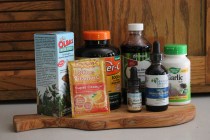
img_4329As we head into the fall and winter months, I thought it might be a good time to mention a few of my favorite pregnancy-safe cold and flu remedies. During pregnancy, the extra demands on  your body combined with a suppressed immune system make for a greater chance of picking up an unwanted virus. But there are things you can do to help boost your body’s immune system, and to be ready to battle off a cold at the first sign or symptom!

One question I get asked often is whether or not there are medicines you can take safely during pregnancy, especially to help with fever or cold symptoms. As a general rule, you want to avoid ibuprofen (found in Advil or Motrin), but acetaminophen (Tylenol) is okay for occasional use, as long as you stay away from the cold combinations marked as “multi-symptom” (these are too strong for pregnancy). But I would strongly suggest that you really do reserve any type of medications as only an emergency remedy (like needing relief so you can be at the family wedding, for instance!), as there are still conflicting results in the medical literature, and you certainly want to be extremely careful about what you putting into your system during such a crucial time in your baby’s growth and development.

But did you know there are some really good natural ways to fight off a cold? Here are some great remedies…and let me note here that I am in no way affiliated with any of these particular brands or companies-in other words, I’m not being paid to pass this information on to you!

  • Extra Vitamin C: I like to keep a high-potency Vitamin C (such as the Ester C picture) in the cabinet for the times when I feel a cold coming on. Taking several thousand miligrams a day for a couple of days will help give your immune system a needed boost!
  • Emergen-C: these little packets that you mix into water to create a fizzy drink can really give you some extra energy during those days you feel tired and down from being sick. Full of extra B vitamins, other vitamins and needed minerals, these are great to keep around for emergencies.
  • Infant Immune Booster from Mountain Meadow Herbs is a combination of Elderberry and Echineacea in a glycerin base, and is safe for use during pregnancy, as well as being safe to give your little ones.
  • Immune Boost for Pregnancy by Wishgarden Herbs is a gentle combination of specific herbs that help to boost your immune system while still being pregnancy-safe.
  • Garlic-lots and lots of garlic! Garlic is a great way to fight off a cold, and you can take it by capsule, or eat it straight. This is one remedy, though, where everyone will know what you’re doing. 🙂
  • Elderberry Syrup: you can purchase this on Vitacost.com (my favorite place to purchase supplements that are reasonably priced!), and take it regularly whenever you feel the need.
  • And finally, when you (or your little one!) are struggling with a cough, here is my favorite natural cough syrup: Olba Natural Cough Syrup. I was delighted to find this one, and I can tell you that it really does work! Sweetened with honey and full of herbs, it is a great addition to your medicine cabinet.

So, here’s wishing you a healthy fall…and hoping these suggestions can be a help if you find yourself down with a cold or needing an extra immune boost. What are your favorite natural and/or pregnancy safe remedies for illness? I’d love to hear about it! Thanks for taking a minute to share this post with your friends!

Celebrating Birth Expo 2016 Photo Report

Celebrating Birth Expo 2016 Photo Report

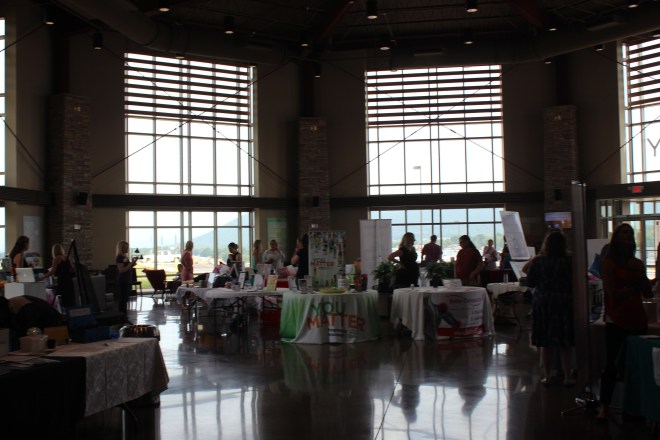
Thanks to each and everyone who helped to make the Celebrating Birth Expo a success! With over 30 different services, care providers and businesses sponsoring the event there was a great variety of information, goodies and prizes! If you attended and have helpful feedback for possible future events, I’d love to hear from you. Here’s a few photos to give you a glimpse into our day:

IMG_3284 - Copy

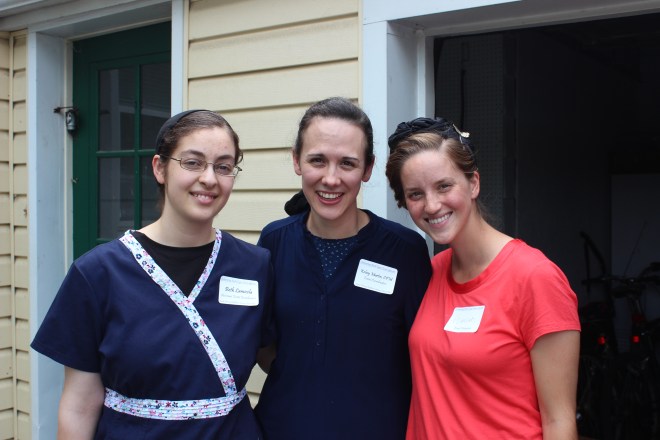
Some of my fantastic helpers for the day…couldn’t have done it without Beth and Hannah!

IMG_3050IMG_3051IMG_3041

IMG_3039

Getting everything set up and ready….

IMG_3075

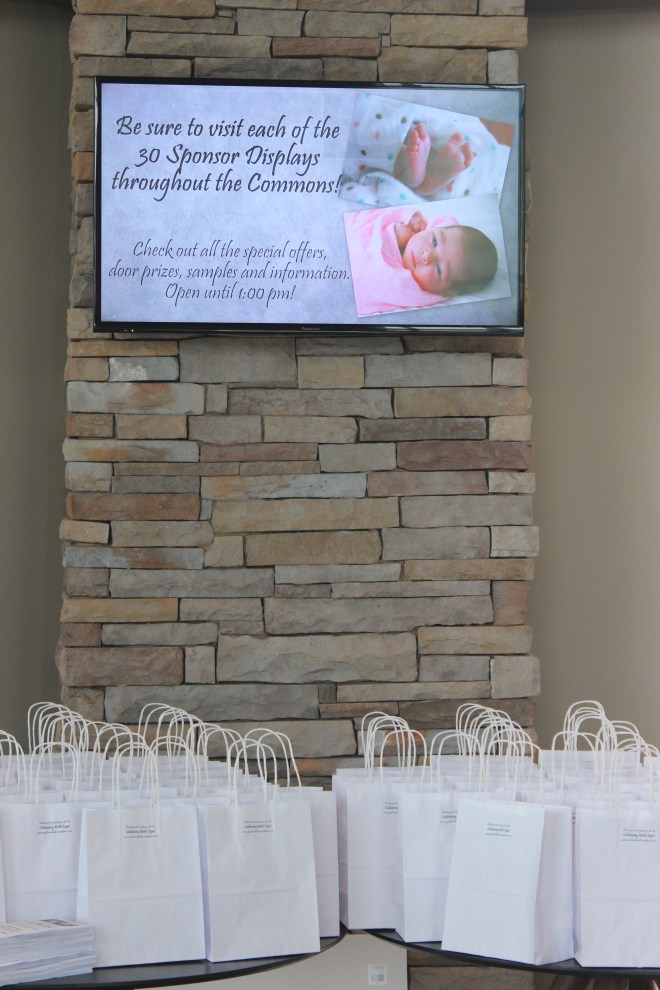
Gift bags for each of the attendees to carry their goodies in

G

IMG_3080

My junior helper-she just HAD to attend the Birth Expo, too! 

IMG_3137

Gentle Delivery’s display and welcome table

IMG_3113

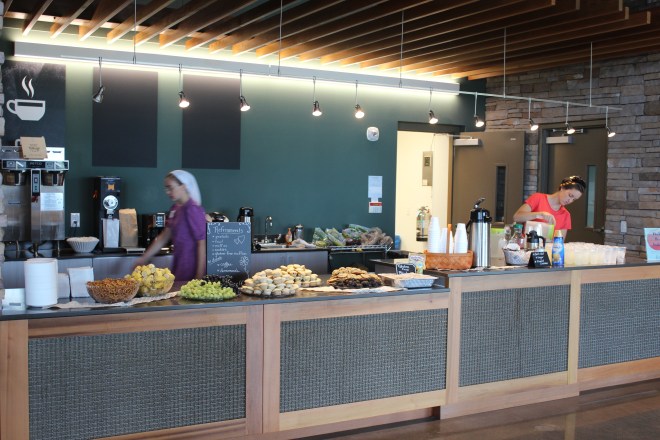
The cafe all ready to serve refreshments

IMG_3222

Heidi Loomis, CNM giving comments after the film screening

IMG_3216

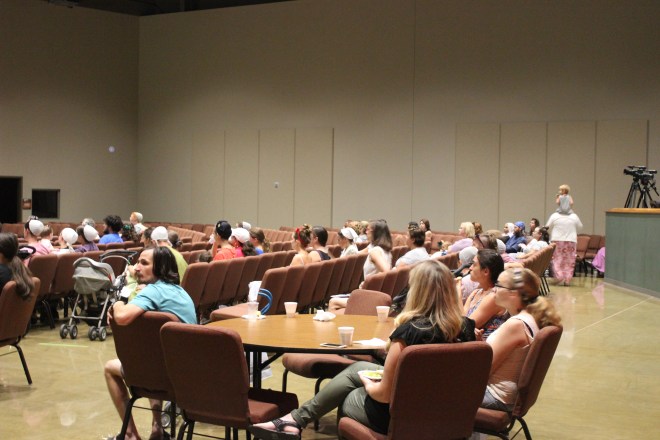
In the auditorium getting ready for the screening of “Why Not Home?”

IMG_3240

IMG_3266

The Calvary Harvest Fields location was a lovely place to host this event…

IMG_3269IMG_3202IMG_3178IMG_3165IMG_3103

IMG_3088

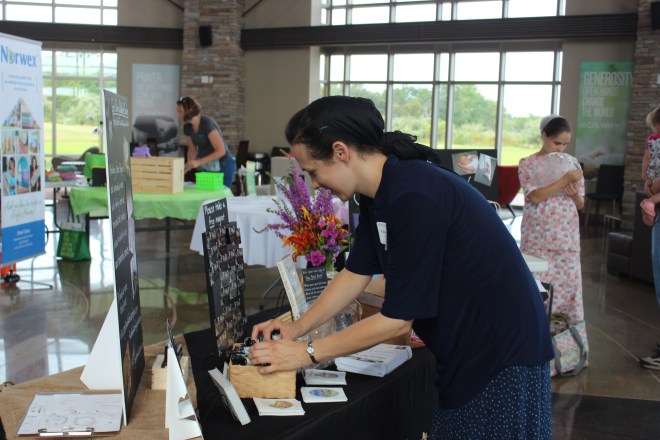
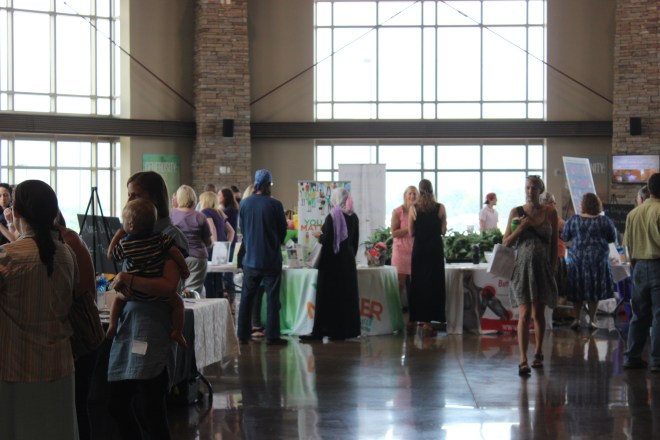
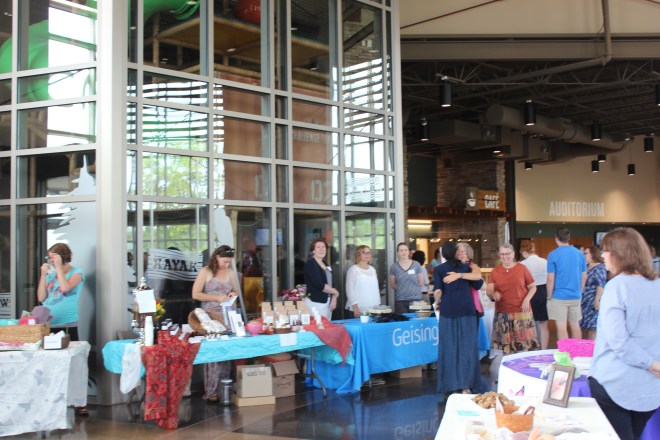
Lots of fantastic displays and community interaction! 

I thoroughly enjoyed the opportunity to see many of “my” babies, and am grateful for the opportunity to learn more about what our community has to offer new and expectant families. In case you missed it, I’ll post a link to the event page where you can see a list of all the sponsors, along with their contact info and/or websites. If you’re interested in a future event like this, send me an email with your thoughts and comments. Thanks!

Celebrating Birth Expo & Why Not Home? Screening

An invitation to attend…

An invitation to attend…

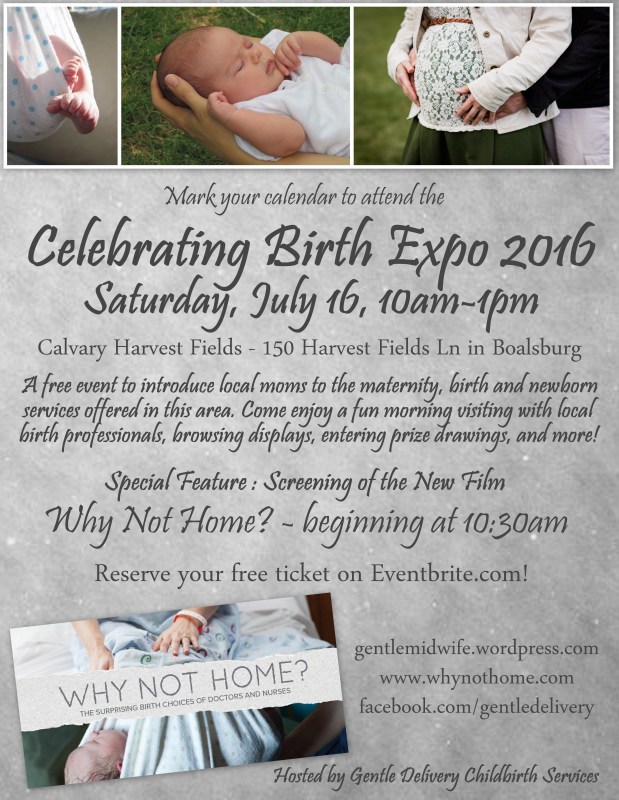
Gentle Delivery Childbirth Services first Celebrating Birth Expo!

Ever since relocating to State College, I’ve wondered what could be done to help moms in this area become more aware of their birth options and support services available to them. Many of the families I work with have moved here in relation to work or studies at Penn State University,  they don’t have family or friends nearby, and aren’t sure how to connect with or find out about the resources that this area has to offer. It’s my hope that this event will enable these moms to be introduced to area doulas, childbirth educators, midwives, lactation consultants, massage therapists, chiropractors, and more…and help to raise awareness of the availability of midwifery care and homebirth through the screening of the new film “Why Not Home?”.

Collages2I would love to see you there! Please help us to spread the word by inviting your friends and family to attend. Perhaps you’re looking for a fun activity to do with your mommy friends…or perhaps you’d like to know more about working with midwives…or perhaps you’re interested in promoting birth options in this area…or perhaps your a new mom or expecting mom, and you want to learn more about what this area has to offer…whatever the case, this event should be a great experience-and there will be chances to win great prizes and sample products at the vendor displays! Come and spend the morning with us!

To find out more about the sponsors helping to make this event possible, check out the website page here. And to RSVP for your free spot, check out the Eventbrite page. Feel free to invite your friends using the Facebook event page.

Feel free to check out the trailer for “Why Not Home?” here.  Here’s a quote from the director of the film, which will give you some background on what the film is all about:

I grew up hearing the story of the doctor and the surgical procedure that saved my life and my mother’s (I was breech, delivered by cesarean section). I never considered that I might give birth outside of a hospital–until I got pregnant.

At that time I had been a nurse for five years and a nurse practitioner for three. Home birth wasn’t part of my culture and wasn’t something my training had directly addressed. Prompted by a colleague’s experience, I started researching, asking questions, and considering my options in and out of the hospital. It was based on that research that I decided I wanted to pursue a home birth. As a low risk mom, it seemed I had the best chance of a safe and uncomplicated natural birth in my own home surrounded by people I knew and trusted. Some of my family and colleagues disagreed.

The decision wasn’t easy to talk about. It’s such an emotionally charged topic. Everyone has an opinion and a story to tell.

Since then I’ve met more health care providers, doctors, nurses, and midwives, who chose to give birth at home. These are not the women most Americans picture when they imagine a home birth mom. These professionals have direct and sometimes daily experience with the risks inherent in birth. Like all women, they wanted a safe birth, yet unlike 99% of women in the US, they chose to give birth at home. This is their story.

Too often polarization occurs on the topic of home birth. By focusing on hospital birth providers who choose home birth, I hope to bring a voice of moderation to the discussion. Together, we can move toward real improvements to maternity care in hospitals and at home.

What if the choice of where to give birth wasn’t limited by cost or insurance coverage, fear or misinformation? What would change if families had access to the care provider of their choice in the setting that best fits their unique needs and values? It’s worth at least asking, “Why not home?” 

This looks like it will be an exciting day, and I hope to see you there!


Do I Need a Doula if I’m Planning a Homebirth?

Do I Need a Doula if I’m Planning a Homebirth?

DSC_0625a

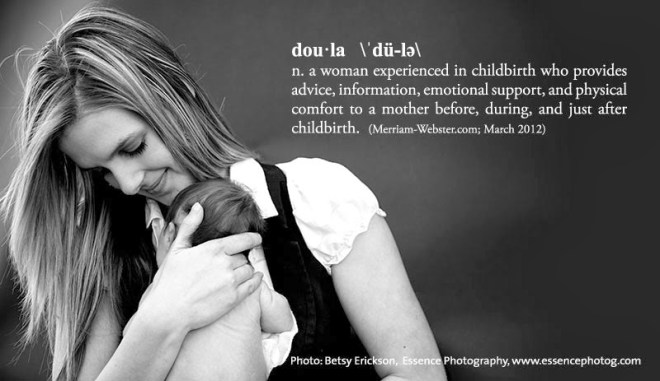
So you’ve heard of the advantages of having a doula with you if you’re planning a hospital birth. The positive aspects include such things as: continuous support that doesn’t change shift, possibility of laboring in the comfort of home knowing someone will help you decide when it’s time to go in, someone who can help you and your spouse keep perspective and act as a liaison with the medical staff, a friendly person to call directly with questions during those last days before labor, and the list goes on. All of these things sound good, but if you’re planning a home birth, then you don’t need all this, right?!? You already know who your caregiver will be, you’re staying in your comfy home, your midwife will provide support and perspective, and you can call your midwife directly…which means that a doula is totally unnecessary, correct?!? Well, that’s a question I hear often, and I wanted to take some time to explore how a doula can actually be a great benefit at a homebirth, as well. If you’re trying to decide whether or not you want to add a doula to your birth team, hopefully this post will give you some help, and maybe even answer some of the questions you have.

To get some input on this subject, I contacted several different groups of midwives, doulas and birthworkers, and asked them to tell me from their experience how homebirths could benefit from doula support. Their responses were very helpful, and provided the bases of what I am going to share below.

When it comes down to it, a midwife and doula offer to distinctly different services. While both are attempting to provide women with personalized, professional care, they are coming at it from two different angles. A midwife’s job is to help ensure that mom and baby both maintain the low-risk status. She is concerned with providing a safe, professional and knowledgeable environment to women seeking out-of-hospital births. This means that she must put mom and baby’s safety first-which sometimes means that she will have to stop providing labor support in order to monitor heart tones, for instance.  There are also those times when the midwife will need to conserve energy in order to maintain the needed mental and physical alertness needed for the actual delivery, which may mean not being able to constantly apply back pressure for hours on end! For some mamas, especially those who appreciate privacy, a midwife and her assistant may be all that she needs in order to feel supported and cared for, but there are others where this may not feel like enough. As a midwife myself, I seek to provide labor support whenever I can, but I am also always acutely aware of what is going on medically. The role of a doula is that of providing consistent emotional support and physical support. Because she does not have to be responsible for the medical aspects of birth, she is free to focus on helping the couple work together, and helps mom to achieve the space and birth atmosphere that she desires, without distraction.

At a homebirth, a doula can:

  • Give valuable input and educational support during the prenatal period.
  • Provide early labor support, and help the couple decide when it’s time to call the midwife to come.
  • Free dad up to focus on mom by paying attention to other details (like keeping the tub water warm, setting up the bed, changing linens as needed, keeping birth atmosphere tidy, etc.).
  • Keep mom and dad fed and hydrated.
  • Help the birth team to remember mom’s preferences-whether it’s the desire for quiet and privacy, or a certain music playing at a certain time, she keeps everyone aware of what mom wants.
  • Help with comfort measures such as massage, positioning techniques, etc.
  • Provide positive encouragement about progress and what is happening.
  • Give mom support during pushing, especially for those families where daddy wants to catch, and mom still needs support by her head that is focused on HER.
  • Assist with childcare as needed, especially if children are present for the birth.
  • Help the mom to feel an extra measure of help and support, through extended availability before and after, and checking on mom’s emotional well-being during the initial postpartum period.
  • Protect and nourish the new family’s space as nursing and bonding are taking place.

A doula is especially beneficial when:

  • A mom is expecting her first baby or is planning a VBAC. The potential for prodromal labor and/or need for extra physical and emotional support make a doula an especially good choice for these moms! For the same reasons, moms who have a history of long labors may also find a doula an excellent addition to their birth team.
  • Mom is lacking other support systems. For single moms, or those who have no family or close friends nearby, a doula can be a tremendous asset in providing a consistent, dependable support person during the pregnancy, labor, delivery and postpartum periods.
  • When using a very busy midwife, or if your midwife has travel plans over the time you are due. If you know there is a good possibility that you may be using your midwife’s backup, then having a doula whom you have already connected with can help make that a smooth transition, as you won’t have to totally “start over” with your birth team.
  • If your chosen midwife usually practices solo (without an assistant). In these cases, it may be hard for her to provide consistent labor support, as she will have many responsibilities to stay on top of.
  • When mom knows that she needs extra hands and extra support. Some moms prefer quiet, privacy and extreme “hands-off” during labor, while other moms know that they would relax better when surrounded by encouragement, positive input, touch, massage, etc.
  • If you’re planning to have your children present at the birth, and don’t have a specific care-giver for them. This can allow dad to spend time with mom or with the other children, and know that no one is being neglected!

So, to tie all of these comments up, you can see that a doula can be a lovely complement to a planned home birth. The moms who have experienced doula care at a homebirth made comments such as “I wouldn’t do it any other way”, “it was the ultimate support group”, “I gained a trusted friend”, “My doula could be someone my midwives could never be (though my midwives were awesome and perfect for me)…All her energy and focus went to me, she had no other obligations”, “she provided a different perspective”, “the little things made a big difference…her doing things that allowed my partner to stay with me was key”. The midwives who have had doulas present at births say, “Doulas are worth their weight in gold, literally!”, “The women who have both feel SO supported”, “Having a doula…helps to share the load, and each individual has something different to bring to each unique situation”, “Doulas provide a different type of connection”,  “I think there are some births where there is plenty of work for many hands…and some where there isn’t”.

All that said, I do want to underline the fact that each mother and each birth is unique. While having a doula can make your birth experience even more special, I totally understand that it is not the choice for everyone. For some mamas a more private, intimate and quiet birth environment with as few people as possible is better.  And this is totally okay. It’s one of the beautiful things I appreciate about the option of birthing at home…the birth team can be personalized to suit the preferences of the individual mom. Each mom/couple has to figure out what is right for them, as this is what will enable them to relax and give birth in the best way. The goal of this article is not to make you feel like you HAVE to hire a doula! But for those who have wondered if a doula could be beneficial, my hope is that you now have a better picture of how a doula can fit in to your homebirth plans, and how this option can make a mama feel even more supported.

Did you use a doula for your homebirth? Or have you been a doula at a homebirth? I’d love to hear about it! And if you’re looking for a doula, be sure to check out www.doulamatch.net in order to find out about doulas offering services near you! For those living in central PA, I’d be glad to refer you to some excellent doulas who serve the surrounding areas.

doula pic

Some Recommended Reading

Some Recommended Reading

As we’ve headed into a new year, I’ve been taking the time to update old records/files/paperwork, etc. One of the fun things I’ve updated is my current library list. While the internet can be an excellent resource for many topics, I still enjoy a good book that can stay on my nightstand, or be read while I nurse baby (one of the best things about having a nursing baby is getting guilt-free time to sit and read a book!). This past year I was introduced to a number of books that I had not read before, and I thought it’d be fun to share a few of those titles to you, in case you’re looking for something new to read!

IMG_9707

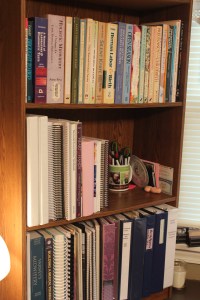
One of the library shelves in my office

  • Ina May’s Guide to Breastfeeding by Ina May Gaskin: I found this jewel at a thrift store this summer, and picked it up just because of Ina May’s name. It’s a great resource to have on hand if you’re wanting some extra help or information on breastfeeding issues. One thing I appreciated was that she actually dove into the issue of tongue-ties causing nursing difficulties, which is something that many manuals on breastfeeding overlook. Overall, this book was a great easy-to-read book that I would recommend adding to your home library!


  • Pushed: The Painful Truth about Modern Maternity Care by Jennifer Block: This book is not your “feel-good-warm-and-fuzzy” type, but if you’re in to making informed choice, and understanding the politics and protocols that go on behind the scenes, especially here in the US, this is an eye-opener. Jennifer explores the history behind different changes to the maternity care scene, how insurance companies dictate much of hospital’s protocols, how our lack of understanding our bodies and understanding the normal function of birth contributes to the rise of interventions, the limitations in so many areas of good alternative care options, and more. While it can be a bit depressing at times, it was definitely educational, and helpful in understanding risks vs. benefits of different medical choices.


  • The Official Lamaze Guide: Giving Birth with Confidence by Judith Lothian: While this one has been around for awhile, I had never taken the time to pick it up and read through it. I found that it really wasn’t all about a particular “method” for birth, but more about understanding how your body works, and how to work with it. Clear, concise information written in an easy-to-read style, with birth stories to boot.


  • Cut, Stapled, and Mended: When One Woman Reclaimed Her Body and Gave Birth on Her Own Terms After Cesarean By Rosanna Rosewood: This one deserves a disclaimer-while the story was fascinating, I don’t recommend or agree with everything this mama pursued in her quest for a VBAC. However, this book helped me to understand many of the challenges that brave VBAC mothers must make as they recover, heal, and prepare for birth from an emotional, spiritual and physical standpoint. I found it valuable as I seek to help mothers who desire a VBAC without having personal experience.


Besides the mentioned books, I’ve encountered a few new resources that I would heartily recommend:

  • Spinning Babies DVD’s: The Parent Workshop & Daily Essentials. Gail Tully, the instructor of these DVD’s and the brains behind the Spinning Babies website, has so many tips, suggestions and information to offer-and it all helps to make pregnancy more comfortable, understand your body, and encourage baby to be in good postion…which ultimately helps your labor, birth and recovery to go so much smoother! If you haven’t spent time on Gail’s website, it’s worth looking in to!


  • VBAC:Know the Facts by Jen Kamel: Jen has compiled an immense volume of research and facts surround VBACs, and presents them in a fascinating seminar that can be taken online or attended live. This 6+ hour seminar addresses subjects such as myths, actual research results, how and why different hopsitals have different protocols, what complications can increase risks (and how to avoid some of them!), and the list goes on and on. If you are considering a VBAC and have questions, or just want to learn more about the subject, this would be a very worthwhile investment. I learned so much from it!


IMG_9708

More books…and they don’t all fit here, either!

This past year I had a friend who contacted me-she was newly pregnant, lived in another state, and wanted to know where to start in figuring out what she wanted for her pregnancy, birth, caregiver, etc. What a list of questions! And where do you start?!? So I’ve been on a quest to find factual, evidence-based information to help new moms in making decisions and sorting through all the myriads of opinions and information. If you have a resource that was particularly helpful to you, I’d love to hear about it! Feel free to comment (below), leave a message on the facebook page, or send me an email at: gentlemidwife@gmail.com. I’d love to hear from you!

And if you want to check out my updated Recommended Reading/Library List, feel free to look at it here:  https://gentlemidwife.wordpress.com/recommended-reading/  Remember, clients have access to this library as part of their maternity care package!


So, you’re interested in a VBAC….

So, you’re interested in a VBAC….

DSC_0632cThis is a subject that I get asked about frequently. There are many mamas out there, who, for a variety of reasons, are looking into their options concerning a pregnancy and birth after a previous cesarean section. The first question usually centers around whether or not I will take on a VBAC client…so let’s start with that, and then look into some ways to make achieving a VBAC a reality.

When it comes to considering a VBAC mom as a possible homebirth candidate, it’s helpful to have an idea of why the c-section was performed in the first place. You have the legal right to your medical records, so ask for them! Sometimes they don’t shed light on the subject, but frequently you’ll have a clue as to what actually happened, which may not have been clearly explained to you at the time. Was it due to a surprise breech? Was baby’s head in a bad position (such as posterior or asynclitic)? Did your water break, putting you on the clock, and labor didn’t start in time? Was it a case of “failure to progress”, where labor didn’t proceed, or you got “stuck” and then were tired? Or perhaps baby’s heart tones dropped, making it a fast emergency? Whatever the case, understanding what all took place helps to paint the picture, and give me an idea of what hurdles you might face in this next birth. And it might help you in knowing what to prepare for-for instance, if your c-section was due to a bad position of the baby, then we’ll be much more proactive at integrating exercises to help with optimal positioning. There are very few situations which risk a mom out of the option of a homebirth, but getting a clear picture of what happened before helps us to determine your eligibility. And perhaps you would feel more comfortable pursuing your first VBAC in the hospital setting…either way, these next suggestions can be beneficial and productive in helping you prepare for your birth!

I like to tell VBAC moms the same thing I tell first time mamas…preparing for birth is like preparing for a marathon. You don’t just decide to run a marathon today and achieve it tomorrow. It takes WORK to prepare your body for it! Most mamas planning a VBAC have not yet had a baby vaginally, so in that respect, we focus on preparation in the same way we do for a first birth. Not to make things sound negative, but it’s good to be prepared for the long haul-and prepare your body to be able to cope with it. Eating a healthy diet and consistent exercise both contribute to this. Regular walks, workouts, squats, etc. can all help to build up your stamina for labor and pushing. I’d also suggest seeing a chiropractor, especially during the last trimester, which can help to ensure good alignment of your pelvis and good positioning for baby. I highly recommend checking into Gail Tully’s website: spinningbabies.com, as well as following her suggestions in her DVD entitled “Daily Essentials”.

Besides getting your body ready, you need to prepare mentally and emotionally…and this includes educating yourself about the particular risks and concerns that affect VBAC mothers and babies, as well as talking with others who have gone through similar experiences. This support can be invaluable in helping you to work through your past disappointments and set realistic expectations. Some excellent resources that I encourage all VBAC moms to consider are:

  • VBAC Facts by Jen Kamel (She teaches an amazing class based on research surrounding VBAC safety. You can attend a live seminar, or take a webinar at your convenience.)
  • Read books on the subject:

C-Section by Mark Zawkowski, MD,  Natural Childbirth After Cesarean: A Practical Guide by Karis Crawford

  • Look into the “International Cesarean Awareness Network” (ICAN) and glean from their website…there are chapters throughout the US that meet regularly, where you can talk with other moms and learn from their experiences.
  • Join a facebook support group for VBAC mamas, and ask questions and hear about how other mamas achieve their VBAC.
  • Read evidencebasedbirth.com, and consider taking the class they offer online regarding “Failure to Progress”.


This information is hopefully enough to get you started with resources…blessings as you pursue your quest for a beautiful, natural and safe birth!

Suggestions for a Healthy Pregnancy

Suggestions for a Healthy Pregnancy

Recently I’ve been searching for a short, easy-to-read handout on nutrition and exercise. I was having trouble finding what I wanted…something that hit the high points, but wasn’t so detailed that no one would take the time to read it. Here’s what I came up with, though there is SO much more that could be said. I encourage each of you mama’s to research nutrition, supplements and exercise so that you know WHY you are doing what you’re doing for you and your baby!

2266-19942-1-SPDuring pregnancy, your body faces extra demands and nutritional needs. Making wise choices in caring for your physical needs can help to build a healthy baby, improve your energy levels, experience less complications during birth, and have a more rapid recovery. How is that for motivation?

Diet Recommendations:
There are many varied suggestions out there as far as pregnancy diet goes. While it is important for you to do your research and make the best choices for your particular situation, the following are a few principles to go by when it comes to what you eat:
– Major on high-quality protein. Protein helps to give you sustained energy, builds good skin integrity, and keeps your blood sugars in check. Some ideas include: Greek yogurt, cheese, nuts, nut butter, chia seeds, eggs, meat, and seeds.
– Consume a variety of vegetables, preferably organic whenever possible. This helps to provide you with more fiber, and the multitude of natural vitamins and minerals that vegetables contain.
– Add quality oils to your diet. Recent research has proven that quality fats are good for us, contrary to what we used to be told! Coconut oil, olive oil, and butter (esp. if it’s grass fed!) are examples of good fats to be consuming.
– Reduce your intake of carbs-especially simple carbs. While carbohydrates are good in moderation, they shouldn’t be considered the foundation of your diet. Carbohydrates tend to elevate blood sugar levels, as well as adding extra pounds to you and the baby during the last several months of pregnancy. When eating carbs, do your best to make sure they are made of whole grains whenever possible, which provide you with fiber and a slower sugar release. Using a variety of organic grains (such as oats, spelt, rye, etc.) are better choices than only consuming wheat products.
– Stay away from artificial sugars, and limit your intake of refined sugar. Try using maple syurp, honey, coconut sugar or other more natural-type sugars when you need something sweet!
– Try to limit fruit juices, and eat whole fruit instead.
– Keep healthy snacks on hand, so that it’s easiest to make good choices when you’re hungry!
Supplements:
Ideally, your nutritional needs should be met through a healthy, balanced diet. But most of us can still use a bit more help!  The basis of your supplements should include a high-quality prenatal vitamin, one made from natural food sources instead of being chemically engineered. Seeking Health, New Chapter Organic, and Thorne Research are good brands, but there are more out there. Most moms are also lacking in sufficient calcium and magnesium, and I recommended taking a minimum of 1000 mg. of calcium each day. This can also help you to sleep better at night, and experience less muscle cramping and discomfort. Other supplements are normally suggested and added as needed, and we can discuss your particular needs during our prenatal visits.newborn

Exercise:
In preparing for your labor and birth, it’s good to keep in mind that it is similar to preparing for a marathon. No one decides to run a marathon and then does it the next day-it takes lots of preparation and training for the big event. It’s much the same with giving birth. The more prepared and equipped your body is, the better able you’ll be able to handle the challenge and the easier your recovery will be. I highly recommend the following:
– Take a brisk walk at least 3 times each week, trying to go at least 1 mile in distance.
– Incorporate some type of exercise program (even just 10 min. long!) into your daily routine, and make it happen at least 3 times a week. There are many different 10 min. pregnancy workouts on youtube, and many other options you can take advantage of. A routine that incorporates lots of squats and leg-strengthening moves can be especially helpful in getting your body prepared for birth.
– Visit the “spinningbabies” website for information on daily exercises that encourage good alignment for mom and good positioning for baby. I have an excellent DVD on this subject that I encourage each of my clients to borrow and watch.
– Consider visiting a chiropractor during the last trimester to ensure your body is ready for birth!

Helping Baby Achieve the Best Position…a little report on my day at Spinning Babies!

Helping Baby Achieve the Best Position…a little report on my day at Spinning Babies!

At the end of April, I had the special opportunity to take the Spinning Babies workshop taught by Gail Tully at the Midwifery Today Conference in Harrisburg. While the day was packed with information, I enjoyed every minute of it…I honestly felt excited about the prospect of having another baby myself after learning so many practical tips on how to promote optimal fetal positioning for both the baby’s sake and the mother’s comfort. Gail has a wealth of information at her fingertips, and I think I’d have to take the class several more times before I could really retain it all (even though I took lots of notes!), but I wanted to at least give a few pointers from things that I learned. Visit her website at: http://spinningbabies.com/ to learn more yourself.

To begin with, Gail showed a diagram about the structure of the uterus, and how it is covered in fascia, just like all of our other muscles. When the fascia is pulled or stretched in an unnatural angle, it is going to affect the way that the baby is positioned in the uterus. This is one reason why it is important to watch your repetitive movements…do you carry a child on your hip? bat a baseball? If the muscles and ligaments are too tight, too loose, or twisted, the baby will NOT be able to settle into the correct position. The balance of your soft tissue can be more important than your pelvic size. Thus, doing specific exercise techniques throughout your pregnancy (and during labor when needed) in order to help align these muscles can make a big impact on what position the baby settles into. When the womb is symmetrical, the baby will naturally assume a more flexed position.

When it comes to the “perfect position”, the place to aim for is having baby settled on the left side. The tendency is for baby to settle on the right side, as our uteri have a natural propensity towards this direction. However, the shorter, curved left side encourages the baby to flex his head and assume a “C” type position-his physiology is actually enhanced by this flexed position, as well as this position providing more consistent, even pressure on the cervix, which in turn encourages dilation. When the baby is on the mom’s steeper right side, the baby naturally wants to assume a more “military presentation”, where the head is not flexed-this causes uneven pressure on the cervix, and can really reduce progress in preparing the cervix for labor, and stalling progress during labor itself.
Spinning babies2

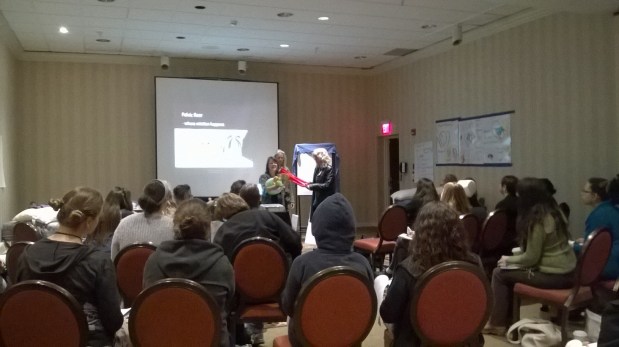
Demonstrating how the different muscle layers work to support or constrict the uterus

Another interesting aspect Gail brought out is how thyroid malfunction can cause the baby to assume a negative position. A root metabolism issue can affect the way in which the uterus operates, as well as causing it to be more susceptible to twisting. Making sure your entire body is working optimally can help prepare you for a better pregnancy and birth! The fact that we spend so much time sitting both in the car and in a reclined position also contribute to a asymmetrical uterus. Women used to be encouraged to sit “like a lady” with good upright posture, which can also help to promote good posture of the womb.

In presenting exercise techniques, Gail focused on three separate types of exercises that she calls the “3 Sisters” to provide balance and room for mom and baby. Each of these exercises helps the mom to relax, and thus in turn helps to relax the fascia of the uterus, which then helps to provide the balance to help the uterus to become more symmetrical. She would encourage pregnant mamas to do these exercises at the minimum of once a week, but once a day would be even more ideal! Besides encouraging baby to engage in a good position, these exercises can also help to improve mom’s comfort by relaxing the muscles that receive so much strain during pregnancy. In labor, these techniques help to promote descent of the baby, and can be done multiple times. Rather than try to explain these techniques myself, I’ll point you in the direction of where you can find instructions on her website:
– First, encourage deep squats and calf stretch. Then move on to the “3 Sisters of Balance” http://spinningbabies.com/techniques/activities-for-fetal-positioning/423-the-3-sisters-of-balance- :
1.  Rebozo sifting: helps relax the broad ligament and get the mother loose and relaxed herself. http://spinningbabies.com/techniques/activities-for-fetal-positioning/rebozo-sifting
2. Forward Leaning Inversion: This is best for resolving a transverse lie, and helps to encourage healthy circulation. http://spinningbabies.com/techniques/the-inversion
3. Side Lying Release: Helps relieve pressure on ligaments.

Once these techniques have been performed to help achieve balance, your next goals are Gravity and Movement-especially to help during a pause in labor.

During labor, you can use these techniques to help whenever you reach a point where progress is being stalled. Gail encouraged us to rethink the usual question of “what is dilation?” and instead think “where’s the baby?”. If the baby isn’t descending, then something needs to change, regardless of what dilation is. And depending on where baby is at, different techniques are needed to get the baby to descend. For any stall, she recommends trying the “3 Sisters of Balance” in order to relax mom and balance the uterus.

As you attempt the three above techniques, consider where baby is: If he is stuck at the brim of the pelvis (characterized by a long latent phase, or start-and-stop labors for days), then the baby needs to flex his head in order to enter the pelvis. Tight round ligaments can prevent baby from descending. At this point it is much more important to get the baby to enter the pelvis, rather than trying to get labor to become more regular. Dilation won’t do any good if the baby isn’t in the pelvis! Trying Gail’s Abdominal Lift and Tuck followed by Walchers, can help to flex that little guys head and get him to descend. http://spinningbabies.com/techniques/activities-for-fetal-positioning/abdominal-lift-and-tuck  http://spinningbabies.com/techniques/activities-for-fetal-positioning/walchers

If baby is stuck in the mid-pelvis (right at the ischial spines), labor tends to stall around 5-7cm. This can often be caused by a tight pelvic floor, and special attention to the side-lying release technique can help to relax those tight muscles. Trying a lunge, and the “Shaking the Apple Tree” techniques can also help to get the pelvic floor relaxed and help baby to descend.

When labor stalls around 9-10 cm (think anterior lip, etc), realize that you must address the root cause, not just push back the lip. Trying positions that open up that part of the pelvis can provide more room (deep squat, McRoberts, hip press, toilet, etc.). Sometimes putting pressure on the sacrotuberal ligaments can help them release and provide more room for birth. If there’s not an urge to push, try to rest, and wait until the body is ready-sometimes mama just needs a break!

There were many, many more things that Gail taught and shared…not to mention all the stories of different complicated, stalled labors where these techniques were used. If you ever have a chance to sit in on one of Gail’s classes, I would highly recommend it! Much of her information is located on her website, as well, which is an excellent resource for both midwives and mamas alike.

Spinning babies1

Where is baby’s position in relation to the mom’s pelvis? How can we use that information to help us decide which technique(s) to try?

More Information about the Summer Childbirth Education Class

Alright, I finally have more detailed information regarding this summer’s childbirth education seminar. This all-day class will cover topics such as prenatal nutrition, exercise, explanation of the childbirth process, tips for couples on how to work together during labor, positions and comfort measures for labor and birth, suggestions on writing a birth plan, and much more! There will be opportunity for you to ask questions, meet other couples who are sharing similar experiences, and learn together about the miracle of birth. Designed especially to help those planning a natural childbirth, this class will help you to better understand and prepare for your upcoming birth from a Christian perspective. I strongly encourage couples to attend together, as well as any other support people who are planning to be present at your birth.

In order to enable the best concentration and involvement, please make other arrangements for your children, with the exception of nursing babies.

When: Saturday, July 10th, 2010
Schedule: 10am-Noon, break for lunch-we suggest you bring your own, as there aren’t many restaurants close by, 1pm-3pm
Location: the home of Heidi Nisly, cpm ~ 9101
W. Red Rock Road, Partridge, KS 67566
Cost: $75/couple (note: for those using Gentle Delivery Childbirth Services, this class is included in your total fee)

A workbook, drinks and snacks will be provided for your enjoyment!

Taught by Kelsey Hobbs, CPM
Please register by July 5th in order to ensure availability of materials.  Feel free to call if you need more information or have questions. Email: gentlemidwife@gmail.com ~or~ phone: 316-253-0099    Please pass this information on to anyone you know who might be interested!

Vaginal Birth After Cesarean (VBAC) Information

Recently I’ve been contacted by several people interested in finding out more about having a VBAC homebirth, checking out their VBAC options in this area, and in general seeking more information. I thought some of you may be interested in the following links to articles on the Midwifery Today site.

Along those same lines, a midwife friend of mine just sent me this quote from a prominent midwifery textbook, which sheds some light on the commonly recognized risk in attempting a vagina birth after cesarean:

“Rupture of a low transverse uterine incision, if it occurs, is not generally catastrophic or life threatening to either the mother or the baby. Such a rupture is usually no more than a dehiscence of the old scar and an incidental finding during uterine exploration following a vaginal birth or during an elected repeat cesarean section. To be life threatening, rupture of a uterine scar either extends into the rich blood supply found in the uterine corpus and fundus or disrupts the placenta, which is normally located in the uterine fundus. Because of these possibilities, VBAC is not recommended for women with classical upper uterine segment vertical scars.”   (from Varney’s Midwifery, Helen Varney)

If any of you would have VBAC stories to share, I would love to hear them! It is always encouraging for those facing a new situation to hear from those who have successfully done it before.

Homebirth after Cesarean: The Myth and the Reality – by Amy V. Haas

http://www.midwiferytoday.com/articles/homebirthaftercesarean.asp

VBAC and Choice: Many Questions and a Few Answers – by Nancy Wainer

http://www.midwiferytoday.com/articles/vbacchoice.asp