If you’ve wondered about eye ointment used on newborns…

For those of you following this blog, you probably thought I had given up ever posting anything again! 🙂 Time seems to keep me from spending much time on the computer, and blogging is at the bottom of the priority list! But, I read this article today and just had to pass it on, as it refers to a question that often comes up during the newborn exam. Enjoy!

http://evidencebasedbirth.com/is-erythromycin-eye-ointment-always-necessary-for-newborns/

Link to article of interest…

I know I’ve not done well at keeping this blog up the past while…it’s been a busy summer! I had a baby of my own in June, which I will have to post about sometime soon. Being a mom has been a blessing and a challenge! But I came across this article, and wanted to share it:

http://erinmidwife.com/2011/03/31/if-i-were-at-home-i-would-have-died/

Enjoy!

More Information about the Summer Childbirth Education Class

Alright, I finally have more detailed information regarding this summer’s childbirth education seminar. This all-day class will cover topics such as prenatal nutrition, exercise, explanation of the childbirth process, tips for couples on how to work together during labor, positions and comfort measures for labor and birth, suggestions on writing a birth plan, and much more! There will be opportunity for you to ask questions, meet other couples who are sharing similar experiences, and learn together about the miracle of birth. Designed especially to help those planning a natural childbirth, this class will help you to better understand and prepare for your upcoming birth from a Christian perspective. I strongly encourage couples to attend together, as well as any other support people who are planning to be present at your birth.

In order to enable the best concentration and involvement, please make other arrangements for your children, with the exception of nursing babies.

When: Saturday, July 10th, 2010
Schedule: 10am-Noon, break for lunch-we suggest you bring your own, as there aren’t many restaurants close by, 1pm-3pm
Location: the home of Heidi Nisly, cpm ~ 9101
W. Red Rock Road, Partridge, KS 67566
Cost: $75/couple (note: for those using Gentle Delivery Childbirth Services, this class is included in your total fee)

A workbook, drinks and snacks will be provided for your enjoyment!

Taught by Kelsey Hobbs, CPM
Please register by July 5th in order to ensure availability of materials.  Feel free to call if you need more information or have questions. Email: gentlemidwife@gmail.com ~or~ phone: 316-253-0099    Please pass this information on to anyone you know who might be interested!

Summer Childbirth Classes- Date is set!

Just wanted to let you all know….I’m planning to teach another childbirth class seminar on Saturday, July 10th. There are a few more details that are in the process of being figured out before I give you all more info, but go ahead and mark your calendars and let me know if you are interested!!  Feel free to let others know, as well!     email: gentlemidwife@gmail.com

Photos from a home birth…

First, I have to mention that I am still excited about the special birth I had the honor of assisting with early yesterday morning. It was one of Heidi’s clients, and after much prayer and anticipation, we were thrilled to witness a lovely VBAC-it was a beautiful birth anyway, but the fact that it was her first vaginal birth following a c-section with her first pregnancy added an extra-special dimension. I barely made it, with only 20 minutes or so to spare!

Now, I’m excited to finally have pictures to post of a birth that occurred back in January. This mama had a photographer there, and has generously allowed me to use some of the photos in order to share her experience with others. Thanks, Kristina!

So, for those of you who enjoy pictures, or are just curious to know a little more about what a home birth looks like, here you go….

Mom was laboring in the tub as the birth was getting closer, with her support people and myself surrounding her

Doppler and other supplies sitting nearby

My dear assitant, Heidi, stands ready to lend a hand when needed, as an aunt peeks in to check on progress

Heidi charting progress as the labor continues

This mama worked beautifully with her contractions, allowing her body to relax and open

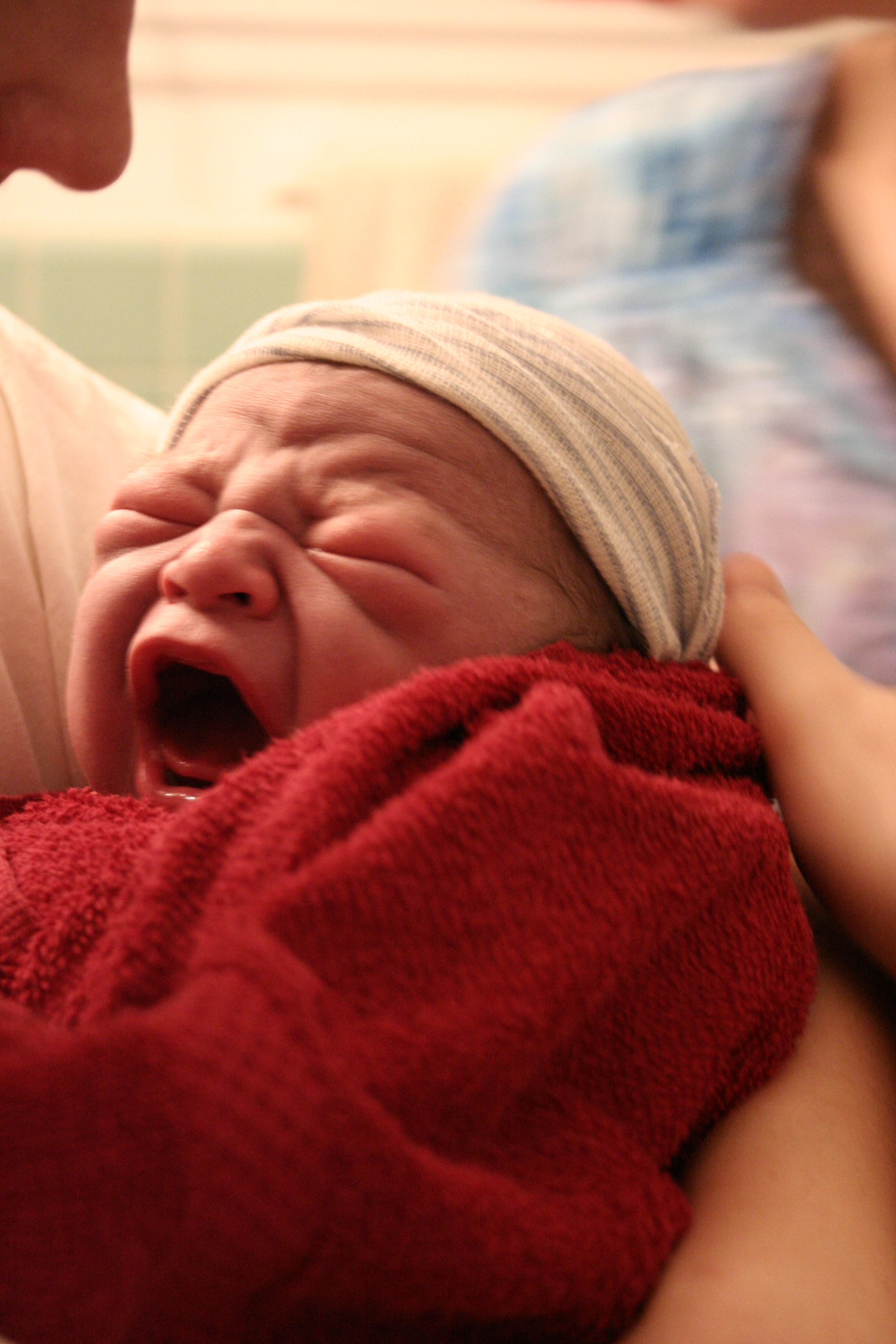
Baby Z in mom's arms just moments after birth

All snuggled up and meeting various family members

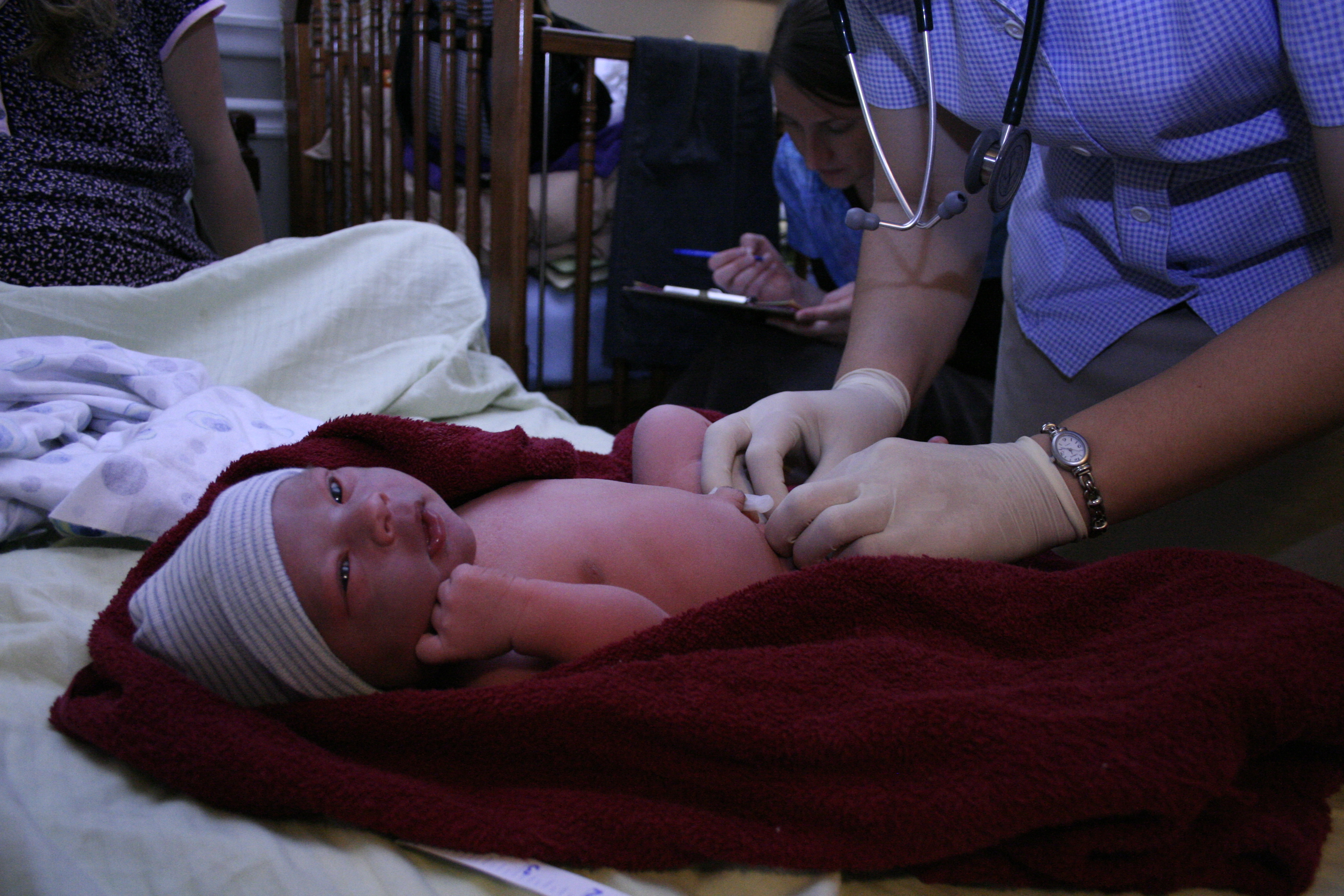
I begin the newborn exam, while Heidi charts in the background

Taking all his important measurements

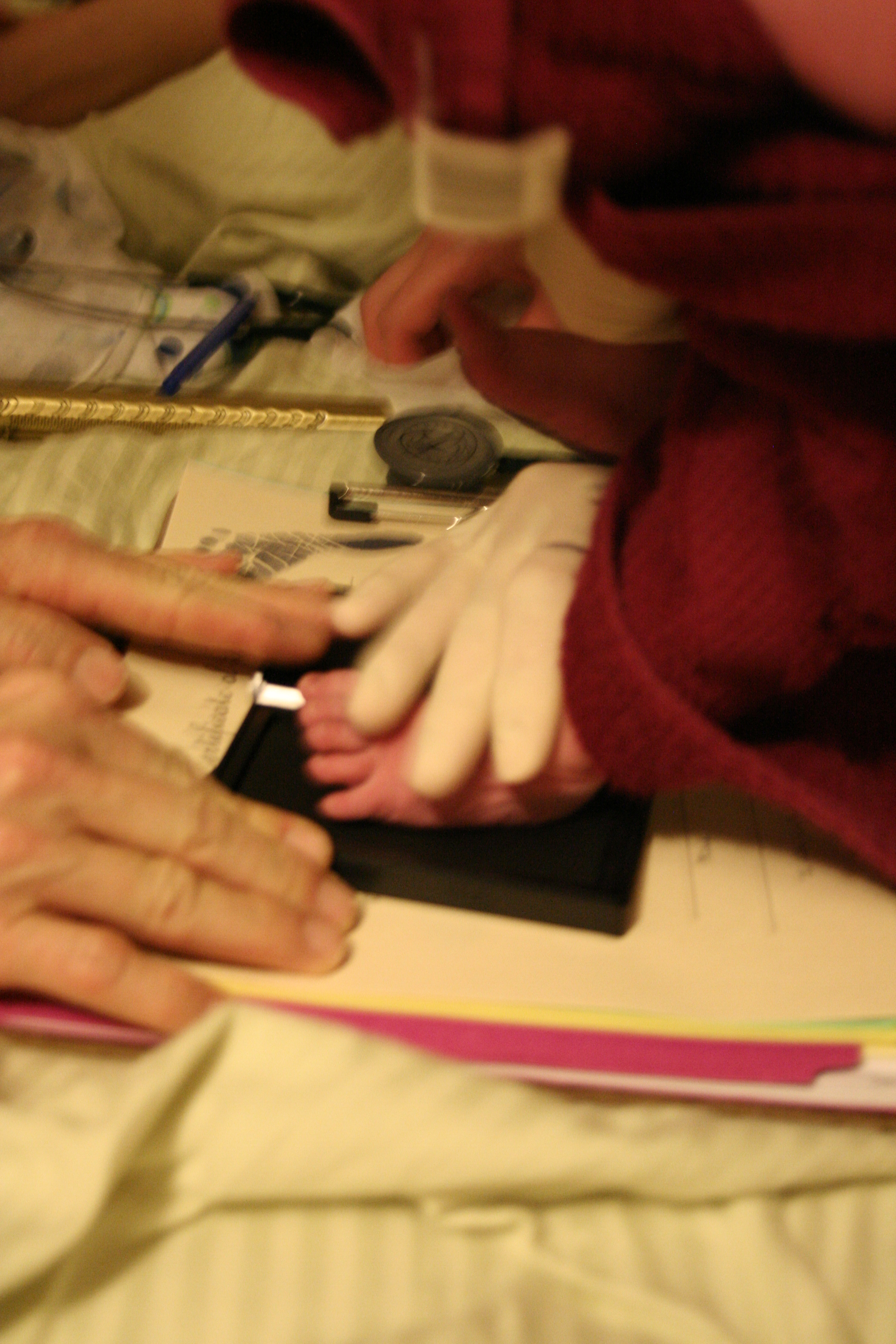
Footprints

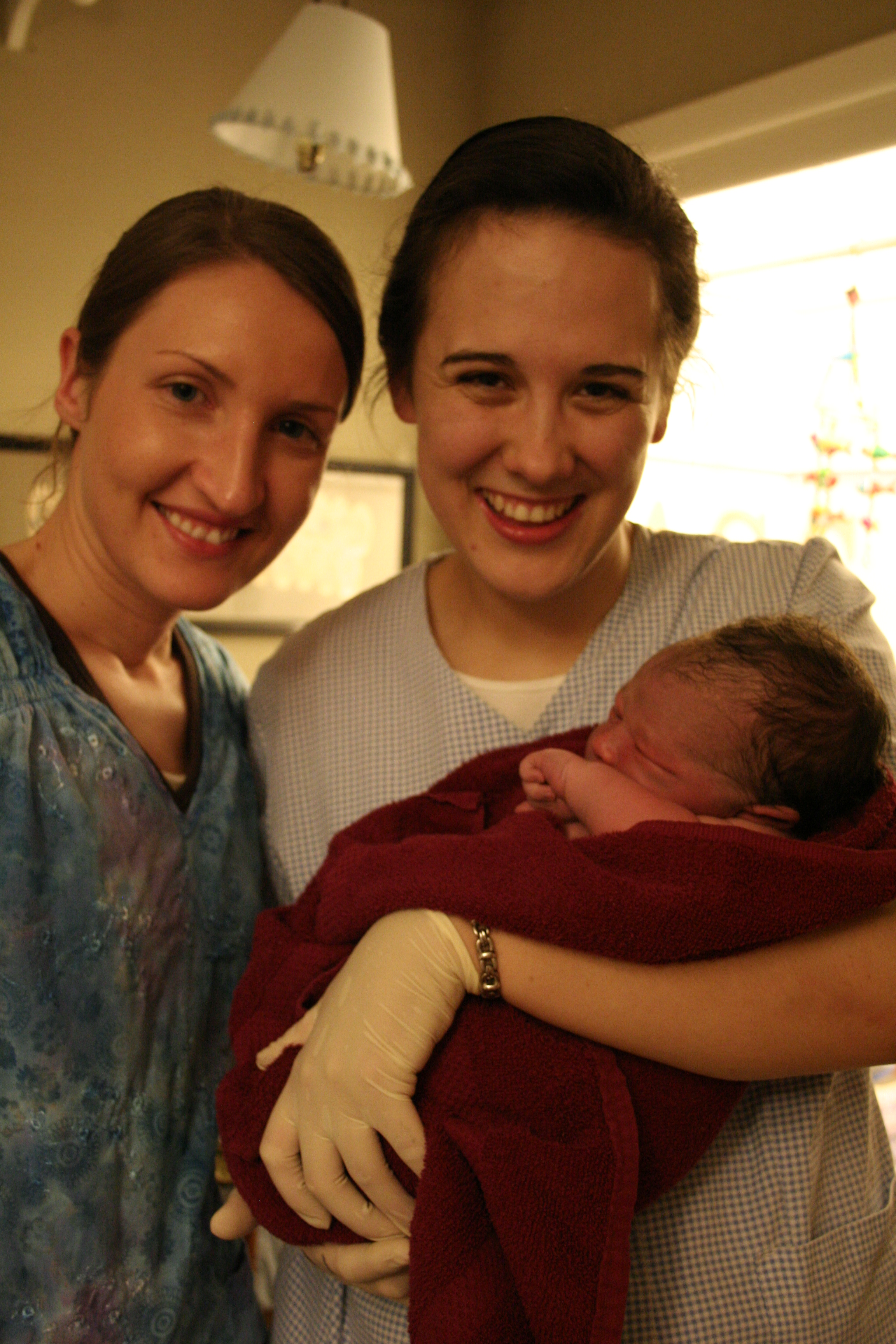
Heidi and I after everything is finished

Mom and baby enjoying some time together

Vaginal Birth After Cesarean (VBAC) Information

Recently I’ve been contacted by several people interested in finding out more about having a VBAC homebirth, checking out their VBAC options in this area, and in general seeking more information. I thought some of you may be interested in the following links to articles on the Midwifery Today site.

Along those same lines, a midwife friend of mine just sent me this quote from a prominent midwifery textbook, which sheds some light on the commonly recognized risk in attempting a vagina birth after cesarean:

“Rupture of a low transverse uterine incision, if it occurs, is not generally catastrophic or life threatening to either the mother or the baby. Such a rupture is usually no more than a dehiscence of the old scar and an incidental finding during uterine exploration following a vaginal birth or during an elected repeat cesarean section. To be life threatening, rupture of a uterine scar either extends into the rich blood supply found in the uterine corpus and fundus or disrupts the placenta, which is normally located in the uterine fundus. Because of these possibilities, VBAC is not recommended for women with classical upper uterine segment vertical scars.”   (from Varney’s Midwifery, Helen Varney)

If any of you would have VBAC stories to share, I would love to hear them! It is always encouraging for those facing a new situation to hear from those who have successfully done it before.

Homebirth after Cesarean: The Myth and the Reality – by Amy V. Haas

http://www.midwiferytoday.com/articles/homebirthaftercesarean.asp

VBAC and Choice: Many Questions and a Few Answers – by Nancy Wainer

http://www.midwiferytoday.com/articles/vbacchoice.asp

“Birth is not an Illness!”

While compiling helpful articles and information for the childbirth class handbooks last month, I came across this one and thought it would be a good one to share. It is interesting to get this perspective!

Birth is Not an Illness!

15 Recommendations from the World Health Organization compiled from Care in Normal Birth: report of a technical working group 1997 – WHO/FRH/MSM/96.24

These 15 recommendations are based on the principle that each woman has a fundamental right to receive proper prenatal care: that the woman has a central role in all aspects of this care, including participation in the planning, carrying out and evaluation of the care: and that social, emotional and psychological factors are decisive in the understanding and implementation of proper prenatal care.

1. The whole community should be informed about the various procedures in birth care, to enable each woman to choose the type of birth care she prefers.

2. The training of professional midwives or birth attendants should be promoted. Care during normal pregnancy and birth and following birth should be the duty of this profession.

3. Information about birth practices in hospitals (rates of cesarean sections, etc.) should be given to the public served by the hospitals. There is no justification in any specific geographic region to have more than 10-15% cesarean section births (the current US c-section rate is estimated to be about 23%).

4. There is no evidence that a cesarean section is required after a previous transverse low segment cesarean section birth. Vaginal deliveries after a cesarean should normally be encouraged wherever emergency surgical capacity is available.

5. There is no evidence that routine electronic fetal monitoring during labor has a positive effect on the outcome of pregnancy.

6. There is no indication for pubic shaving or a pre-delivery enema.

7. Pregnant women should not be put in a lithotomy (flat on the back) position during labor or delivery. They should be encouraged to walk during labor and each woman must freely decide which position to adopt during delivery.

8. The systematic use of episiotomy (incision to enlarge the vaginal opening) is not justified.

9. Birth should not be induced (started artificially) for convenience and the induction of labor should be reserved for specific medical indications. No geographic region should have rates of induced labor over 10%.

10. During delivery, the routine administration of analgesic or anesthetic drugs, that are not specifically required to correct or prevent a complication in delivery, should be avoided.

11. Artificial early rupture of the membranes, as a routine process, is not scientifically justified.

12. The healthy newborn must remain with the mother whenever both their conditions permit it. No process of observation of the healthy newborn justifies a separation from the mother.

13. The immediate beginning of breastfeeding should be promoted, even before the mother leaves the delivery room.

14. Obstetric care services that have critical attitudes towards technology and that have adopted an attitude of respect for the emotional, psychological and social aspects of birth should be identified. Such services should be encouraged and the processes that have led them to their position must be studied so that they can be used as models to foster similar attitudes in other centers and to influence obstetrical views nationwide.

15. Governments should consider developing regulations to permit the use of new birth technology only after adequate evaluation.

January Childbirth Class

Thanks to all who participated in the class this past weekend! We had a great group which included 5 couples who are due from March to July, and a few others who were interested in learning more about the birth process. I was grateful for God’s timing and provision-I had a home birth the night before (more on that one later!), and only got a few hours of sleep before the all day class. I enjoyed all the participation from everyone involved- we had some good discussions and covered a lot of information. It was a full day, and I think we all enjoyed it!

Using the model doll and pelvis to demonstrate the delivery process.

Guest appearance by friends of mine, who came to share their birth experiences and answer questions. Thanks, Jesse, Crystal and Silas!

Making an Informed Decision on Epidurals

I wrote this article on epidural anesthesia while I was in school, and I thought someone may find it helpful….it’s always important to consider ALL aspects of the information available!

There is much debate today over the use of epidural anesthesia during labor and delivery. On one hand they are reported to bring miraculous relief from labor pain, and yet on the other hand many different risks and complications have been reported. How much do we know about this method of pain relief? For how many years have epidurals been used? How is it administered? What are the possible risks and complications? How does it affect other facets of labor? What are the benefits? Let us take some time to look at the issue from the perspective of researchers who are representing both sides.

The history of epidural anesthesia:

According to one source, the epidural block was first introduced unsuccessfully in 1901. (1)  At that time, administering an epidural through the caudal region was being experimented with, but was a complex technique that required extreme skill. In 1921, Fidel Pages from Madrid, Spain, first reported on his successful results using the epidural space for insertion of anesthesia. As this method became more familiar, and new discoveries were made in the invention of better needles and equipment along with further understanding of anesthesia and its effect on the human body, the epidural block has become part of the modern medical world. (2)

How is an epidural administered?

Before administering an epidural, the patient must first be given an IV of crystalloid solution (in order to counter-act the hypotensive effect of the medication), and it must be determined that she is in active labor. The anesthesiologist will take a full history and determine if there are any contraindicating factors. Ideally, he will also talk with the patient about the possible risks and benefits of the procedure. Then she will be instructed to lay on her side, in a curled, arched position so that he can reach the vertebrae and insert a needle into the L3-4 or L4-5 area. (3) The patient must hold extremely still, as the epidural space is only 3-5 mm deep, and it is easy to accidentally puncture the dura, which can cause major headaches and other side effects. (4) Once the needle is inserted, it is replaced with a catheter, and a test dose is given to make sure that the dura has not been punctured and that the patient will not have an adverse reaction to the particular drug used. She must continue to lie on her side to prevent aortocaval compression and hypotension that results from being on her back, and the remainder of the anesthetic is injected. Some evidence of pain relief should occur within 5 minutes, and full effect should take place within 8-15 minutes. The catheter is then taped to the patient, and remains inserted so that more medication can be injected as needed for the duration of the labor. (5)

How does the epidural work?

The anesthesia of choice (usually a combination of two or more of the following: lidocaine, bupivacaine, mepivacaine, chloroprocaine) is injected into the epidural space (6), which surrounds the outside membrane of the spinal cord. Since the spinal cord carries signals to the brain, the nerve sensations can be numbed or blocked by filling the epidural space with anesthesia. This affects the areas just above and below the insertion spot. The amount of pain relief depends upon the type of anesthesia used, and the amount that is given. It is possible to have all sensations blocked so that the patient has no feeling from the waist down, or to have just enough pain relief to “take the edge off” and yet still allow the mother to be mobile. (7)

Advantages of an epidural:

Advantages of using an epidural block include:

–    Completely pain-free labor and birth experience is possible, while allowing the mother to remain aware of what is transpiring. (8)

–     Pain relief is constant for whatever length of time is desired.                                                                                                                  –     During a long, difficult labor, it can bring about needed relaxation to help the mother progress and give her strength by providing a chance to rest. (9)                                                                                                                                                                                  –     Should a cesarean become necessary, the entry route for anesthesia is already established, allowing the mother to remain awake during the surgery, thus enabling her to be a part of the birth and postpartum periods.                                                             –     If the mother is having trouble coping with labor pains, an epidural can help her to relax and enjoy the process. (10)

Disadvantages and possible complications:

–     Complications are reported to occur in about 23% of women. (11)

–     Safety to the baby is not proven.

–     Restricts the mother’s movement, as she must remain on her side in order to prevent complications and allow the catheter to stay in place. (12)

–     Lowers the blood pressure, which may make the patient feel nauseas and possibly vomit. This also affects the baby due to the reduced amount of blood flow through the placenta. (13)

–     There is a 15-20 % chance of the patient developing a fever, in which case further testing must be done in order to make sure the baby is not being negatively affected.

–     Changes the normal progress of labor, many times lengthening the second stage. (14)

–     Increases the possibility of other interventions: urinary function can become impaired, necessitating a catheter; second stage may be prolonged, indicating a higher incidence of oxytocin, episiotomy, forceps, and/or vacuum extraction. In addition, continuous fetal monitoring is indicated, and the mother’s vital signs must be closely observed. (15)

–     It can influence the baby’s heart rate. In one study, 8-12% of the women who used an epidural experienced low fetal heart decelerations, indicating fetal distress. (16)

–     The actual strength of the uterine contractions can be concealed, which can increase the possibility of uterine rupture, especially when oxytocin is involved. (17)

–     There is an 8% incidence of the dura being punctured during insertion of the catheter. This results in extreme headaches, which can last for up to a week, with some patients experiencing long term chronic problems. (18)

–     Occasionally there are women in which the epidural does not take, which can cause further discomfort and pain, along with subsequent loss of expectations. Some women experience numbing on one side and not the other, or in certain areas, which is a frustrating experience. (19)

–     The drugs do reach the baby, and depending on the degree in which he was affected, his muscle tone and reflexes can be altered and he may be excessively drowsy for his first hours of life. (20)

–     Many women experience long term backache, sometimes as a result of unknowingly straining muscles during labor, due to lack of feeling in the area. (21)

–     Paralysis can last for up to several days (this occurs in 1/500 women). (22)

–     Postpartum problems including a higher increase of jaundice in the newborn, and an increased difficulty with breast feeding have been reported. (23)

Conclusion:

In closing, it must also be considered that pain can be a good thing. Research shows that the pain and stress of normal labor trigger the release of adrenaline and noradrenalin, which are necessary in preparing the fetal lungs to breathe air and helps to utilize the mother’s energy. Pain can be an indicator of progress, as well as a safeguard to keep the mother from assuming a position that can be harmful. When the nerves of the pelvic floor are numbed, the body is not able to make the same supply of oxytocin which causes the pushing urge. Thus the body’s natural mechanisms are altered.  Along the same lines, stress hormones cause the release of endorphins, creating a natural form of painkiller. These give the mother a type of “high” enabling her to do the work needed throughout the laboring process. (24)                                                                                                 The decision whether or not to use an epidural must be the choice of the mother, after she has been informed of all of the pros and cons on both sides. Any type of intervention is not without its risk, as we can see from this study. However, there are times when intervention is necessary, and it is important to know what the risks are when evaluating your choices. For a mother who has had a long labor without progress, and is getting tired and worn out, and epidural may be just what she needs in order for her to have a vaginal birth. At these times we are extremely grateful for medical invention and progress, but we must not forget that a woman’s body was designed to give birth, and for thousands of years this has happened without epidural anesthesia. As with any medical advancement, we must exercise caution and make wise, informed decisions concerning what is placed inside of our bodies.

Reference:

  1. 1. Mandabach, Mark G., MD; article entitled “The History of Epidural Anesthesia”. Accessed on August 29, 2007, at:     http://www.asaabstracts.com/strands/asaabstracts/abstract.htm;jsessionid=AEA7FF46297392A08B32A41CD6976656?year=2000&index=14&absnum=506
  2. 2. Franco, A.; article entitled “Current Anesthesia & Critical Care”, accessed in August, 2007, at: http://linkinghub.elsevier.com/retrieve/pii/S0953711200902643
  3. 3. Article entitled “Epidural”, accessed in Aug. 2007 at: http://www.nt.net/lerouxma/epidural.htm#history
  4. 4. Article entitled “Epidural”, accessed in Aug. 2007 at: http://www.answers.com/topic/epidural?cat=health
  5. 5. Oxhorn, Harry, Human Labor and Birth, pg. 461
  6. 6. Oxhorn, Harry; pg. 461
  7. 7. BUPA’s Health Information Team, article entitled “Epidurals for Surgery and Pain Relief”, accessed in August, 2007, at: http://hcd2.bupa.co.uk/fact_sheets/html/epidural.html
  8. 8. Kitzinger, Sheila; Complete Book of Pregnancy and Childbirth, The, pg. 242
  9. 9. Oxhorn, Harry;  pg. 462
  10. 10. Sears, William, MD; The Birth Book, pg. 177
  11. 11. Marsden, Wagner,MD; Born in the USA: How a Broken Maternity System Must be Fixed to Put Women and Children First, pg. 54
  12. 12. Sears, William,MD,  pg. 177
  13. 13. Kitzinger, Sheila, pg. 243
  14. 14. Wagner, Marsden, MD,  pg. 54
  15. 15. Wagner, pg. 55; Goer, Henci, Obstetric Myths Versus Research Realities,  pg. 250
  16. 16. Wagner, Marsden, MD, pg. 55
  17. 17. Oxhorn, Harry,  pg. 463
  18. 18. Various authors, article entitled “Epidural Anesthesia and Analgesia Are Not Impaired After Dural Puncture With or Without Epidural Blood Patch”, accessed in August 2007, at: http://www.anesthesia-analgesia.org/cgi/content/full/89/2/390?ck=nck
  19. 19. Kitzinger, Sheila, pg. 243; Sears, William, MD,  pg. 176
  20. 20. Cohen, Nancy, Open Season,  pg. 98
  21. 21. Sears, William, MD, pg. 175
  22. 22. Wagner, Marsden, MD, pg. 54
  23. 23. Goer, Henci, pg. 255; article entitled “Epidural Birth May Negatively Affect Breastfeeding”, accessed August 2007, at:  http://www.forbes.com/health/feeds/hscout/2006/12/11/hscout536503.html
  24. 24. Goer, Henci, pg. 252

Announcing Winter 2010 Natural Childbirth Class!!

This all-day class will cover topics such as prenatal nutrition, exercise, explanation of the childbirth process, tips for couples on how to work together during labor, positions and comfort measures for labor and birth, suggestions on writing a birth plan, and much more! There will be opportunity for you to ask questions, meet other couples who are sharing similar experiences, and learn together about the miracle of birth. Designed especially to help those planning a natural childbirth, this class will help you to better understand and prepare for your upcoming birth from a Christian perspective. I strongly encourage couples to attend together, as well as any other support people who are planning to be present at your birth.

In order to enable the best concentration and involvement, please make other arrangements for your children, with the exception of nursing babies.

When: Saturday, January 23rd
Schedule: 10am-Noon, break for lunch (on your own), 1pm-4pm
Location: Camp Hiawatha Chapel,1601 W 51st Street North, Wichita, KS 67204
Cost: $75/couple (note: for those using Gentle Delivery Childbirth Services, this class is included in your total fee)

A workbook, drinks and snacks will be provided for your enjoyment!

Taught by Kelsey Hobbs, CPM
Please register by January 17th, to ensure availability of materials. Feel free to call if you need more information or have questions. Email: gentlemidwife@gmail.com ~or~ phone: 316-253-0099