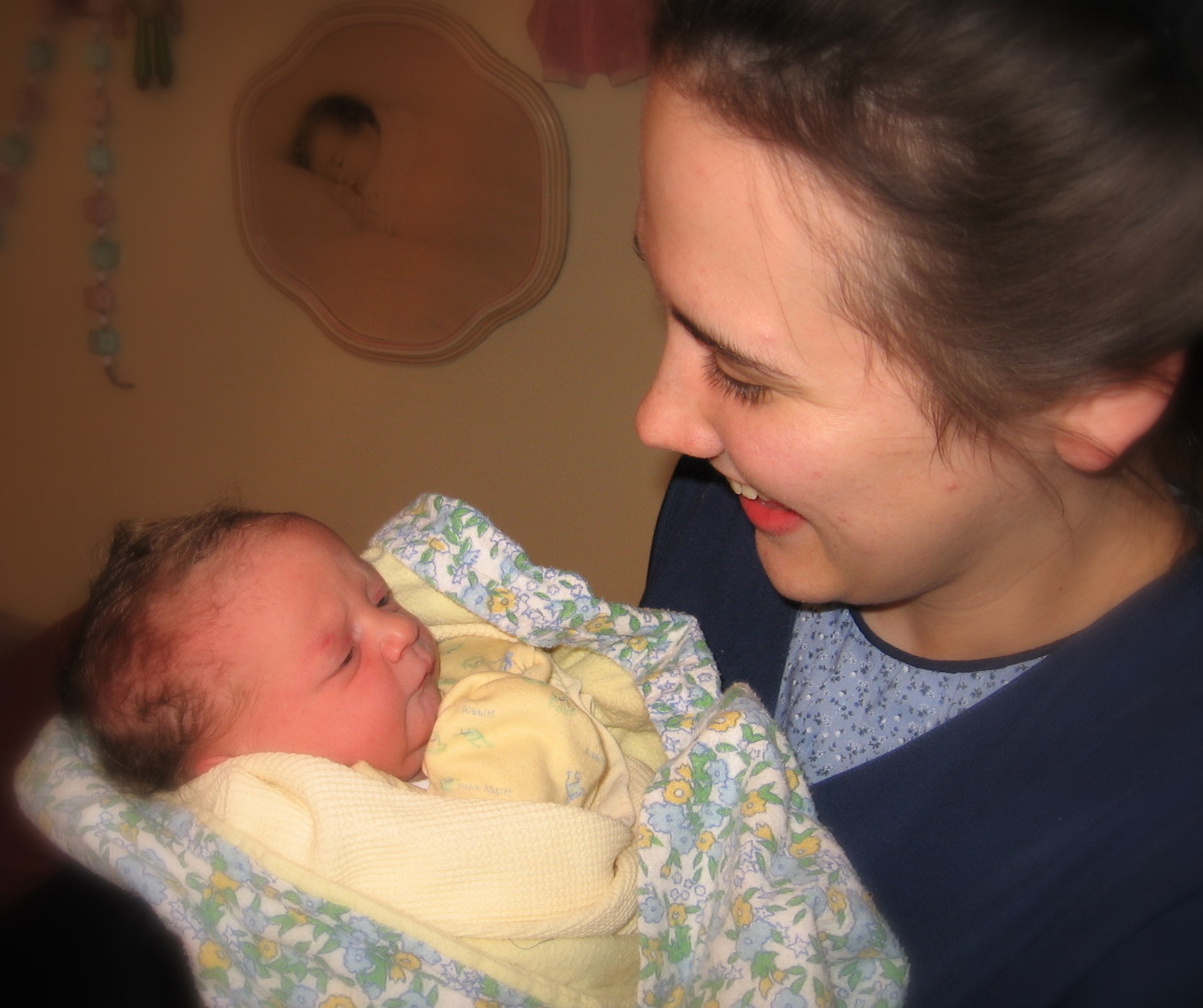
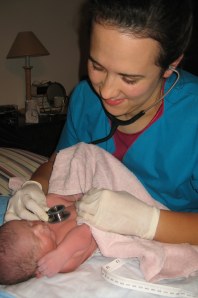
Thanks to all who participated in the class this past weekend! We had a great group which included 5 couples who are due from March to July, and a few others who were interested in learning more about the birth process. I was grateful for God’s timing and provision-I had a home birth the night before (more on that one later!), and only got a few hours of sleep before the all day class. I enjoyed all the participation from everyone involved- we had some good discussions and covered a lot of information. It was a full day, and I think we all enjoyed it!
Author: gentlemidwife
Making an Informed Decision on Epidurals
I wrote this article on epidural anesthesia while I was in school, and I thought someone may find it helpful….it’s always important to consider ALL aspects of the information available!
There is much debate today over the use of epidural anesthesia during labor and delivery. On one hand they are reported to bring miraculous relief from labor pain, and yet on the other hand many different risks and complications have been reported. How much do we know about this method of pain relief? For how many years have epidurals been used? How is it administered? What are the possible risks and complications? How does it affect other facets of labor? What are the benefits? Let us take some time to look at the issue from the perspective of researchers who are representing both sides.
The history of epidural anesthesia:
According to one source, the epidural block was first introduced unsuccessfully in 1901. (1) At that time, administering an epidural through the caudal region was being experimented with, but was a complex technique that required extreme skill. In 1921, Fidel Pages from Madrid, Spain, first reported on his successful results using the epidural space for insertion of anesthesia. As this method became more familiar, and new discoveries were made in the invention of better needles and equipment along with further understanding of anesthesia and its effect on the human body, the epidural block has become part of the modern medical world. (2)
How is an epidural administered?
Before administering an epidural, the patient must first be given an IV of crystalloid solution (in order to counter-act the hypotensive effect of the medication), and it must be determined that she is in active labor. The anesthesiologist will take a full history and determine if there are any contraindicating factors. Ideally, he will also talk with the patient about the possible risks and benefits of the procedure. Then she will be instructed to lay on her side, in a curled, arched position so that he can reach the vertebrae and insert a needle into the L3-4 or L4-5 area. (3) The patient must hold extremely still, as the epidural space is only 3-5 mm deep, and it is easy to accidentally puncture the dura, which can cause major headaches and other side effects. (4) Once the needle is inserted, it is replaced with a catheter, and a test dose is given to make sure that the dura has not been punctured and that the patient will not have an adverse reaction to the particular drug used. She must continue to lie on her side to prevent aortocaval compression and hypotension that results from being on her back, and the remainder of the anesthetic is injected. Some evidence of pain relief should occur within 5 minutes, and full effect should take place within 8-15 minutes. The catheter is then taped to the patient, and remains inserted so that more medication can be injected as needed for the duration of the labor. (5)
How does the epidural work?
The anesthesia of choice (usually a combination of two or more of the following: lidocaine, bupivacaine, mepivacaine, chloroprocaine) is injected into the epidural space (6), which surrounds the outside membrane of the spinal cord. Since the spinal cord carries signals to the brain, the nerve sensations can be numbed or blocked by filling the epidural space with anesthesia. This affects the areas just above and below the insertion spot. The amount of pain relief depends upon the type of anesthesia used, and the amount that is given. It is possible to have all sensations blocked so that the patient has no feeling from the waist down, or to have just enough pain relief to “take the edge off” and yet still allow the mother to be mobile. (7)
Advantages of an epidural:
Advantages of using an epidural block include:
– Completely pain-free labor and birth experience is possible, while allowing the mother to remain aware of what is transpiring. (8)
– Pain relief is constant for whatever length of time is desired. – During a long, difficult labor, it can bring about needed relaxation to help the mother progress and give her strength by providing a chance to rest. (9) – Should a cesarean become necessary, the entry route for anesthesia is already established, allowing the mother to remain awake during the surgery, thus enabling her to be a part of the birth and postpartum periods. – If the mother is having trouble coping with labor pains, an epidural can help her to relax and enjoy the process. (10)
Disadvantages and possible complications:
– Complications are reported to occur in about 23% of women. (11)
– Safety to the baby is not proven.
– Restricts the mother’s movement, as she must remain on her side in order to prevent complications and allow the catheter to stay in place. (12)
– Lowers the blood pressure, which may make the patient feel nauseas and possibly vomit. This also affects the baby due to the reduced amount of blood flow through the placenta. (13)
– There is a 15-20 % chance of the patient developing a fever, in which case further testing must be done in order to make sure the baby is not being negatively affected.
– Changes the normal progress of labor, many times lengthening the second stage. (14)
– Increases the possibility of other interventions: urinary function can become impaired, necessitating a catheter; second stage may be prolonged, indicating a higher incidence of oxytocin, episiotomy, forceps, and/or vacuum extraction. In addition, continuous fetal monitoring is indicated, and the mother’s vital signs must be closely observed. (15)
– It can influence the baby’s heart rate. In one study, 8-12% of the women who used an epidural experienced low fetal heart decelerations, indicating fetal distress. (16)
– The actual strength of the uterine contractions can be concealed, which can increase the possibility of uterine rupture, especially when oxytocin is involved. (17)
– There is an 8% incidence of the dura being punctured during insertion of the catheter. This results in extreme headaches, which can last for up to a week, with some patients experiencing long term chronic problems. (18)
– Occasionally there are women in which the epidural does not take, which can cause further discomfort and pain, along with subsequent loss of expectations. Some women experience numbing on one side and not the other, or in certain areas, which is a frustrating experience. (19)
– The drugs do reach the baby, and depending on the degree in which he was affected, his muscle tone and reflexes can be altered and he may be excessively drowsy for his first hours of life. (20)
– Many women experience long term backache, sometimes as a result of unknowingly straining muscles during labor, due to lack of feeling in the area. (21)
– Paralysis can last for up to several days (this occurs in 1/500 women). (22)
– Postpartum problems including a higher increase of jaundice in the newborn, and an increased difficulty with breast feeding have been reported. (23)
Conclusion:
In closing, it must also be considered that pain can be a good thing. Research shows that the pain and stress of normal labor trigger the release of adrenaline and noradrenalin, which are necessary in preparing the fetal lungs to breathe air and helps to utilize the mother’s energy. Pain can be an indicator of progress, as well as a safeguard to keep the mother from assuming a position that can be harmful. When the nerves of the pelvic floor are numbed, the body is not able to make the same supply of oxytocin which causes the pushing urge. Thus the body’s natural mechanisms are altered. Along the same lines, stress hormones cause the release of endorphins, creating a natural form of painkiller. These give the mother a type of “high” enabling her to do the work needed throughout the laboring process. (24) The decision whether or not to use an epidural must be the choice of the mother, after she has been informed of all of the pros and cons on both sides. Any type of intervention is not without its risk, as we can see from this study. However, there are times when intervention is necessary, and it is important to know what the risks are when evaluating your choices. For a mother who has had a long labor without progress, and is getting tired and worn out, and epidural may be just what she needs in order for her to have a vaginal birth. At these times we are extremely grateful for medical invention and progress, but we must not forget that a woman’s body was designed to give birth, and for thousands of years this has happened without epidural anesthesia. As with any medical advancement, we must exercise caution and make wise, informed decisions concerning what is placed inside of our bodies.
Reference:
- 1. Mandabach, Mark G., MD; article entitled “The History of Epidural Anesthesia”. Accessed on August 29, 2007, at: http://www.asaabstracts.com/strands/asaabstracts/abstract.htm;jsessionid=AEA7FF46297392A08B32A41CD6976656?year=2000&index=14&absnum=506
- 2. Franco, A.; article entitled “Current Anesthesia & Critical Care”, accessed in August, 2007, at: http://linkinghub.elsevier.com/retrieve/pii/S0953711200902643
- 3. Article entitled “Epidural”, accessed in Aug. 2007 at: http://www.nt.net/lerouxma/epidural.htm#history
- 4. Article entitled “Epidural”, accessed in Aug. 2007 at: http://www.answers.com/topic/epidural?cat=health
- 5. Oxhorn, Harry, Human Labor and Birth, pg. 461
- 6. Oxhorn, Harry; pg. 461
- 7. BUPA’s Health Information Team, article entitled “Epidurals for Surgery and Pain Relief”, accessed in August, 2007, at: http://hcd2.bupa.co.uk/fact_sheets/html/epidural.html
- 8. Kitzinger, Sheila; Complete Book of Pregnancy and Childbirth, The, pg. 242
- 9. Oxhorn, Harry; pg. 462
- 10. Sears, William, MD; The Birth Book, pg. 177
- 11. Marsden, Wagner,MD; Born in the USA: How a Broken Maternity System Must be Fixed to Put Women and Children First, pg. 54
- 12. Sears, William,MD, pg. 177
- 13. Kitzinger, Sheila, pg. 243
- 14. Wagner, Marsden, MD, pg. 54
- 15. Wagner, pg. 55; Goer, Henci, Obstetric Myths Versus Research Realities, pg. 250
- 16. Wagner, Marsden, MD, pg. 55
- 17. Oxhorn, Harry, pg. 463
- 18. Various authors, article entitled “Epidural Anesthesia and Analgesia Are Not Impaired After Dural Puncture With or Without Epidural Blood Patch”, accessed in August 2007, at: http://www.anesthesia-analgesia.org/cgi/content/full/89/2/390?ck=nck
- 19. Kitzinger, Sheila, pg. 243; Sears, William, MD, pg. 176
- 20. Cohen, Nancy, Open Season, pg. 98
- 21. Sears, William, MD, pg. 175
- 22. Wagner, Marsden, MD, pg. 54
- 23. Goer, Henci, pg. 255; article entitled “Epidural Birth May Negatively Affect Breastfeeding”, accessed August 2007, at: http://www.forbes.com/health/feeds/hscout/2006/12/11/hscout536503.html
- 24. Goer, Henci, pg. 252
New Baby Girl!
One of the January babies I was waiting on arrived yesterday. Little Grace was welcomed with great excitement, after her sisters had hoped for a baby girl after a row of 4 brothers! She also had the special title of being child #13!
I’m busy right now preparing for the upcoming childbirth class-it should be lots of fun, and the list of couples continues to grow. Be sure to let me know if you need more information, or have something specific you want to see covered!
Blessings on everyone in 2010…I’m starting to get excited about all the new little ones that we will be getting to meet for the first time!
Announcing Winter 2010 Natural Childbirth Class!!
This all-day class will cover topics such as prenatal nutrition, exercise, explanation of the childbirth process, tips for couples on how to work together during labor, positions and comfort measures for labor and birth, suggestions on writing a birth plan, and much more! There will be opportunity for you to ask questions, meet other couples who are sharing similar experiences, and learn together about the miracle of birth. Designed especially to help those planning a natural childbirth, this class will help you to better understand and prepare for your upcoming birth from a Christian perspective. I strongly encourage couples to attend together, as well as any other support people who are planning to be present at your birth.
In order to enable the best concentration and involvement, please make other arrangements for your children, with the exception of nursing babies.
When: Saturday, January 23rd
Schedule: 10am-Noon, break for lunch (on your own), 1pm-4pm
Location: Camp Hiawatha Chapel,1601 W 51st Street North, Wichita, KS 67204
Cost: $75/couple (note: for those using Gentle Delivery Childbirth Services, this class is included in your total fee)
A workbook, drinks and snacks will be provided for your enjoyment!
Taught by Kelsey Hobbs, CPM
Please register by January 17th, to ensure availability of materials. Feel free to call if you need more information or have questions. Email: gentlemidwife@gmail.com ~or~ phone: 316-253-0099
New Arrival!
Special Suggestions for first-time moms
This information is written specifically to give first time mothers suggestions for how to improve their chances at achieving a natural, easier delivery. Pregnancy and birth is such a special and exciting time, and it is also something to be prepared for ahead of time. It is good to keep in mind that a woman’s body was designed to give birth, and that, normally speaking, your body does know what to do to get the baby out. On the flip side, though, is the fact that this is the first time your body has ever experienced this process. Because of this, labor can sometimes last longer, and be more physically demanding, as your body takes the time it needs for all of the muscles and bones to work together and stretch to allow your baby to enter this world. If you have invested time and effort into preparing ahead of time, your body will benefit, both in the labor and recovery processes. Just think, you wouldn’t run a marathon without giving adequate training and preparation-and so it is with childbirth. You must condition your mind and body to give you the best results.
Throughout the pregnancy:
– Read and educate yourself! Take childbirth classes, together with your husband. This will help you both to be informed about the physical and emotional processes, and allow you to discuss ideals, hopes, and dreams before labor begins. I believe that education can also help to reduce the level of pain, as it helps you to understand what is going on in your body, instead of fearing the unknown. The more you can find out ahead of time, the more able you will be to relax, knowing your body is doing what it was intended to do. There are many books, DVD’s, and classes available-talk with me if you need suggestions!
– Eat a healthy diet. A diet full of good, healthful foods (vegetables, protein, and complex carbohydrates), and low in sugars, fats and simple carbohydrates, can help you in several areas. One, it doesn’t build a huge baby. A smaller baby is easier to push out! Secondly, it allows your body to be able to function at it’s optimal ability, as your energy level is increased. Thirdly, good nutrition can build better skin integrity, which decreases your chances of tears.
– Exercise regularly. Exercise is an extremely important factor, as labor and birth are very much physical events. Stretching, and building up your endurance level throughout the pregnancy will enable you to persevere if your labor gets long and tiresome. Throughout the last few weeks, walking briskly (until your pelvis hurts!) for at least 45 min. every day, can help to encourage the baby’s arrival to happen sooner rather than later.
– Practice relaxation. If you can learn to relax, go limp, and let your body work before labor begins, then the better able you will be to do this during labor. Remember, fighting pain and discomfort works against you during labor-you must open up, let go, and relax in order for your uterus to function the most efficiently. And the more efficiently it works, the easier it will be on you! In practicing, pick times of the day when you can work on letting each area of your body go limp. Find out what helps you to relax: water, music, massage, etc., and then have these available during labor.
During the last 5 weeks:
– I encourage moms to take the following supplements:
- Gentle Birth Formula ~ this is a specially formulated blend of herbs in a tincture form that work to help prepare the uterus for the upcoming birth. You begin at 35 weeks by taking 2 dropperfulls a day throughout the first week, and increasing the amount to 2 dropperfulls 3x/day for the remaining weeks. Mothers who take this herb usually have more “warm-up” contractions, which help the cervix to begin dilation and effacement before actual labor. This tincture can be purchased through In His Hands Birth supply at the same time that you order your birth kit.
- Super Primrose Oil or Borage Oil ~ this supplement is in a soft-gel form, and you begin taking 1-2 capsules orally beginning at 35 weeks. Around 36-37 weeks, you may begin inserting one capsule vaginally at night when ready to go to bed. The high GLA content and natural prostaglandin that these oils contain helps the cervix to soften, making dilation easier. It’s a great way to give your body a head-start towards dilation!
In closing, remember to keep yourself hydrated, rest often, and take care of yourself. And when labor begins, try to get some rest before getting excited. You need to conserve the energy for later. So think about some activities that provide fun distraction (games, movies, going out for supper, etc.), and try to focus on other things until the contractions become consistent and strong enough that you can’t be distracted through them….
Check out the new pages!
This post is to bring to your attention two new pages that have been added recently. The first is a short History of Midwifery article, which may help to explain some of the differences between the midwifery care model, and other forms of midwifery care. The second page provides you with more information about some of my assistants, and the people you may meet throughout your pregnancy. Enjoy!
Random Thoughts and Tidbits
I was thinking that by this time I might have another baby announcement, but the next arrival hasn’t made his/her appearance yet! However, I do seem to stay plenty busy these days seeing expectant mamas, answering numerous phone calls and emails, and keeping up with life in general. I’ve thought I’d get some articles written to post before now, but it hasn’t happened yet. Maybe it will happen sometime this week?
This past week, as I was searching for new material to share in Childbirth Class, I stumbled upon this website: http://www.thebirthfacts.com While not written from the home-birth standpoint, it had a variety of useful information. As a disclaimer, I’ll mention that it is wise to take things read on the web with a grain of salt (my comments included!). Do your research, and get your information from a variety of sources!
Speaking of childbirth classes, I am in the process of planning for an all-day class sometime towards the end of January. We’ll cover everything from nutrition, exercise, the physiological process of labor and birth, relaxation and positional techniques to help with pain, what to expect, how the father can play a vital role…..and much more! I’m getting excited about it, and would love to get your input as to things you would like to see covered. Or perhaps you’ve taken classes before, and have some suggestions? Let me know!! Once I have the date and time set, I’ll be sure to give out more information….
And in closing, since I enjoy baby pictures, here’s another one to share-this little one just celebrated her 2nd birthday this month!
New Arrival!!
A big welcome to little Andrew who was born late last night!

Time for the newborn exam.

He's a cute, cuddly little one-can't hardly resist a kiss....

An extra treat-the first birth for Heidi and I to do together since graduating from our midwifery studies! We trained together at FBS in TX, and never expected to work together in KS someday, but God put it all together!!

Just a couple of hours old!
Back in Kansas again
After a full month in Guatemala, my younger sister and brother and I have arrived safely back in Kansas. The trip was a wonderful experience, and we made many special memories together. God worked out so many details, and I enjoyed introducing my siblings many of my friends, and places that I had visited before. We studied at the La Ensenañza school in Antigua for three weeks, and then headed to the northern Petén region where we visited friends for a week. Getting to experience life in another culture without many of the conveniences that we are used to is an opportunity that I wish many people could experience!
Now I’m back to work, getting ready for a couple of upcoming births, seeing clients and babies, and numerous other activities that have been keeping me busy since arriving back in the States.
Here are a few of our favorite pictures from the trip, to give you a taste of what our life was like….

One of the beautiful, old landmarks in the town of Antigua

A view of some of the delicious fruit available in the markets.

Isaac, Charis and I

Some of the lovely handiwork available in the markets-the colors are gorgeous!